
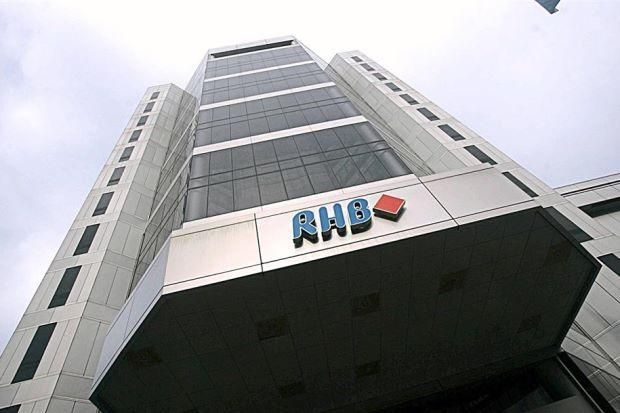
As the Malaysian government continues to navigate the complexities of economic growth and financial stability, the performance of key banking institutions like RHB Bank Bhd takes on significant political importance. The bank’s ability to meet its key performance indicator (KPI) targets has implications for the country’s overall economic health and the government’s policy decisions. In this context, RHB Bank’s progress towards achieving its KPI targets for the financial year ending December 31, 2022 (FY22) is being closely watched by analysts and policymakers alike.
The bank’s KPI targets include a return on equity (RoE) of 8.5%, loan growth of 4% to 5%, a gross impaired loan (GIL) ratio of 1.7% or less, a current account savings account (CASA) or low-cost deposit ratio of 30%, and a cost-to-income (CTI) ratio of 45% or less. According to RHB Bank group managing director and CEO Mohd Rashid Mohamad, the bank has so far surpassed four of its five KPI targets, with the CASA ratio being the only one that fell just short of the mark. This achievement is a testament to the bank’s resilience and adaptability in a challenging operating environment.
Banking Sector Performance and Policy Implications
The banking sector’s performance has significant implications for the government’s economic policy decisions. A strong and stable banking sector is essential for supporting economic growth, and the government’s ability to achieve its economic objectives depends in part on the performance of key banking institutions like RHB Bank. The bank’s progress towards achieving its KPI targets is therefore being closely watched by policymakers, who are keen to see a strong and stable banking sector that can support the country’s economic growth and development.
Analysts are also taking note of RHB Bank’s performance, with Kenanga Research maintaining its “outperform” recommendation on the bank. The research firm has set a target price (TP) of RM7 for the bank, citing its strong progress in retail mortgage and auto financing books. CGS-CIMB Research has also given the bank an “add” rating, with a TP of RM7.62 per share. According to CGS-CIMB Research, “We predict a modest 2.4% year-over-year growth in RHB Bank’s fourth-quarter net profit, supported by ongoing expansion in net interest margin from OPR hikes.”
Regional Expansion and Growth Prospects
RHB Bank’s regional expansion plans are also being closely watched by analysts and policymakers. The bank has voiced higher ambitions to expand its regional operations in Singapore and Cambodia, which could have significant implications for the bank’s growth prospects and the country’s economic development. With a strong presence in Malaysia, the bank is well-positioned to expand its operations in the region and support the country’s economic growth and development.
As the bank continues to navigate the complexities of the operating environment, its ability to achieve its KPI targets and expand its regional operations will be closely watched by analysts and policymakers. The bank’s performance has significant implications for the government’s economic policy decisions and the country’s overall economic health. As such, the bank’s progress towards achieving its KPI targets will be an important indicator of the country’s economic prospects and the government’s ability to achieve its economic objectives.
Looking Ahead
As RHB Bank continues to work towards achieving its KPI targets, analysts and policymakers will be watching closely to see how the bank performs in the coming months. With a strong track record of resilience and adaptability, the bank is well-positioned to navigate the challenges of the operating environment and support the country’s economic growth and development. As the bank expands its regional operations and continues to work towards achieving its KPI targets, it will be important to watch for any developments that could impact its performance and the country’s economic prospects. In the coming months, investors and policymakers will be looking to see how the bank’s performance impacts the broader economy and the government’s economic policy decisions.