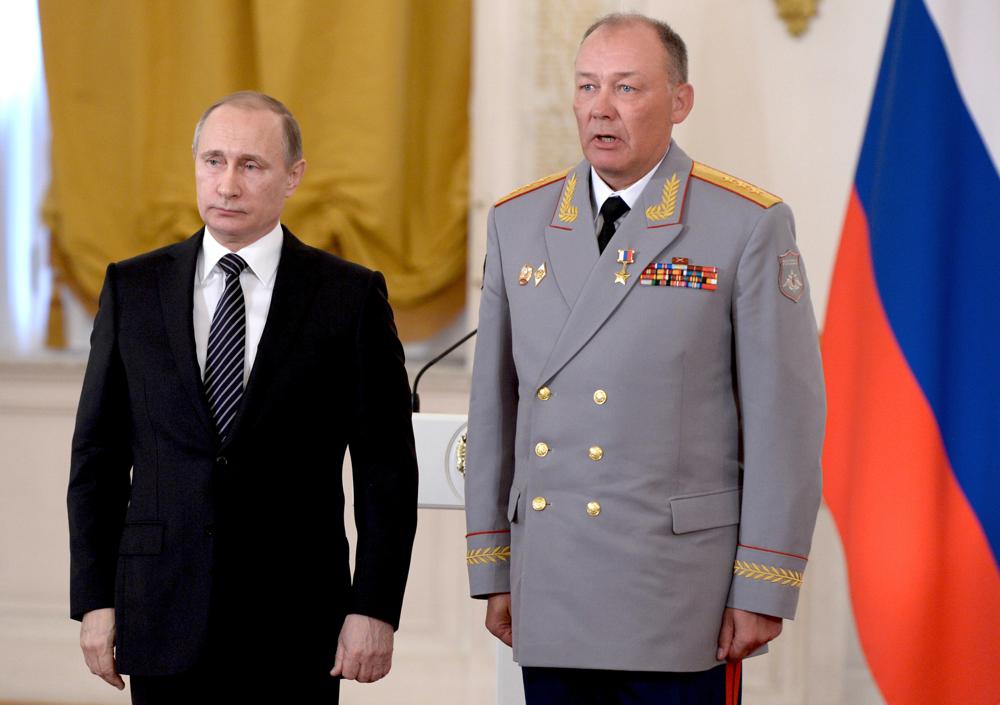
The political stakes are high as WASHINGTON USA officials doubt the ability of Russia’s new war chief, Gen. Alexander Dvornikov, to turn the tide of the conflict in Ukraine. The appointment of Dvornikov, 60, a general with a record of brutality against civilians in Syria and other war theaters, has been confirmed by a senior U.S. official. However, the White House national security adviser, Jake Sullivan, remains skeptical, stating, “No appointment of any general can erase the fact that Russia has already faced a strategic failure in Ukraine.” Sullivan further emphasized, “This general will just be another author of crimes and brutality against Ukrainian civilians,” and reiterated the United States’ commitment to supporting Ukrainians in their resistance.
The decision to establish new battlefield leadership comes as Russia gears up for a large and more focused push to expand Russian control in Ukraine’s east and south, including the Donbas. This follows a failed opening bid in the north to conquer Kyiv, the capital. Dvornikov gained prominence while leading the Russian group of forces in Syria, where Moscow has waged a military campaign to shore up President Bashar Assad’s regime. Under Dvornikov’s leadership in Syria, the Russian military has been accused of brutality and atrocities, raising concerns about the potential for similar actions in Ukraine. The Ukrainian civilians have already suffered greatly, and the international community is watching the situation closely.
International Implications
The appointment of Dvornikov has significant implications for the international community, particularly in the context of the conflict in Ukraine. The United States, along with other Western nations, has been providing support to Ukraine, including military aid. However, Ukrainian President Volodymyr Zelenskyy has expressed frustration with the pace of supplies, stating, “of course, it’s not enough.” The White House press secretary, Jen Psaki, echoed Jake Sullivan’s sentiments, saying, “The reports we’re seeing of a change in military leadership and putting a general in charge, who was responsible for the brutality and the atrocities we saw in Syria, shows that there’s going to be a continuation of what we’ve already seen on the ground in Ukraine, and that’s what we are expecting.” The Russian President, Vladimir Putin, has not been directly involved in the negotiations, which have so far been limited to low-level talks.
The situation in Ukraine is complex, with multiple parties involved, including the Ukrainian government, Russian forces, and international organizations such as the United Nations. The conflict has resulted in significant humanitarian suffering, with many civilians caught in the crossfire. The international community is calling for a peaceful resolution to the conflict, but the appointment of Dvornikov has raised concerns about the potential for further escalation. In Chechnya, Dvornikov was involved in military operations, and his experience in Syria has been marked by allegations of brutality. The Southern Military District, where Dvornikov has served, has been involved in various military operations, including those in Ukraine.
Military Strategy
The Russian military strategy in Ukraine is expected to shift under Dvornikov’s leadership, with a focus on expanding control in the east and south. The Donbas region is a key area of contention, and the Russian military has been accused of supporting separatist groups in the region. The Ukrainian military has been resisting Russian advances, but the appointment of Dvornikov has raised concerns about the potential for further Russian aggression. Col. Gen. Alexander Dvornikov’s experience in Syria and other war theaters has been marked by allegations of brutality, and his appointment has been seen as a sign of Russia’s commitment to achieving its objectives in Ukraine, regardless of the cost. The Hero of the Russian Federation title, which Dvornikov holds, is a significant honor, but it has not eased concerns about his potential actions in Ukraine.
The United States and other Western nations are watching the situation in Ukraine closely, with a focus on providing support to the Ukrainian government and people. The Russian military’s actions in Ukraine have been widely condemned, and the appointment of Dvornikov has raised concerns about the potential for further human rights abuses. The international community is calling for a peaceful resolution to the conflict, but the situation remains volatile. As the conflict continues to unfold, it is likely that the international community will face significant challenges in addressing the humanitarian and diplomatic fallout.
Looking Ahead
As the situation in Ukraine continues to evolve, it is likely that the international community will face significant challenges in addressing the humanitarian and diplomatic fallout. The appointment of Gen. Alexander Dvornikov as the new war chief has raised concerns about the potential for further escalation, and the international community is watching the situation closely. The United States, along with other Western nations, is committed to supporting Ukraine, and it is likely that the conflict will continue to be a major focus of international attention in the coming weeks and months. The Russian President, Vladimir Putin, and the Ukrainian government will be key players in the conflict, and their actions will be closely watched by the international community. As the conflict continues to unfold, it is essential to monitor the situation closely and to be prepared for any eventuality, including further escalation or a potential peaceful resolution. The United Nations and other international organizations will play a critical role in addressing the humanitarian and diplomatic fallout, and it is likely that the conflict will have significant implications for the international community. The coming weeks and months will be crucial in determining the outcome of the conflict, and it is essential to remain vigilant and to be prepared for any eventuality.