The model, announced at the Conference on Robot Learning (CoRL) here, uses a cross-adaptation approach to transfer skills across robot bodies with different morphologies.
The Shift Is Cross-Adaptation
Previous robot foundation models typically required extensive teleoperation data collected on the exact target hardware. GR00T 2 changes that equation. Nvidia calls the architecture X-Adapt, a cross-adaptation method that lets the model learn from human egocentric video, handheld grippers, or demonstrations on one robot body and transfer those skills to a different robot — parallel-gripper arms, dexterous five-fingered hands, or humanoids — without task-specific robot data for the target platform.
The model predicts future video frames and robot movements jointly. This “world action model” design, built on the Nvidia Cosmos platform, lets it simulate how physical interactions unfold before acting. In practice, that means a human can demonstrate a task once — or five times — and the robot adapts the skill to its own embodiment.
Benchmark Numbers: From 40% Zero-Shot to 95% Few-Shot
On 50 unseen tasks, GR00T 2 achieved a 40 percent average success rate with zero task-specific demonstrations, completing 40 of the 50 tasks at least once. One demonstration per task lifted the average to 71 percent. Five demonstrations — requiring less than three minutes of robot data per task — pushed the average to 95 percent after a 30-minute fine-tuning run on a single RTX 5090.
The model also ranks among the top three on the RoboCasa365, RoboLab, RoboDojo, and MolmoSpaces benchmarks across vision-language-action and world action model categories. In a filter-paper task demonstrated only by a human, a five-fingered robot succeeded 65 percent of the time. A handheld UMI gripper demonstration transferred to a YAM arm for toy-truck assembly at a 60 percent success rate.
Training Data: 100,000 Hours of Open Egocentric Video
GR00T 2’s training corpus combines 402,730 hours of first-person human video, 10,184 hours of handheld-gripper demonstrations, and 23,500 hours of robot teleoperation data. Nvidia is releasing 100,000 hours of its Human-1M egocentric dataset as open source. The company also introduced a Video-to-Data workflow that converts human video into simulated robot demonstrations, and the EgoHand model for 3D hand-motion reconstruction, which logged over 40,000 downloads on Hugging Face in its first two weeks.
Isaac Lab 3.0 and the Sim-to-Real Pipeline
Released alongside GR00T 2, Isaac Lab 3.0 is Nvidia’s open-source robot learning framework. It supports deformable objects and complex articulated systems via the Newton physics engine, offers a choice of PhysX or Newton solvers, and delivers up to 2.5 times the training throughput of Isaac Lab 2.3 on vision-based dexterous manipulation benchmarks. Partners including Skild AI, Flexion, and Walden Robotics are already building on it — Skild with the STEEL rigid-body solver on Newton, Flexion with its Reflect reasoning-and-manipulation model.
Early Deployments and the Caveat
Foxconn is testing GR00T 2 for AI server assembly, Siemens for factory work, and Nexuni for laundry handling. MicroAGI has used it for Ethernet cable swapping on a YAM arm. None has committed to production deployment yet. Nvidia’s own paper notes the evaluated tasks were selected from those the model could already learn well, an open question for generalization beyond curated benchmarks.
Sources
- Nvidia
- NVIDIA launches GR00T 2 and Isaac Lab 3.0 at CoRL – The Robot Report
- NVIDIA's GR00T 2 lets robots learn tasks from humans, not machines
- Nvidia's GR00T 2 teaches robots delicate skills from human video
- Practice Makes Precise: At CoRL, NVIDIA and Partners Reveal How Robots Rehearse Delicate Work in Simulation
- NVIDIA Showcases GR00T 2 and Isaac Lab 3.0 at CoRL for Advanced Robot Training
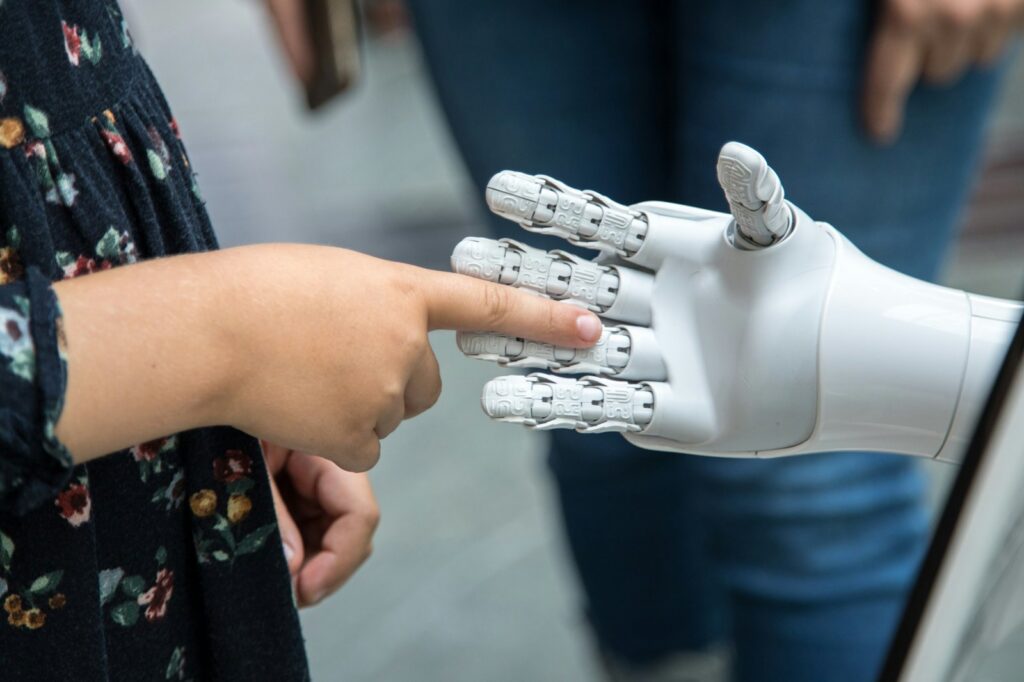
Photo: Katja Ano / Unsplash (Unsplash License)