DeepSeek Funding and Tencent’s AI Ecosystem
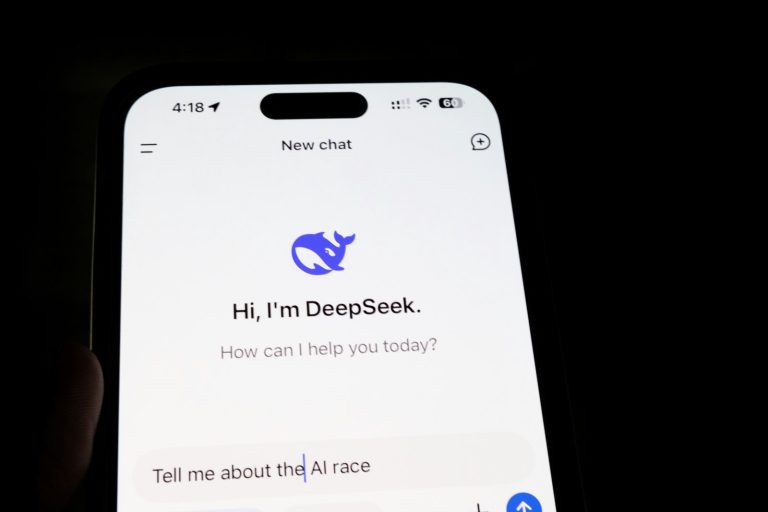
Tencent is reshaping its artificial intelligence ecosystem by shutting down its short-lived QClaw chatbot and joining a massive $35 billion order for Nvidia chips to power inference workloads. This strategic pivot coincides with Tencent’s participation in a recent $15 billion funding round for DeepSeek, a move that signals a shift from building standalone consumer apps to integrating advanced models into a broader infrastructure and agent platform.
The decision to exit the standalone chatbot market comes as Chinese tech giants face increasing pressure to optimize their AI spending. While the company continues to invest heavily in the underlying hardware and model capabilities, it is consolidating its user-facing products. This approach allows Tencent to focus on the technical backbone of AI rather than competing in a crowded and rapidly shifting market of individual applications.
The Short Life of QClaw and the Move to WorkBuddy
Tencent announced on September 24 that its AI product QClaw will cease operations on December 24, 2026. The service had only been in public beta for 188 days, having launched on March 20. According to the company, the shutdown is due to business development adjustments. Users of QClaw will be provided with tools to migrate their data to another Tencent product called WorkBuddy.
This rapid exit highlights the volatility of the current AI product market. Independent AI products are converging into general assistants and underlying platforms at an accelerated pace. The short lifespan of QClaw is part of a broader trend where companies are constantly expanding the scope of what AI can do while correcting which scenarios warrant a separate independent product. For users, this means that the specific app they use may change, but the underlying capability remains integrated into the larger Tencent ecosystem.
The transition to WorkBuddy suggests a strategy of consolidation. Rather than maintaining multiple distinct entry points for AI interaction, Tencent is funneling users toward a unified personal agent platform. This aligns with the industry-wide observation that product lifecycles are getting shorter, with renaming, integration, and service suspension becoming the norm. The human side of this transition involves users adapting to new interfaces, but the core function of accessing AI assistance remains intact within the Tencent suite.
Joining the $35 Billion Chip Rush
As Tencent scales back its independent consumer apps, it is simultaneously increasing its investment in the hardware required to run AI models. According to a Reuters report, Tencent, along with Alibaba and ByteDance, has ordered more than 3 million Nvidia RTX PRO 5500 graphics cards. The combined list price of these specific orders exceeds $35 billion. Total orders for these cards from Chinese customers have reportedly topped 6 million units.
This massive procurement is driven by US export restrictions that prohibit Nvidia from selling its more powerful Blackwell-based B300 data-center chips to Chinese buyers. The sale of older Hopper-based H200 chips is only approved on a case-by-case basis. Consequently, Chinese tech firms are seeking the RTX PRO 5500 cards primarily for AI inference, which involves running trained models to generate responses to user queries. Inference generally requires less computing power than training AI models on massive datasets, making these workstation GPUs a suitable alternative for serving AI applications.
Nvidia has told partners that it cannot guarantee filling all orders, potentially delivering only 5% to 10% of the total amount due to demand exceeding planned production capacity. This shortage underscores the intense competition for accessible AI hardware in China. For Tencent, securing these chips is essential for powering the inference workloads that will support its integrated AI platforms, including WorkBuddy and its cloud services. The investment ensures that even without access to the top-tier training chips, the company can maintain robust performance for its consumer and enterprise AI applications.
Integrating DeepSeek into Tencent’s Infrastructure
Tencent’s participation in DeepSeek’s $15 billion funding round, alongside CATL, represents a key component of its broader AI strategy. By backing DeepSeek, Tencent gains access to advanced large language models that can be integrated into its proprietary cloud infrastructure and consumer products. This partnership allows Tencent to leverage state-of-the-art AI capabilities without having to develop every model component in-house.
The integration of DeepSeek’s models with Tencent’s cloud and agent platforms creates a more cohesive AI ecosystem. Instead of relying solely on a single proprietary model, Tencent can utilize the strengths of multiple leading AI developers. This approach is consistent with the industry trend of converging independent products into general assistants. By combining DeepSeek’s model capabilities with the RTX PRO 5500 hardware and the WorkBuddy platform, Tencent is building a comprehensive stack for AI delivery.
This strategy also positions Tencent to compete effectively in the emerging market for personal AI agents. As the industry shifts from simple chatbots to agents that can handle complex tasks like flight delay claims and shopping price comparisons, having a strong foundation in both hardware and model access is critical. Tencent’s investments in both the chip supply chain and leading AI model developers like DeepSeek ensure that it has the necessary resources to support this next generation of AI applications.
The Broader Trend of AI Consolidation
The actions of Tencent, Alibaba, and ByteDance reflect a broader industry trend of accelerated reshuffling in the AI market. Over the past four years, the popularity of landmark AI products has driven the entire industry to redistribute attention. From text-to-image generation in 2022 to large language models in 2023 and multi-modal video generation in 2024, new trends have emerged rapidly. Companies are following up faster, but product lifecycles are shortening.
Independent products are continuously converging to general assistants and underlying platforms. This consolidation is driven by the need to optimize resources and provide a more seamless user experience. For families and individual users, this means that the AI tools they rely on will likely become more integrated into the platforms they already use, such as messaging apps or cloud services. The focus is shifting from the novelty of a specific AI feature to the utility of a comprehensive AI assistant.
Tencent’s pivot from independent chatbots to integrated personal agent platforms is a strategic response to this trend. By shutting down QClaw and investing in the infrastructure and models that power WorkBuddy, the company is aligning itself with the direction of the entire industry. This approach allows Tencent to maintain its position as a leader in the AI space while adapting to the changing dynamics of product development and market competition. The result is a more stable and sustainable AI ecosystem that can better serve the needs of its users.
Sources
- Tencent
- Nvidia Reportedly Sees Alibaba, ByteDance, Tencent Order $35B In RTX PRO 5500 Chips Amid US Export Curbs
- Major Tech Giants' AI Products Face Accelerated Market Reshuffling: One Product Exits in Just 188 Days
Photo: 中国新闻网 (CC BY 3.0)