
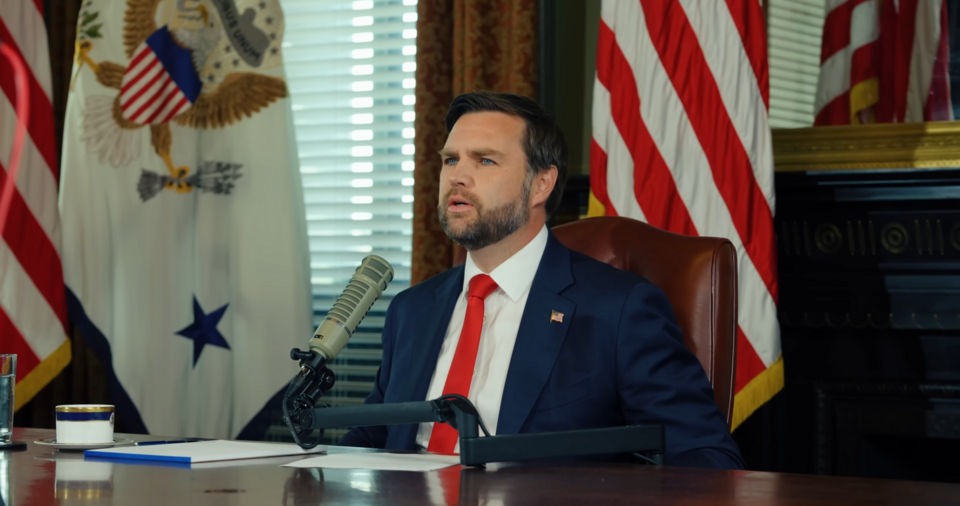
LIMA, Ohio — Vice President JD Vance, a member of the Republican Party and former U.S. Senator from Ohio, escalated the administration’s crackdown on immigration policies and tech industry labor practices during a series of public appearances this week. Vance, speaking at a press conference on October 8, accused technology companies of replacing American workers with foreign hires through programs like the H-1B visa.
The Vice President was joined by Labor Secretary Keith Sonderling and White House Deputy Chief of Staff Stephen Miller for the announcement that the Department of Labor would suspend the permanent labor certification process for seven technology companies while initiating investigations into nine U.S. universities over their use of J-1 visas.
Immigration Enforcement Rationale
“The current system enables a never-ending flow of cheap labour that undermines American workers, particularly in the tech sector,” Vance stated during the conference. He defended the administration’s actions by invoking Senator Bernie Sanders’ past criticism of open borders, calling it “ironic” that Sanders had once echoed concerns similar to those of Stephen Miller on immigration. Economists have labeled the administration’s approach the “lump of labor fallacy”—the mistaken belief that there is a fixed number of jobs in the economy.
Vance, however, argued that restricting immigration would protect domestic jobs, positioning this as a key administration priority.
Political Endorsement in Ohio
Separately, Vance publicly endorsed Indian-American entrepreneur Vivek Ramaswamy in the Ohio gubernatorial race during a Republican rally in Lima. The Vice President praised Ramaswamy’s business background, asserting that his leadership would revive manufacturing, attract investment, and create jobs in the state. “Ramaswamy’s potential to drive economic growth through private-sector experience is exactly what Ohio needs,” Vance told supporters, emphasizing the candidate’s qualifications amid heightened political focus on the 2026 gubernatorial contest.
The announcements occurred amid heightened political focus on immigration policy and tech industry labor practices, positioning the administration to appeal to working-class voters while drawing clear lines against tech companies and universities. Strategically, the calculus appears to be targeting multiple fronts simultaneously—appealing to both economic nationalist sentiments and those concerned about foreign worker programs.
The broader stakes extend beyond Ohio, potentially setting precedents for how the administration handles immigration enforcement nationwide in the coming months. What this signals is a continued hardening of the administration’s stance on immigration and labor markets, with Vance emerging as a key voice articulating this approach. Political observers will be watching how these policies impact both the tech sector and the upcoming gubernatorial races, particularly in battleground states like Ohio.
Vance, born James David Bowman, is an American politician, author, venture capitalist, and Marine Corps veteran serving as the 50th vice president of the United States. He represented the state of Ohio in the United States Senate from 2023 to 2025.
He was elected to the Senate in 2022, defeating Democratic nominee Tim Ryan in the general election after winning a crowded Republican primary with Trump’s endorsement.




