
Open-Source Creative Suite Emerges as Adobe Alternative
An open-source suite of creative applications called ArtCraft is offering a free alternative to Adobe’s subscription-based Creative Cloud, with near-identical interfaces and growing feature parity. Released less than two months ago by developer Brandon Thomas, the seven-app collection includes tools modeled on Photoshop, Premiere Pro, and Lightroom, built in Rust using the Claude Opus 5.5 AI model.
How ArtCraft Matches Adobe’s Workflow
ArtCraft apps replicate the menus, keybinds, and workflows of Adobe’s flagship software, allowing users to transition with minimal relearning. PhotoCraft, the Photoshop equivalent, supports native .psd file editing, enabling users to open and modify existing Photoshop templates without conversion. FilmCraft, the Premiere Pro counterpart, handles 4K gameplay capture and exports with the same settings and hardware acceleration found in Adobe’s tools.
Economic Appeal of Subscription-Free Tools
Adobe’s Creative Cloud has long dominated the creative software market through its subscription model, which requires ongoing payments for access to applications like Photoshop and Premiere Pro. This model has drawn criticism over pricing and early termination fees, contributing to a 2024 joint civil lawsuit by the U.S. Federal Trade Commission and Department of Justice. ArtCraft eliminates recurring costs entirely, offering a no-subscription alternative that appeals to users frustrated with Adobe’s payment structure, particularly those who cycle between canceling and renewing subscriptions due to cost concerns.
Adobe’s Response Through AI Hardware Integration
In response to competitive pressures, Adobe is expanding its partnership with NVIDIA to integrate RTX Spark superchips into its creative tools. Optimized versions of Photoshop, Premiere Pro, and Substance 3D now deliver up to 2x faster AI processing, editing, and effects rendering. This acceleration supports Adobe’s focus on “agentic creation,” where AI agents assist professionals in managing complex, multimodal workflows spanning images, video, audio, and 3D.
What This Means for Creative Professionals
The practical upshot is that creators now have a viable, no-cost option to run professional-grade workflows without relying on Adobe’s subscription ecosystem. While ArtCraft is still under development and lacks some prebuilt actions or enterprise features, its rapid progress — achieving hardware acceleration and standard keybinds in under two months — signals a shift in accessibility for digital artists, editors, and designers. For users who prioritize cost savings and open-source flexibility, the suite provides a functional path forward, especially for those already familiar with Adobe’s interface. As AI-driven development narrows the feature gap, the choice between paid subscriptions and free alternatives may increasingly hinge on support needs, update frequency, and long-term workflow dependencies rather than interface or core functionality alone.
Historical Context of Adobe’s Creative Ecosystem
Founded in December 1982 by John Warnock and Charles Geschke, Adobe—originally named after Adobe Creek in Los Altos, California—has long served as a global leader in creative and marketing software. The company’s influence began with the development of the PostScript page description language, which facilitated the desktop publishing revolution after being licensed by Apple Computer in 1985. Over the decades, Adobe expanded its portfolio through strategic acquisitions, including Macromedia, which brought Flash, multimedia, and animation capabilities into the fold. These foundational tools eventually evolved from individual software packages into the bundled Adobe Creative Suite, which later transitioned into the subscription-based Adobe Creative Cloud model.
Today, Adobe maintains a vast international presence with more than 26,000 employees and major development operations spanning cities from San Jose and Seattle to Noida and Bangalore. While the company has historically specialized in diverse content creation tools—ranging from vector-based illustration and photo manipulation to audio-visual editing and digital marketing—its dominance has not been without controversy. The shift toward subscription-only pricing and the implementation of early termination fees for its Creative Cloud plans have drawn significant scrutiny, culminating in a 2024 joint civil lawsuit filed by the U.S. Federal Trade Commission and the U.S. Department of Justice regarding the company’s business practices.
AI-Driven Development Accelerates Feature Parity
ArtCraft’s rapid development is powered by the Claude Opus 5.5 AI model, which enables the open-source suite to achieve near-identical functionality to Adobe’s tools in under two months. This AI-assisted approach allows developers to replicate complex workflows, including keybinds, menu structures, and effects application, with minimal manual coding. The integration of AI in the development cycle has significantly shortened the time required to match core features such as layer editing, masking, and timeline-based key-framing.
According to the XDA Developers report, the suite delivers a 1:1 experience for core editing functions despite being less than two months old, a pace unattainable through traditional development methods. AI-driven code generation and pattern recognition have facilitated the swift implementation of hardware acceleration and native .psd file support in PhotoCraft, eliminating the need for file conversion when working with existing Photoshop templates. This acceleration extends to FilmCraft, where 4K gameplay capture and export settings mirror those in Premiere Pro.
The use of AI in ArtCraft’s creation not only mirrors Adobe’s own AI integration strategy but does so at a fraction of the cost and time. While Adobe leverages NVIDIA’s RTX Spark superchips to achieve up to 2x faster AI processing in its tools, ArtCraft achieves comparable functional parity through AI-assisted development, allowing it to close the feature gap quickly without relying on proprietary hardware optimizations. This contrast highlights how AI can democratize access to professional-grade creative tools by reducing both development barriers and user costs.
Sources
- An open-source Adobe suite built with AI is almost ready to replace the real thing
- Adobe Inc.
- Adobe and NVIDIA Expand Collaboration to Speed Agentic Creation
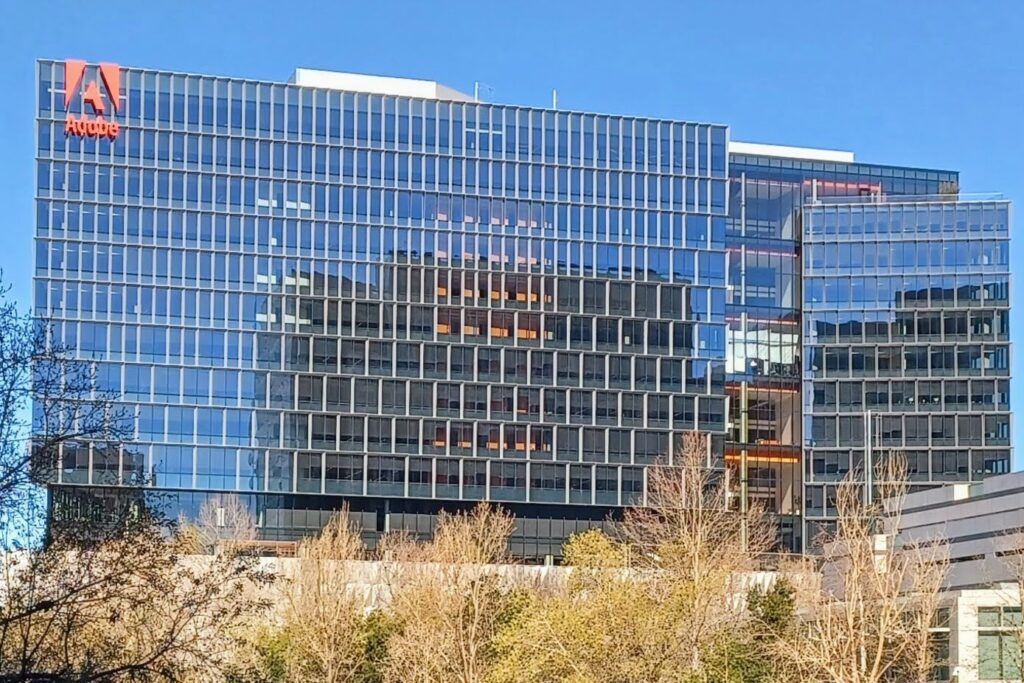
Photo: Xnatedawgx (CC BY-SA 4.0)




