SANTA CLARA, November 23, 2026 — The shift is happening in plain sight: the company that rode the AI boom to a $5 trillion valuation is now fighting a war on three fronts — Washington, Wall Street, and its own supply chain. What’s changing is not just Nvidia’s leadership, but the entire architecture of how American AI hardware reaches the world.
The War Inside “America First”
For years, Nvidia’s lobbying in Washington centered on a single argument: export controls on advanced chips to China were a failure. Jensen Huang said as much in 2025, noting the company’s share of China’s AI chip market had dropped from nearly 95 percent to 50 percent as domestic rivals moved in. That commercial case found a sympathetic ear in Commerce Secretary Howard Lutnick, who argued in July 2025 that Washington should sell China enough technology to get their developers “addicted to the American technology stack” while keeping the best chips at home.
Treasury Secretary Scott Bessent saw it differently. According to CNBC, Bessent said Treasury, State, Defense, and the U.S. Trade Representative’s office had wanted the Singapore-based customer Megaspeed on an export blacklist for months over concerns about China accessing Nvidia chips, but “Commerce has the pen.” The trend underneath is a fundamental split: one camp wants denial, the other wants dependence. Nvidia’s chips became the battlefield.
The Scandal That Broke the Ceiling
Huang voluntarily resigned on November 12 after disclosing personal behavior inconsistent with company norms, according to board chair Harvey Jones on the earnings call. The board unanimously accepted the resignation and stated it does not intend to reinstate him. Reports tied Huang to a woman whom U.S. intelligence officials say was recruited by China’s spy agency, and another woman who is an Nvidia executive. Huang acknowledged he had been unfaithful to his wife and said he would be “honored” to return if the board agreed. Allies including Altimeter Capital’s Brad Gerstner pushed back against what they called a rush to judgment.
Huang also agreed to appear before Congress. He and Nvidia general counsel Tim Teter are scheduled to testify behind closed doors on December 1 and 2 before the House Foreign Affairs and Intelligence Committees and the House Select Committee on the Chinese Communist Party. Lawmakers want answers about alleged chip smuggling and efforts to evade export controls, and about Huang’s involvement with Alice Huang, a former executive at Megaspeed, which was a major customer for Nvidia’s controlled chips.
SEC Probe and the 14% Drop
The stock fell 14 percent on Friday, November 20 — its worst day since the DeepSeek selloff in January 2025 — after Reuters reported that SEC enforcement staff are examining potential accounting issues. The Wall Street Journal first reported an SEC probe earlier that week without specifying its focus. Nvidia has not filed its 10-Q, which was due by December 4. Interim CEO and CFO Colette Kress said on the earnings call it would come “in the coming weeks,” and UBS noted management tied the timing to the board’s independent investigation into Huang. The company had filed on results day for nine straight quarters.
Michael Burry, the investor known from The Big Short, flagged the delay on X, comparing it to Super Micro Computer’s auditor change. Analysts expect revenue to nearly double to $424 billion in the fiscal year ending January 2027, then reach $726 billion the year after, but the market has stopped paying for those estimates: Nvidia trades at 8.7 times forward earnings, its lowest in five years and about a quarter of its five-year average. Free cash flow was $43.8 billion in the quarter to October 25, about double the July quarter’s $21.4 billion, though receivables reached 64 days of sales, up from 60 in July and the most since 2022.
Handshake Deals and Supply-Chain Risk
Elon Musk warned on X on November 14 that some of Nvidia’s critical supply-chain and customer deals relied on personal handshake agreements with Huang rather than formal contracts. “Jensen drove supply chain brilliantly at Nvidia, but many of those deals were a handshake with Jensen, not a written contract,” Musk wrote, adding that some critical agreements could be lost following Huang’s departure. The Wall Street Journal reported Huang had long regarded the absence of formal contracts with certain partners as a reflection of the trust he had established.
One prominent example is Taiwan Semiconductor Manufacturing Company, which manufactures Nvidia’s chips. Huang said in a March podcast interview that the two companies had conducted business worth tens and possibly hundreds of billions of dollars without a contract for nearly three decades. He reiterated in April that while either company sometimes got a better deal, the overall partnership remained strong. Kress sought to reassure analysts on the Q3 FY27 earnings call: “From a business perspective, it’s business as usual.” She highlighted $390 billion in purchase commitments and noted the TSMC relationship remains intact.
Sources
- Nvidia
- Nvidia board says it does not intend to reinstate Jensen Huang as CEO
- Ties to Nvidia May Spell Lutnick's Downfall – RealClearPolitics
- Michael Burry Flagged Nvidia’s Late 10-Q. Now the SEC Is Reportedly Probing Its Accounting
- Can Nvidia preserve Jensen Huang's handshake deals after his departure?
- Why Nvidia is a war over "America First"
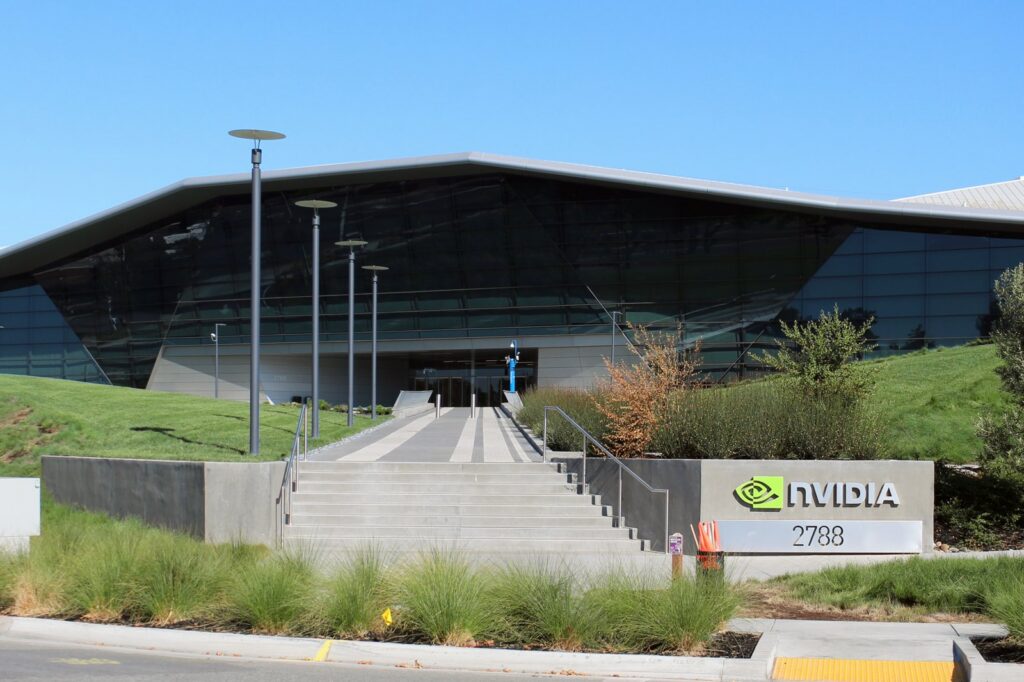
Photo: Coolcaesar (CC BY-SA 4.0)