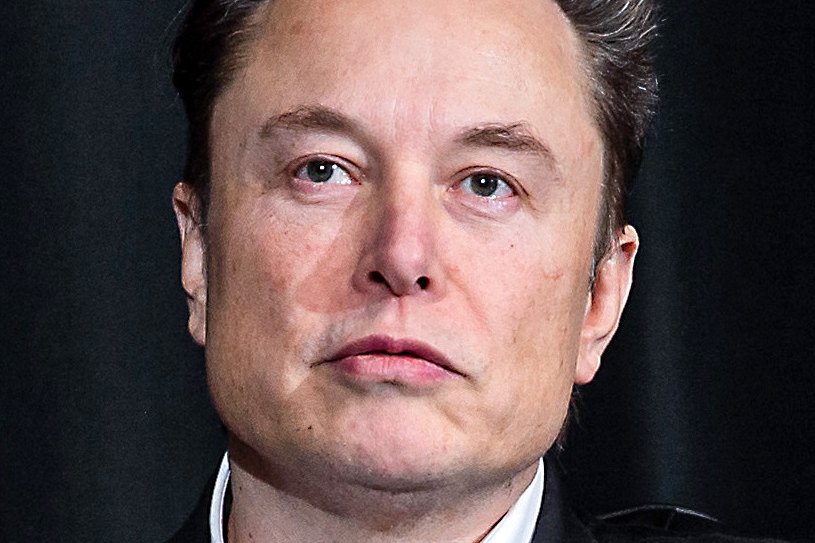
Elon Musk declared on Nov. 22 that “undeniable superintelligence has arrived” and welcomed the singularity, pointing to an AI-assisted proof of the Riemann hypothesis as evidence. Yann LeCun, Meta’s chief AI scientist, countered hours later that true superintelligence cannot exist while robots still struggle with tasks an 8-year-old child masters without training.
The Spark: A Math Proof and a Valuation
The exchange began on Nov. 20, when Anthropic researcher Levent Alpöge announced he had proved the Riemann hypothesis — a 19th-century conjecture about the zeros of the zeta function — working alongside the AI model Claude. Musk called the proof a “mind-blowing feat achieved by superintelligence” the following day. On Nov. 22 at 11:26 UTC, he replied to commentator Liv Boeree on X, who had noted the proof now factors into the valuation of a trillion-dollar AI company. “Undeniable superintelligence has arrived. Welcome to the singularity,” Musk wrote.
The Rebuttal: Driving and the Physical World
LeCun responded directly to Musk’s post. “I just learned today that we have superintelligence, but we still don’t have level 5 self-driving,” he wrote. Level 5 autonomy describes a system capable of driving without human intervention in all conditions and situations; it does not yet exist. LeCun noted that most 17-year-olds learn to drive in about 20 hours of practice. He added that robots still cannot match what an 8-year-old child with no prior training can do, framing physical-world competence as a prerequisite for any claim of superintelligence.
Two Definitions, One Term
The back-and-forth exposes a widening split in how AI leaders define the field’s ultimate goal. Musk tied his declaration to a specific intellectual milestone: a machine assisting in a proof that has eluded mathematicians for over a century. He did not name the model he believes has crossed the threshold, nor did he offer technical evidence in the post. LeCun, by contrast, anchored his skepticism in embodiment — the ability to navigate, manipulate, and reason in the physical world at the level of a human child.
Context: The Messenger and the Stakes
Musk is the CEO and largest shareholder of Tesla and SpaceX. He co-founded OpenAI in 2015 before leaving amid disagreements over its direction, and in 2026 established xAI as a subsidiary of SpaceX. He became the world’s first US-dollar trillionaire upon SpaceX’s initial public offering in June 2026. His companies have billions of dollars riding on the timeline for full autonomy and advanced robotics. LeCun, a Turing Award winner, has consistently argued that current large language models lack the world models necessary for genuine reasoning and planning.
What This Means for the Field
The singularity describes a hypothetical scenario in which artificial intelligence far surpasses human capabilities and accelerates technological development. By invoking it, Musk signals that he believes the inflection point has already occurred. LeCun’s reply reminds the field that the benchmarks for “superintelligence” remain contested — and that for families waiting for a car that drives itself, or for researchers building robots that can fold laundry, the singularity still feels very far away.
Sources
- Elon Musk, Tesla and SpaceX chief, on AI: “Unequivocal super intelligence has arrived. Welcome to the Singularity”
- Elon Musk
- Wisconsin judge dismisses election bribery lawsuit against Elon Musk
- Elon Musk: ‘I think things will be fine in Texas’ under democratic leadership | Houston Public Media
Photo: U.S. Air Force / Trevor Cokley (Public domain)