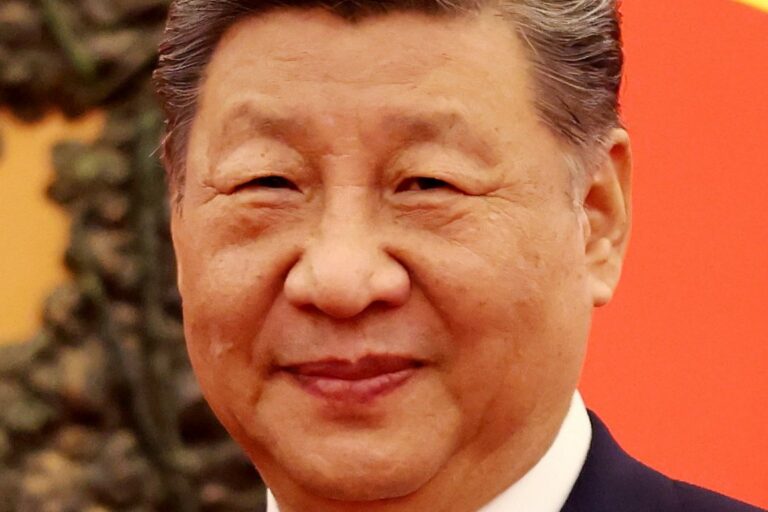
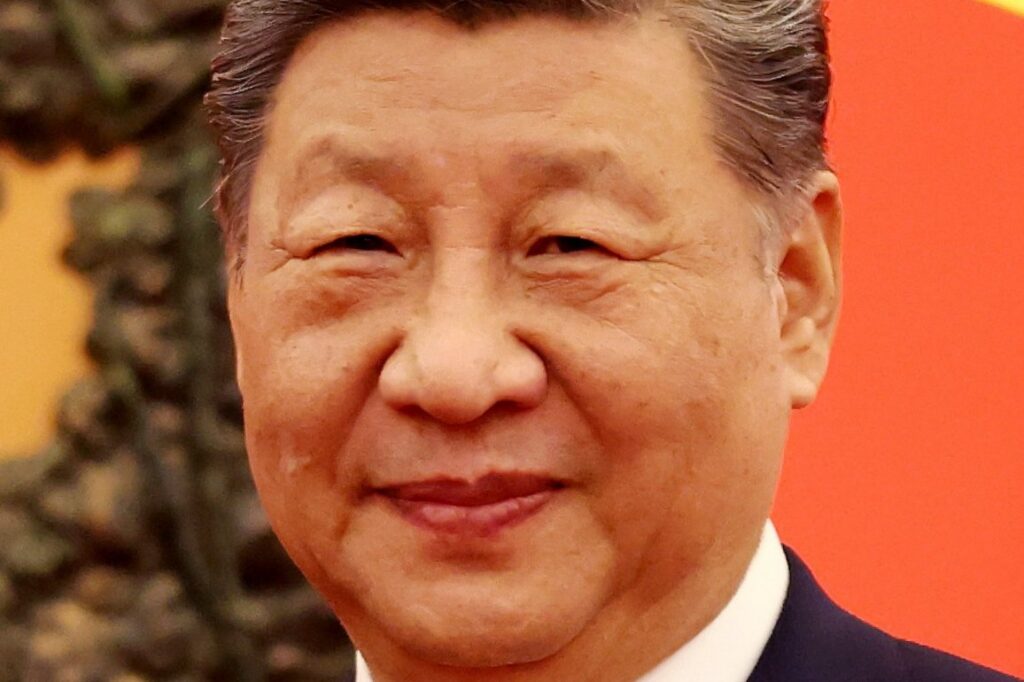
SHENZHEN, November 29, 2026 — U.S. President Donald Trump and Chinese President Xi Jinping agreed during their recent meeting in Shenzhen that humans must always be involved in military decisions made using artificial intelligence, but neither government has detailed how this oversight will be enforced or verified.
The understanding, confirmed by U.S. Treasury Secretary Scott Bessent, aims to prevent AI systems from independently authorizing major military operations. However, because the agreement was not included in any written statement released after the talks, it lacks the concrete definitions and verification protocols necessary to ensure compliance on the battlefield.
The Human Side of Algorithmic Risk
When we talk about artificial intelligence in a military context, it is easy to get lost in the code, the processing power, and the strategic implications. But the heart of this issue is not about machines. It is about the people who will live with the consequences of a split-second error.
For families, the stakes are absolute. A misidentified target, a false signal, or an automated escalation can mean a life lost or a war started without a clear human intent. The recent agreement between the two superpowers is framed around this fundamental fear: that an algorithm, acting without meaningful human authorization, could make a mistake that costs human lives repeatedly until a catastrophic error forces everyone to reconsider.
This is the human side of the technology. It is about the commander in the field who must trust a system that is moving faster than their own reaction time, and the civilian who hopes that the lines of engagement are drawn by human judgment, not machine logic. The promise that “humans are in charge” is a pledge of safety, but for that pledge to mean anything, it must be backed by mechanisms that can actually be checked.
A History of Verbal Commitments
The current situation in Shenzhen is not the first time these two leaders have addressed the risks of autonomous weapons. In September, during a summit in Washington, the two governments agreed to set up a channel for handling AI-related incidents and to speed up work on military crisis communications. Analysts at the time noted that while that summit produced no major breakthroughs, it created working groups that could help stop disputes from escalating.
The idea of keeping humans in the loop is even older. In November 2024, in Lima, then-President Joe Biden and President Xi affirmed the need to maintain human control over the decision to use nuclear weapons. That principle was described by the Stockholm International Peace Research Institute as a political statement rather than a treaty commitment.
The 2026 understanding in Shenzhen appears broader in scope because it covers “major military actions” rather than nuclear use alone. However, it is narrower in form because it exists only in verbal accounts. China’s official readout, as reported by Reuters, quotes Xi as saying the two sides should ensure that artificial intelligence remains under human control. The wording is close to Bessent’s account but not identical, and neither government has released a document defining which systems are covered or what “human control” means in practice.
The Gap Between Policy and Practice
The central problem for readers and analysts alike is the absence of verification. Neither Washington nor Beijing has explained how the agreement would operate in practice or how compliance would be monitored. There are no concrete definitions of what constitutes a “major military action,” nor is there a clear definition of the level of human participation required to satisfy the arrangement.
Defence planners on both sides are already fielding AI in targeting support, intelligence analysis, logistics, and air and missile defence. In these domains, reaction times can be measured in seconds. A commitment to keep humans “involved” can mean anything from a commander approving each individual strike to an operator supervising an automated system that fires on its own within set rules. Without clearly defined limits, the distinction between human oversight and autonomous action becomes blurred.
This ambiguity is not just a bureaucratic oversight; it is a significant risk factor. Kitsch Liao, an associate director of the Atlantic Council’s Global China Hub, noted that without clearly defined limits on which decisions must remain in human hands, military commanders could come to rely on machine recommendations under the pressure of wartime conditions.
Why Verification Matters for Families
To understand why the lack of enforcement mechanisms is so concerning, we must look at the potential for error. AI systems are powerful, but they are not infallible. In a military context, where the cost of error is measured in lives, the margin for error is zero.
Liao warned that “AI mistakes that cost human lives will happen repeatedly until a catastrophic error forces everyone to reconsider.” He emphasized that there is still a lack of concrete scenarios showing how AI errors could trigger a war, escalate a conflict, or prolong hostilities. His advice is blunt: “We should do this homework before paying a terrible price.”
This is not a theoretical concern. The pressure of wartime conditions can lead to a phenomenon where human operators begin to trust the machine’s speed and data processing capabilities over their own judgment. If the system recommends a strike, and the human operator is under stress, the temptation to accept the machine’s recommendation grows. Without a verification mechanism to ensure that a human is genuinely making the decision, rather than just rubber-stamping a machine’s output, the promise of human control becomes hollow.
For families, this means that the safety net they are counting on may not be as strong as it appears. The agreement is a political signal, but it is not a legal guarantee. Without the ability to verify that humans are truly in control, there is no way to know if the systems are operating within the agreed-upon boundaries.
The Broader Context of Competition
This agreement comes at a time of intense technological competition between the United States and China. Both countries are racing to develop increasingly advanced artificial intelligence capabilities, and the military applications of this technology are a key area of focus. The People’s Liberation Army has sought to use AI to accelerate military decision-making and gain an advantage by acting faster than its adversaries.
The United States has sought to maintain its technological advantage by restricting China’s access to advanced technologies and high-end computer chips, though it has allowed some sales, such as Nvidia’s H200 processors, under license. This competition means that both sides are under pressure to deploy AI systems quickly, which can lead to shortcuts in safety and oversight.
Bessent stressed that cooperation on military safeguards would not prevent either country from pursuing technological advantages. The understanding does not signal an end to competition over advanced artificial intelligence development or its military applications. Instead, it is an attempt to establish a shared position on human oversight while the competition continues.
What This Means for the Future
The lack of enforcement and verification mechanisms in the Shenzhen agreement leaves a significant gap in global AI safety. While the intent is clear, the implementation is vague. This creates a situation where both governments can claim to be upholding human control, but without the tools to prove it.
For the international community, this highlights the need for more robust frameworks that go beyond political statements. The current approach relies on trust and verbal commitments, which may not be enough in a high-stakes military environment. The absence of a written agreement, concrete definitions, and verification protocols means that the agreement is more of a political understanding than a binding rule.
As AI technology continues to advance, the need for clear, enforceable, and verifiable standards becomes more urgent. The human cost of getting this wrong is too high to leave to chance. The next step must be to translate these verbal commitments into concrete actions that can be monitored and enforced, ensuring that the human element remains truly central to military decision-making.
Until then, the promise of human control remains a hope rather than a guarantee, and the burden of proof lies with the systems themselves, which are currently operating in a gray area of undefined authority.
Sources
- Trump and Xi agreed to keep humans in charge of military AI
- China investigates Politburo member and Shanghai party chief Chen Jining
- China's purgemeister Xi Jinping strikes again
- US, China leaders agree on human control of military SI as experts warn of wider risks
- Trump and Xi Agree to Keep Humans in Command of Military AI
- Trump and Xi Agreed Humans Must Stay in Control of Military AI Decisions, Bessent Says After Shenzhen Talks – Envanter Medya
Photo: Simon Dawson / No 10 Downing Street (CC BY 4.0)