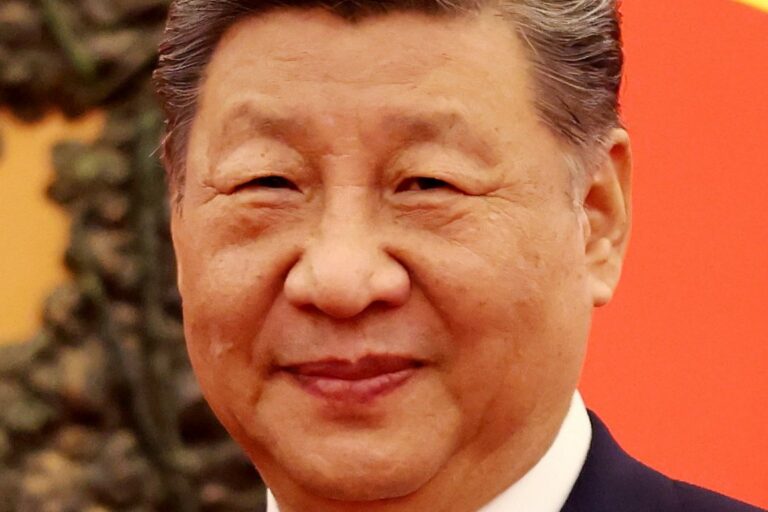
At last week’s APEC summit in Shenzhen, President Donald Trump voiced opposition to what he called “globalist” regulation of artificial intelligence, while President Xi Jinping called for deepening international co-operation. The split underscored a growing reality: as the United States and China race for AI supremacy, middle powers like Canada are refusing to pick a side.
The Rivalry Hardens
The contrast between the two approaches was on full display in Shenzhen. While the U.S. retains technological superiority at the frontier of AI research, the gap with China has disappeared entirely when it comes to industrial applications and models suitable for everyday use, according to Monocle. The competition has already spawned two rival institutions: the U.S.-led Pax Silica initiative, focused on AI and supply-chain security, and the China-led World Artificial Intelligence Co-operation Organization (Waico), which emphasizes governance and has gained traction in emerging markets including Brazil, Ethiopia, Indonesia, and Vietnam. Membership has largely been a binary choice, though Kazakhstan has signed on to both.
A Middle-Power Doctrine
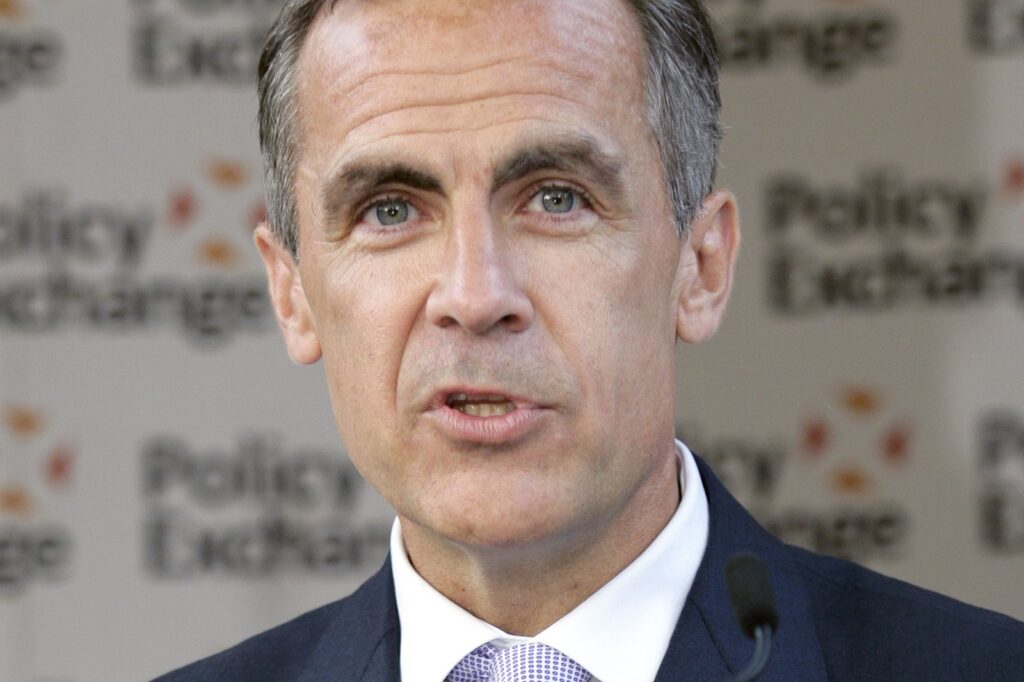
Canadian Prime Minister Mark Carney framed the lack of global AI governance as an existential risk at the summit. He has argued that middle powers must avoid being forced to choose between hegemons and hyperscalers — the massive cloud providers that control the computing infrastructure. In a January speech at the World Economic Forum, Carney declared a rupture in the rules-based order and called on like-minded middle powers such as Australia, Japan, and South Korea to forge flexible, issue-based coalitions, a strategy he calls “variable geometry.”
Mexico’s President Claudia Sheinbaum echoed the sentiment in Shenzhen, speaking of the need to measure AI’s impacts on inequality and human dignity.
Canada’s Hand to Play
Few countries are better positioned to test this theory than Canada. The country possesses abundant energy, sovereign funds dedicated to computing power investment, and a thriving research community, according to the Council on Foreign Relations. Think of it like having the raw ingredients — land, power, and capital — to build your own kitchen, rather than always having to order takeout from a foreign giant.
The recipe for modern AI was largely written in Canadian labs. Geoffrey Hinton and University of Toronto researchers demonstrated the viability of deep learning. Yoshua Bengio’s work at the University of Montreal improved neural network performance through breakthroughs in next-word prediction and attention. And AlexNet, built by Hinton, Alex Krizhevsky, and Ilya Sutskever, demonstrated the power of graphics processing units for image recognition. Those advances helped enable the wave of innovation that led to today’s large language models.
The Commercialization Gap
Here’s what it means in plain terms: Canada invented the core technology, but U.S. companies captured the commercial value. The commercialization of those breakthroughs has been driven primarily by American firms acquiring Canadian research ventures and intellectual property, and recruiting Canadian-trained researchers. Canada was the first country to produce a national AI strategy in 2017, but has changed course frequently since, most recently tabling a risk-based framework in 2022 that edged toward the European regulatory model.
The practical upshot is that sovereign computing capacity — the ability to train and run models on domestic infrastructure — is now the lever that lets a middle power say “no” to unfavorable terms. Carney’s bet is that variable geometry, Issue by issue, coalition by coalition, lets smaller nations shape the standards that will govern the technology they helped create.
Sources
- The US and China are racing for AI leadership – but the final say might rest with middle powers
- Middle powers had a middling moment
- Canada's AI Playbook: How a Middle Power Can Rely Less on U.S. Tech Giants | Council on Foreign Relations
- The Rings of Power Season 3 Ending Explained With Showrunners J. D. Payne and Patrick McKay
- ‘The Rings of Power’ Just Set Up Season 4's Darkest Chapter for Númenor
- The Lord of the Rings: The Rings of Power Season 3 finale ending explained: Why does Sauron surrender to Pharazôn?
Photo: Policy Exchange (CC BY 2.0)