
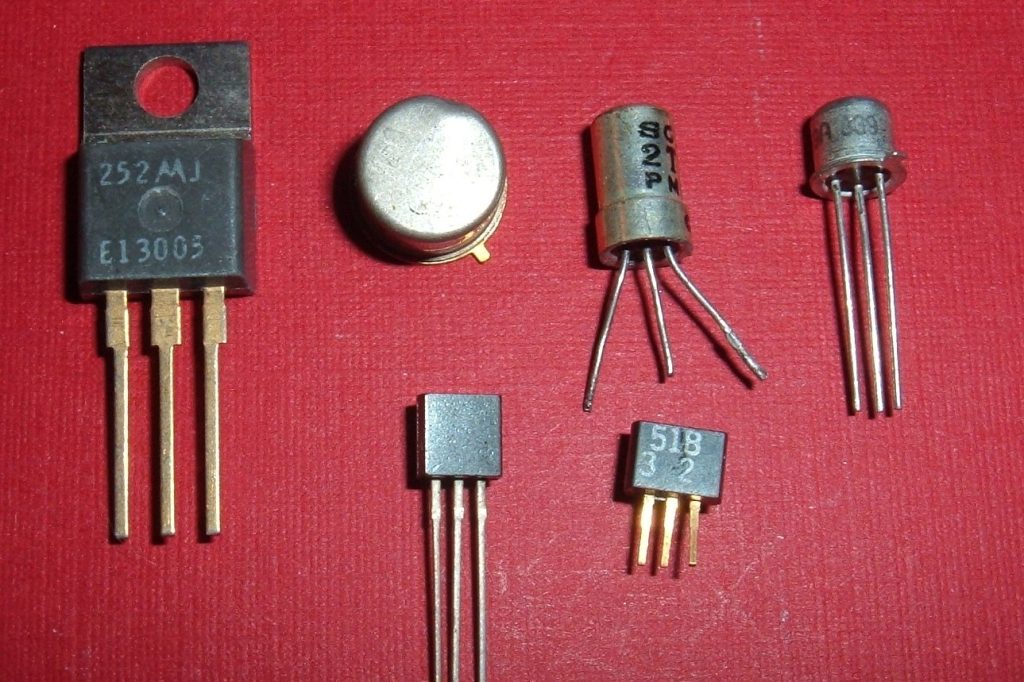
New Delhi, September 26 — The story of the semiconductor is, at its heart, a story of compounding. It began in December 1947, when John Bardeen and Walter Brattain at Bell Labs in Murray Hill, New Jersey, demonstrated the first working point-contact transistor. Their colleague William Shockley invented the more manufacturable junction transistor the following year.
The three shared the 1956 Nobel Prize in Physics. Jack Kilby of Texas Instruments built the first integrated circuit in 1958.
Robert Noyce of Fairchild Semiconductor developed a silicon-based version using planar technology in 1959. Then, in 1965, Gordon Moore — later a co-founder of Intel — published an observation that the number of components on a chip doubled roughly every year, later revised to about every two years. Moore’s Law was born.
Intel was founded in 1968 by Noyce and Moore, and in 1971 introduced the 4004, the first commercially available single-chip microprocessor. The 1980s saw the rise of Japanese manufacturers such as NEC and Toshiba, prompting the 1986 U.S.-Japan Semiconductor Trade Agreement.
In 1987, Morris Chang founded Taiwan Semiconductor Manufacturing Company (TSMC), pioneering the pure-play foundry model that separates chip design from manufacturing. The Netherlands-based ASML, founded in 1984, became the sole supplier of extreme ultraviolet (EUV) lithography machines, essential for producing chips at the most advanced nodes. The 1990s and 2000s saw the rise of fabless design firms such as Qualcomm (founded 1985) and Nvidia (founded 1993), which initially focused on graphics processing units.
In 2020, Nvidia’s GPUs became central to training large AI models.
The policy scramble
The U.S. CHIPS and Science Act, signed into law in August 2022, authorized roughly $280 billion in funding, including $52.7 billion for semiconductor manufacturing, research, and workforce development. In October 2022, the U.S. imposed export controls restricting China’s access to advanced chips and chipmaking equipment, and in October 2023 tightened those controls. The Netherlands and Japan implemented similar export restrictions in 2023.
In 2023, TSMC announced plans to invest $40 billion in Arizona, later increased to $65 billion, while Intel announced expansions in Ohio and Arizona. China’s largest chipmaker, SMIC, remains years behind leading-edge producers.
The global chip shortage of 2020-2023, driven by pandemic-related demand shifts, disrupted automobile production and cost the auto industry an estimated $210 billion in 2021 revenue, according to AlixPartners. In 2022, the U.S. passed the CHIPS Act, and the European Union introduced its own European Chips Act, aiming to double Europe’s share of global chip production to 20% by 2030. In 2024, the U.S. government awarded Intel up to $8.5 billion in CHIPS Act funding and TSMC up to $6.6 billion.
The race now centers on AI accelerators, advanced packaging, and the geographic concentration of leading-edge manufacturing in Taiwan, South Korea, and the United States. For India, the stakes are clear: the country remains a consumer of chips, not yet a producer at scale.
The next chapter will be written in fab construction timelines, export-control revisions, and the pace at which AI demand pulls advanced packaging capacity online.




