
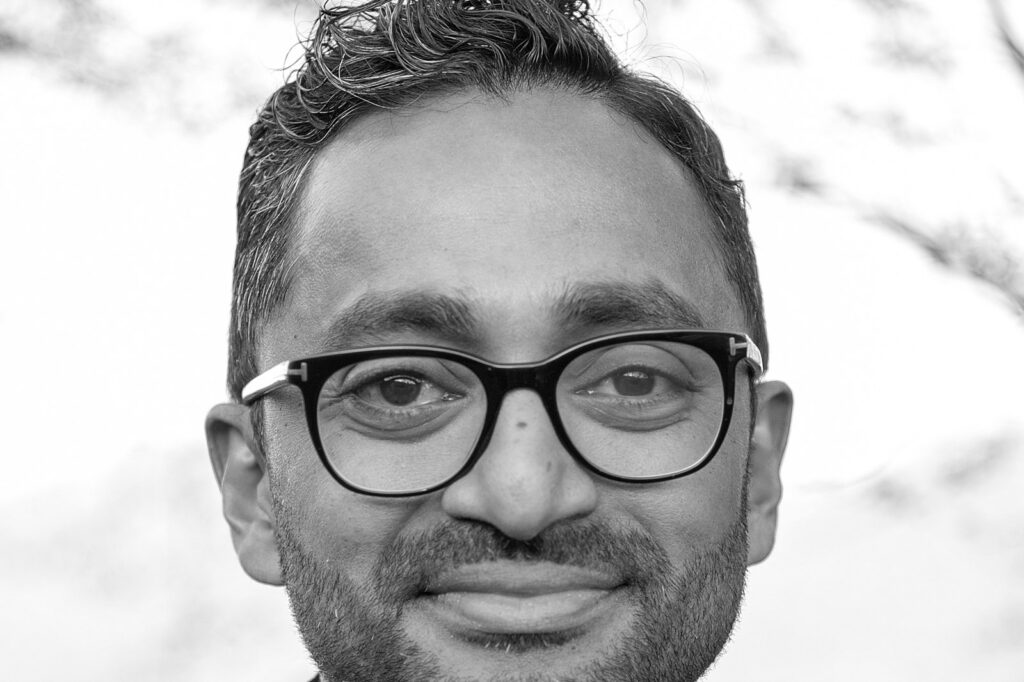
Venture capitalist Chamath Palihapitiya warns that the modern artificial intelligence boom may face hidden vulnerabilities tied directly to how firms generate sales. According to Yahoo Finance, the founder of Social Capital suggests that much of the financial activity within the sector relies on money moving in a loop rather than coming from broad consumer adoption.
The Concentration of Venture Capital
Here’s what it means in plain terms: money is pouring into artificial intelligence at an unprecedented rate, but a massive share of those dollars stays inside the same tech bubble. According to Yahoo Finance, AI and machine-learning companies captured approximately 83% of United States venture funding through September. That figure marks a massive jump from 2015, when those same sectors accounted for just 10% of total venture funding.
Think of it like a small group of people trading the same twenty-dollar bill back and forth at a neighborhood market, making the local economy look much wealthier than it actually is. If Company A sells compute, models, or infrastructure to AI Company B, but Company B survives entirely on venture capital, Company A’s success depends on outside investors keeping the wallet open. The practical upshot is that a slowdown in venture funding could ripple outward and destabilize the entire supply chain.
Defining the Revenue Quality Problem
Palihapitiya describes this phenomenon as a revenue quality issue rather than a traditional circular revenue problem. According to Yahoo Finance, he estimates that 70% to 80% of revenues at artificial intelligence companies originate from other AI firms that rely on venture backing.
This dynamic bears a striking resemblance to the software-as-a-service funding cycle of the early and mid-2010s, according to Yahoo Finance. Back then, enterprise software startups frequently sold subscriptions to other venture-backed startups, creating an inflated sense of market demand that corrected sharply when private financing cooled down.
Industry Giants and Market Skepticism
Even the biggest players in the space acknowledge their reliance on outside financial lifelines. OpenAI closed a record $122 billion funding round in March and is reportedly seeking an additional $30 billion at a $1.4 trillion valuation, according to Yahoo Finance. However, the organization has disclosed to investors that its heavy dependence on Microsoft for financing and compute creates a distinct business risk.
Other financial institutions are urging caution as the market expands. Bill Eigen of J.P. Morgan Asset Management has previously warned investors to monitor slowing capital expenditure and private-market valuations closely, according to Yahoo Finance. Despite these warnings, prediction markets show strong confidence among speculators, with Polymarket bettors assigning only a 17% probability that an artificial intelligence market bubble will burst by June 30, 2027.
Social Delusion and Industry Fanaticism
Beyond financial structures, industry leaders have raised concerns regarding the psychological state of those driving the artificial intelligence sector. Shyam Sankar, CTO of Palantir Technologies, has characterized the widespread hype surrounding the technology as a form of “mass psychosis” and “social delusion.” According to Yahoo Finance, Sankar noted that some researchers possess such extreme faith in the potential of AI to cure diseases like cancer that they have begun smoking to signal their total commitment to the industry’s success.
Sankar argues that these extreme viewpoints, ranging from doomsday predictions to fanatical optimism, distract from the technology’s actual developments and empirical evidence. He maintains that the industry has an obligation to prove AI can strengthen national prosperity and security while ensuring safety is integrated into products from the beginning. This skepticism regarding the current AI narrative contrasts with the high-stakes commercial efforts already underway, such as the collaboration between Tempus AI, Moderna, and Merck to support individualized cancer therapy development.
Sources
- Chamath Palihapitiya Flags ‘Revenue Quality Problem’ in AI, Warns of VC Overdependence — But Crypto Traders See Little Risk of a Crash
- Palantir CTO Says Some AI Researchers Are So Sure It Will Cure Cancer They’ve Started 'Smoking' — Warns Both AI Extremes Reflect ‘Social Delusion’
- Chamath Palihapitiya Flags ‘Revenue Quality Problem’ in AI, Warns of VC Overdependence — But Crypto Trade
Photo: Christopher Michel (CC BY-SA 4.0)




