
Llama.cpp MoE Caching Brings Massive Models to Home Hardware
Recent updates to the open-source library llama.cpp have introduced a GPU caching feature for Mixture-of-Experts models, letting users run massive language models on consumer-grade hardware. For everyday developers tinkering with AI in a home workspace, this means consumer graphics cards can now handle architectures previously restricted to enterprise clusters. According to reports from users experimenting with local setups, this optimization bridges the gap between limited hardware and the growing scale of modern AI research.
At the heart of this capability is a new Least Recently Used caching mechanism implemented in version 0.7.0 of the library. The system keeps a portion of model experts located in system RAM directly inside GPU VRAM, reusing them whenever they are needed for calculations. Any experts not currently in the cache are transferred to the GPU dynamically on demand, while older entries are swapped out using the LRU method. This feature is controlled by the –moe-cache-mib option and supports multiple graphics cards, effectively utilizing whatever combination of VRAM and RAM a user has on hand.
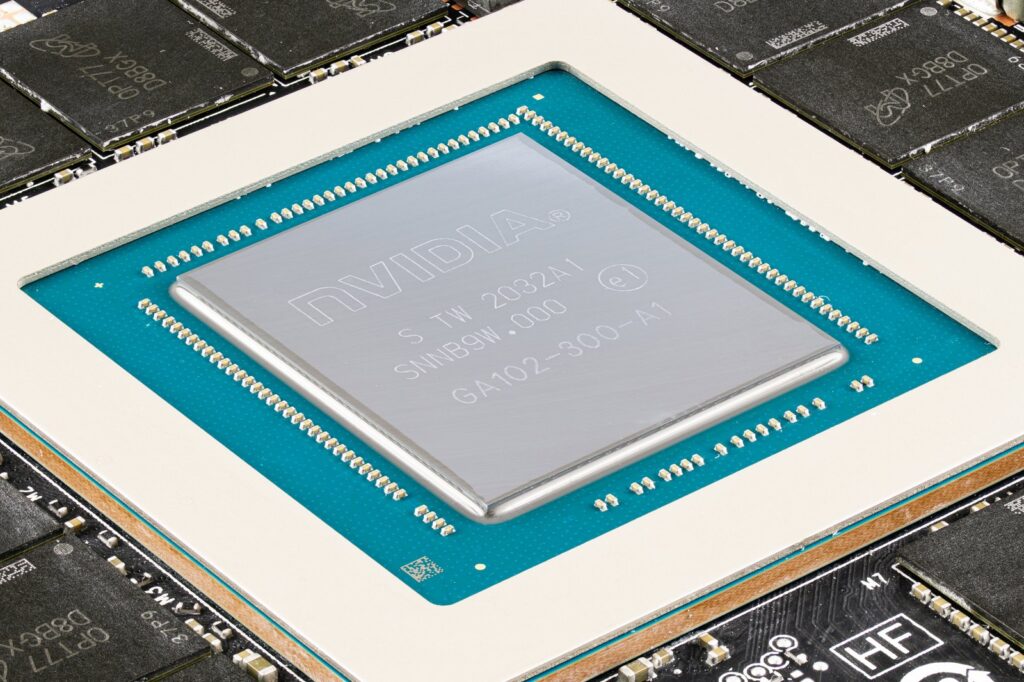
For home developers who want to test these boundaries, the practical results on consumer hardware are striking. Verification on an NVIDIA RTX 3090 card shows that users can speed up execution times for large Mixture-of-Experts models without needing dedicated inference engines like Strata. This optimization unlocks tools like Project Maya, which enables local PCs to run 321B-class GLM language models, and Abyss, which makes 284B-class DeepSeek models operable on standard Windows environments. For developers working outside major corporate data centers, these software advancements expand the range of experiments possible on a single desktop machine.
To understand why this matters for home AI development, it helps to look at the history of the software itself. Developed initially by Georgi Gerganov in March 2023 as a pure C/C++ implementation of Meta’s Llama inference code, llama.cpp was built with strict memory management goals to run efficiently on central processing units without specialized hardware. Over time, the library added support for hardware backends such as CUDA, Metal, and Vulkan, alongside features like partial offloading of model layers to system RAM. As of May 2026, the project has accumulated more than 109,000 stars on GitHub, serving as the de facto standard core for popular local inference tools like Ollama and LM Studio.
Structured Decision Making with SemIf Integration
Beyond local hardware optimization, llama.cpp is being integrated into cloud-based decision-making workflows through Amazon SageMaker AI. A recent deployment guide details how developers can serve quantized models using the AWS Deep Learning Container for llama.cpp. This setup allows applications to route requests or assign policy outcomes by scoring fixed choices rather than generating free-form text. The standard path utilizes the OpenAI-compatible chat completions API, mapping POST /invocations directly to the llama-server endpoint for generated responses.
For scenarios requiring precise probability scores over declared options without decoding an answer token, the runtime can be extended with SemIf, formerly known as OpenJev. Because the standard llama-server HTTP API does not expose final-position logits or state operations required by SemIf, the structured-decision path involves building a child image via AWS CodeBuild. This child image retains the compiled CPU or CUDA libraries from the original container but replaces the entry point with a SageMaker-compatible adapter. The adapter returns option IDs, probabilities, and raw option logits in the same order as the input options, enabling applications to apply thresholds and policy checks without parsing generated prose.
Technical Constraints and Hardware Requirements for MoE Caching
While the new caching feature significantly expands the capabilities of consumer hardware, it does not function unconditionally across all model architectures. This limitation is critical for developers planning their hardware configurations, as the feature is designed to effectively utilize limited VRAM and RAM combinations rather than serving as a universal solution for all MoE structures. Users must verify specific model compatibility before attempting to offload experts to the GPU cache.
The primary advantage of this mechanism is the ability to optimize existing hardware setups before considering the purchase of new graphics cards. By keeping a portion of experts in VRAM and dynamically transferring others from RAM, the system reduces the overhead associated with loading massive models. This approach allows users to increase the number of options they can try with their current hardware, providing a practical reference for determining whether existing GPU and memory configurations are sufficient for running large-scale local language models.
Performance verification on an NVIDIA RTX 3090 demonstrates the practical impact of these optimizations. The testing focused on speeding up execution times for large Mixture-of-Experts models without relying on dedicated inference engines like Strata. This general-purpose approach within llama.cpp allows users to select their preferred supported MoE model, ensuring that the performance gains are accessible through the standard library rather than requiring specialized external tools. The results highlight how efficient memory management can bridge the gap between consumer-grade components and enterprise-scale model requirements.
Performance Verification on Consumer RTX 3090 Hardware
The introduction of the –moe-cache-mib option in llama.cpp v0.7.0 allows for practical performance testing on consumer-grade hardware like the NVIDIA RTX 3090. By utilizing this feature, developers can effectively manage limited VRAM and RAM combinations to run large Mixture-of-Experts models. This optimization provides a way to speed up execution times without requiring dedicated inference engines like Strata, enabling users to increase the number of model options they can experiment with on their existing desktop configurations.
Verification results on an RTX 3090 highlight the utility of this caching mechanism for local AI development. According to reports, the system keeps a portion of experts located in RAM directly inside VRAM, reusing them as needed while using an LRU method to replace older entries. This approach serves as a useful reference for users to determine if their current GPU and memory setups are sufficient for large-scale models, or if further improvements in hardware utilization are possible before considering new equipment purchases.
Sources
- [Weekly GPU News] How to load massive models? From llama.cpp MoE cache to Maya (321B) and Abyss (284B)|yuhmak
- Llama.cpp
- Deploy decision models with llama.cpp on Amazon SageMaker AI | Amazon Web Services
Photo: Fritzchens Fritz from Berlin (CC0)




