WASHINGTON, November 6, 2026 — The shift is here: Democrats have seized full control of Congress, setting the stage for a new era of aggressive federal oversight on artificial intelligence infrastructure. After sweeping the November 3 midterm elections, the party now holds both the House and the Senate, marking the first time since 2023 that one party controls both chambers. This return to unified legislative power comes with a clear target: the sprawling ecosystem of AI data centers and the cloud giants that power them.
The immediate reaction from the market was surprising to many. Rather than panicking over the prospect of stricter rules, investors rallied behind the sector’s heavyweights. Amazon, Microsoft, and Alphabet saw their stocks jump 7.2%, 6.5%, and 4.1%, respectively, in the trading following the election. The logic is not intuitive, but the trend underneath is clear: a divided government creates stability. With President Donald Trump retaining veto power over major legislation, the risk of sudden, chaotic policy swings has dropped. For AI infrastructure, that predictability is a commodity worth buying.
Oversight Replaces Legislation
While the new Democratic Congress cannot easily pass sweeping new laws without facing a presidential veto, it wields a different kind of power: investigative reach. Congressman Robert Garcia of California is set to lead a powerful House oversight committee with the authority to dig into alleged conflicts of interest and corporate corruption. Garcia’s message to the White House and corporate executives was blunt: “Lawyer up.” This is not a path to new statutes, but a path to scrutiny. Committees in both chambers can now launch deep dives into how federal contracts are awarded and how regulatory agencies are staffed.
For the AI industry, this means the focus shifts from what laws are passed to who is watching. The Democratic Congress will shape federal budgets and approve the leadership of key regulators that influence the AI sector. This is where the real leverage lies. By controlling the purse strings and the appointments, the new majority can steer the regulatory environment without needing Trump’s signature on a bill. The friction is expected to be high, but the tools for investigation are ready to be deployed.
The Cloud Giants Under the Microscope
Amazon, Microsoft, and Alphabet face a new reality of regulatory scrutiny on their federal contracts. These companies are the backbone of the AI cloud, and their relationship with the government is now a primary target for congressional review. The investigation will likely focus on market concentration and the sheer scale of their operations. With the House and Senate aligned, there is no longer a partisan gridlock to block the start of these inquiries. The process is designed to proceed regardless of the political temperature in the White House.

The public mood has also shifted in a way that empowers these investigations. There is a growing groundswell of opposition to AI data centers, fueled by concerns over energy use, water consumption, and local property rights. This sentiment was visible on the ballot, with 50 data-center-related measures across 10 states. Many of these measures supported moratoriums or stricter regulations. In Texas, Governor-elect Gina Hinojosa has championed a freeze on data center construction until lawmakers can assess the impact on water, electricity, and air quality. This state-level pressure mirrors the federal trend, creating a multi-layered regulatory landscape that cloud providers must navigate.
Energy and the Texas Factor
Texas is a critical node in this network of scrutiny. According to research firm SemiAnalysis, the state is slated to account for roughly 41% of new data center capacity by 2028. That is a massive concentration of compute power in a single state. With a new Democratic governor and a state legislature that may face similar hurdles as other states like Ohio, Georgia, and Arizona, the timeline for expansion could be delayed until mid-2027. This delay is not just a local issue; it affects the global supply chain of AI hardware and the pace at which new models are trained.
The energy implications are significant. Data centers are power-hungry, and the fight over their footprint is becoming a central issue in American politics. The Democratic Congress will likely use its budgetary powers to influence how federal energy resources are allocated and regulated. This is not about stopping AI, but about managing its physical footprint. The shift is from unchecked growth to managed expansion, a trend that will define the next two years of infrastructure development.
Market Reaction and Investor Logic
The stock market’s initial rally may seem counterintuitive to those who view regulation as a burden. However, analysts suggest that the stability of a divided government is a relief to investors who have been on edge over unpredictable policy changes. The “overshoot” of the rally in cloud stocks reflects a bet that the worst-case scenario of chaotic, unpredictable legislation is less likely than the status quo of slow, steady oversight. Companies with strong business results tend to outperform regardless of the political party in power, and the big tech giants have proven their resilience.
Yet, the compliance costs are real. While the immediate legislative threat is muted by the veto power, the cost of navigating a more aggressive oversight regime will increase. Companies will need to invest in transparency, bias audits, and federal procurement standards to maintain their standing with the government. This is a long-term cost that will be baked into their financial planning. The trend underneath is a move toward a more regulated, transparent, and accountable AI industry, driven by both federal and state pressures.
What Comes Next
The new Congress is set to be sworn in in January, when the real work begins. The first order of business will be the annual appropriations bills, which fund the government and the agencies that regulate AI. This is where the Democratic Congress can exert immediate influence, shaping the budgets of the regulators that oversee the sector. The investigation into corporate corruption and conflicts of interest will likely begin in earnest, with Garcia’s committee leading the charge.
For the AI industry, the message is clear: the era of unregulated expansion is ending. The shift is toward a model where growth is balanced with public accountability. Watch this space, as the first hearings and budget proposals will reveal the specific targets and priorities of the new majority. The next scheduled date for the swearing-in of the 120th United States Congress is January 3, 2027, when the new leadership will take their seats and begin the work of oversight.
Sources
- What Democrats can and can't do with their new power after taking Congress
- Democrats win full control of Congress, ushering in a new era of divided government
- Will Democrats pass Medicare for All? 5 Ideas proposed for new Congress
- What the Midterm Election Results Mean for Your Money
- What Midterms Mean for Your Stocks | The Motley Fool
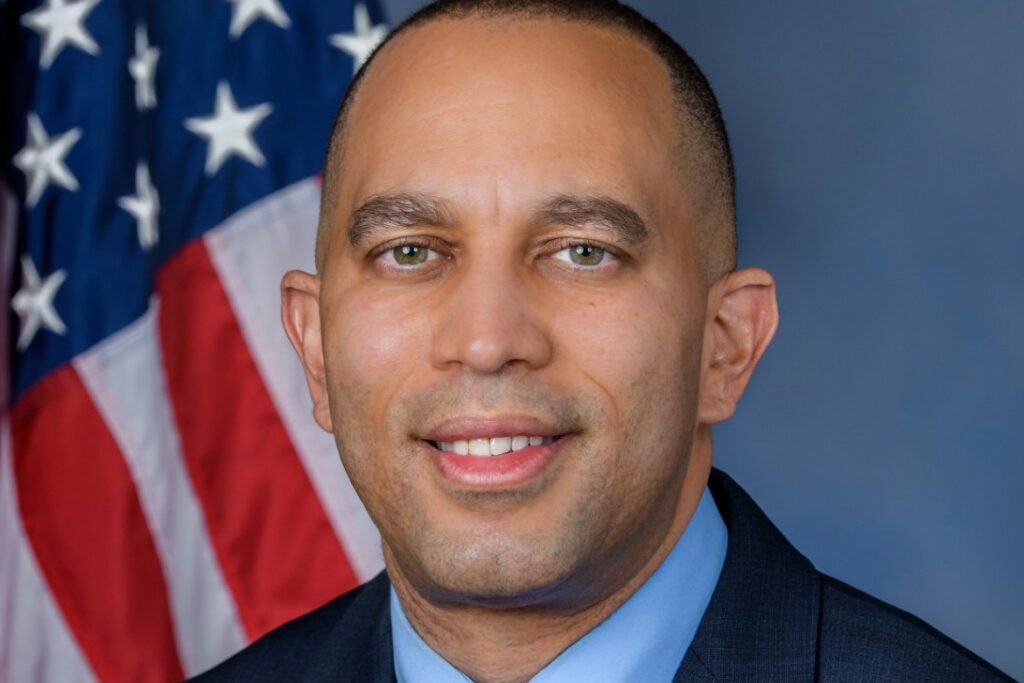
Photo: Office of Representative Hakeem Jeffries (Public domain)