
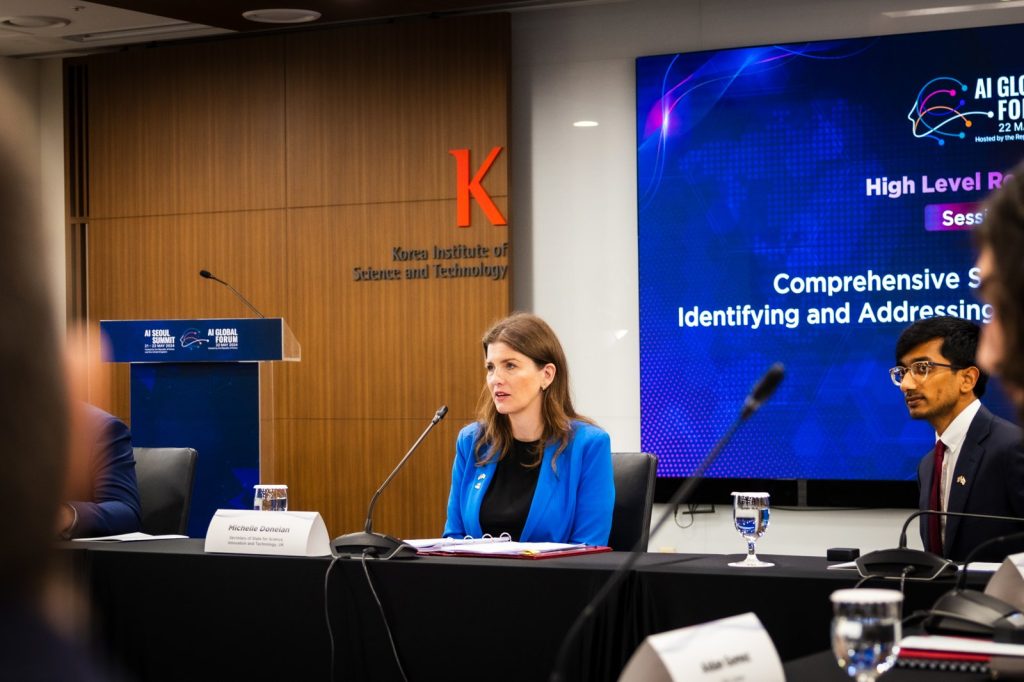
At the AI Seoul Summit on 15 May 2024, representatives from governments and research bodies signed an agreement to launch an international network of Artificial Intelligence Safety Institutes. The alliance brings together institutions from the United Kingdom, United States, Japan, France, Germany, Italy, Singapore, South Korea, Australia, Canada and the European Union, creating a coordinated platform for overseeing the safety of frontier AI models. The notion of dedicated AI safety institutes entered public discourse in 2023, when policymakers highlighted the possible existential threats posed by advanced artificial intelligence.
In response, the United Kingdom and the United States each established national AI safety bodies during the AI Safety Summit held in November 2023. Those entities were tasked with assessing emerging AI systems and developing safeguards to manage the risks linked to their deployment.
Since their inception, the two institutes have undergone rebranding that reflects an expanded remit. The UK’s AI Safety Institute was renamed the “AI Security Institute” in 2025, while the U.S. counterpart became the Center for AI Standards and Innovation (CAISI) the same year. The name changes underscore a shift toward broader security and standards‑setting responsibilities as the field matures.
The newly formed network aims to foster cross‑border collaboration, allowing member institutes to share research, evaluation methodologies and best‑practice guidelines. By aligning standards, the alliance hopes to create a common baseline for testing and certifying AI systems, thereby reducing the likelihood of harmful outcomes while preserving the technology’s benefits.
Cooperation is considered essential because AI development transcends national boundaries; breakthroughs in one country can quickly affect users worldwide. The network’s structure is designed to enable rapid exchange of findings, joint training exercises and coordinated policy recommendations, ensuring that safety measures keep pace with the accelerating pace of AI innovation. Analysts note that the collective effort represents a milestone in the global response to AI risk.
The shared framework is expected to streamline regulatory approaches, support the creation of interoperable safety protocols, and provide a venue for addressing emerging challenges such as model interpretability, robustness against adversarial attacks and the mitigation of bias. Looking ahead, the institutes plan to publish joint standards and conduct regular assessments of frontier models released by major AI developers.
Their work will be monitored by both national governments and international bodies to gauge effectiveness and to identify areas where further coordination may be needed. While the network’s success will hinge on sustained political commitment and the ability to adapt to rapid technological change, its formation signals a clear intent among leading economies to treat AI safety as a shared responsibility. As AI systems become ever more integral to sectors ranging from healthcare to finance, the collaborative model pioneered at the Seoul summit could prove pivotal in steering the technology toward safe and beneficial outcomes.




