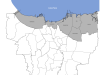
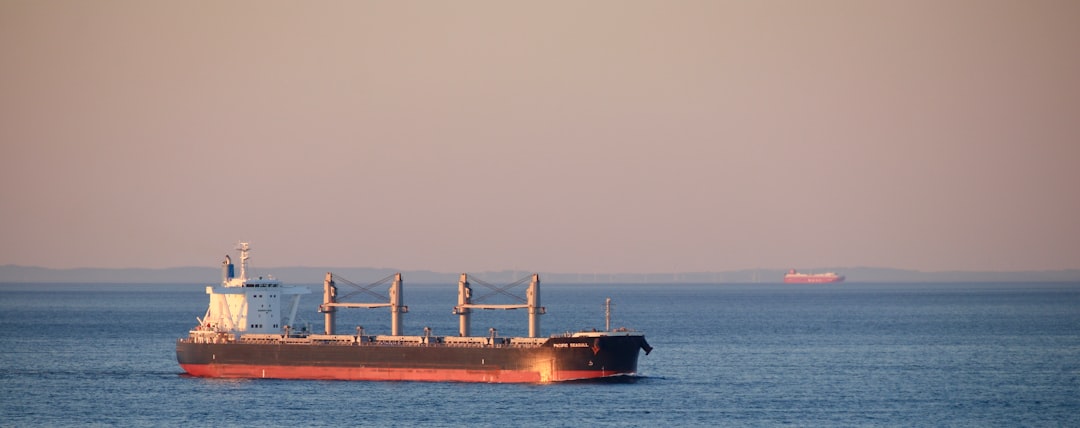
The Strait of Hormuz is 21 miles wide at its narrowest point. That narrow channel carries roughly a fifth of the world’s petroleum. And right now, it is the fuse on a bomb that connects Tehran, Washington, and Jerusalem.
What started as Iranian threats to disrupt oil shipments through that waterway has hardened into something far more dangerous. The United States and Israel are now publicly aligned against Iran’s government, which the West has long treated as a hostile actor. Hezbollah, the Iranian-backed militia in Lebanon, is reportedly preparing for action against Israel. The region’s web of alliances and rivalries is pulling tight.
This is not a new crisis. It is an old one that has finally snapped into open confrontation.
Iran’s strategy has always relied on the Strait of Hormuz as leverage. The waterway is the only exit for oil exports from Iran, Iraq, Kuwait, Qatar, and the United Arab Emirates. Block it, even threaten to block it, and the global economy feels the pressure. Tanker rates spike. Insurance premiums climb. Oil prices lurch upward. That is the lever Iran has been pulling for years.
The difference now is that the United States and Israel appear to have decided the lever must be broken.
Israel’s involvement is the sharp edge here. The two countries share a deep concern about Iran’s actions, but Israel’s calculus is more immediate. Hezbollah sits on its northern border with tens of thousands of rockets. Iran supplies those rockets. For Israel, the threat from the Strait of Hormuz is real, but the threat from Hezbollah is existential. Reports that the militant group is preparing for potential action suggest that the conflict may already be widening beyond the waterway.
The U.S. president has been briefed. His national security team is developing a response. The stated focus is on protecting American interests and maintaining regional stability. But stability is exactly what is slipping away.
No one knows what happens next. That is not a hedging statement. It is the honest condition of a situation that is extremely fluid, with multiple factors moving at once. The alliances in the region are not simple. Iran has proxies in Yemen, Syria, Iraq, and Lebanon. The United States has bases in Qatar, Bahrain, and the UAE. Israel has its own air force and its own red lines. A single miscalculation — a tanker hit, a drone strike, a missile launch — could turn a standoff into a war.
The economic stakes are plain enough. The Strait of Hormuz is a chokepoint. Close it and the global energy supply chain seizes up. But the geopolitical stakes are bigger. This is about whether Iran can continue to use the waterway as a weapon without consequence. The United States and Israel are taking a firm stance. That means consequence is coming.
The question is whether consequence means deterrence or detonation.
Hezbollah’s reported preparations suggest the group expects the latter. If fighting breaks out between Israel and Hezbollah, the Strait of Hormuz becomes a secondary theater. The primary one becomes Lebanon and northern Israel. That is a war that has happened before, and it was brutal.
For now, the Strait of Hormuz remains open. Oil still flows. Tankers still transit. But the threats have been made, the alliances have been activated, and the militaries are posturing. The conflict is unfolding in real time, and the only certainty is that the United States and Israel are not backing down.