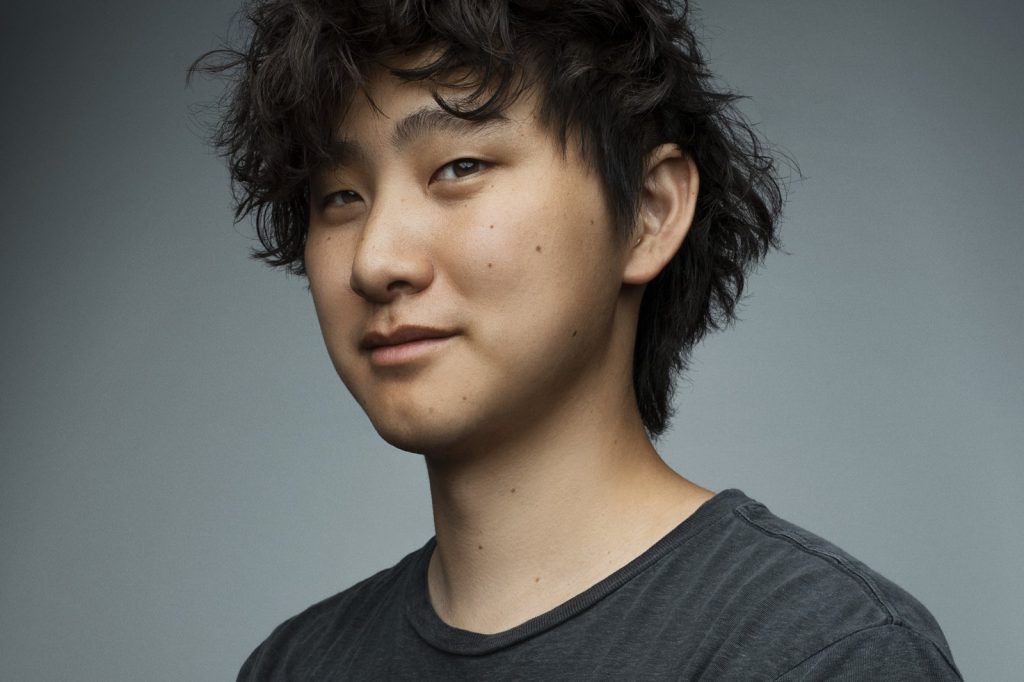
Alexandr Wang is now the man steering Meta’s artificial intelligence rebuild. That is the real story behind Tuesday’s launch of Muse Spark, the first model to emerge from the company’s freshly created Superintelligence Labs. Wang’s appointment, and the $14.3 billion Meta poured into his company Scale AI, explain why this model exists at all.
Meta needed a reset. Its earlier AI efforts had stalled, trailing rivals.
The Scale AI investment was not a side bet. It was the engine. That money bought the talent, the data infrastructure, and likely the architecture that makes Muse Spark different.
The model does not work like a typical chatbot. It runs multiple agents in parallel, each chewing on a piece of a problem, coordinated through something Meta calls Contemplating mode.
That parallel-agent design matters. It is why Muse Spark handles visual STEM problems well. It is why Meta is pitching it for health queries and interactive problem solving.
A single large language model can hallucinate its way through a calculus diagram. A team of agents, each checking the others, has a better shot. The trade-off is speed.
Contemplating mode takes longer. But for complex tasks, users may accept the wait.
Access requires a Meta account. The model is available on the web and inside the Meta AI app. That is a narrow on-ramp for now.
Meta expects to expand it across its other apps — Instagram, WhatsApp, Facebook Messenger. That is where the real user base lives.
Muse Spark inside a chat thread, helping a student with homework or a parent with a symptom, is a different proposition than a standalone web tool. The company has signaled that this is only the beginning. More advanced models are coming.
And notably, Meta has hinted at possible open-source releases. That would be a significant shift. An open-source version of a frontier model, backed by the Scale AI infrastructure, could reshape competition.
It would put advanced multi-agent AI in the hands of any developer, any startup, any researcher. Meta’s history with open-source AI — its LLaMA models — suggests it is serious.
But open source carries risks. A model that handles health queries competently, if released freely, could be used for diagnosis without oversight. Meta will have to weigh that.
For now, the company is focused on proving Muse Spark works at scale. The launch lands in a crowded market.
OpenAI, Google, Anthropic all have capable models. Meta’s bet is that multi-agent parallelism gives it a distinct advantage in reasoning-heavy tasks. STEM education, technical support, medical triage — these are the use cases where a single model falters and a team of agents excels.
If Meta is right, Muse Spark could carve out a real niche. Wang’s role cannot be overstated. He built Scale AI into a data-labeling giant worth billions.
Now he is applying that same discipline to Meta’s entire AI operation. The $14.3 billion investment was not just a check.
It was a takeover of strategy. Wang is effectively running the Superintelligence Labs. His track record suggests he will push for speed and scale, not caution.
What comes next depends on adoption. If users find Muse Spark genuinely useful for complex problem solving, Meta will pour more resources into the Labs.
If it remains a curiosity, the company may pivot. Either way, the model represents a clear signal: Meta is no longer content to follow in AI. It is building its own path, agent by agent.
{“@context”: “https://schema.org”, “@type”: “NewsArticle”, “headline”: “Meta’s $14.3 Billion Scale AI Deal Fuels New Muse Spark Model Launch”, “description”: “Alexandr Wang is now the man steering Meta’s artificial intelligence rebuild. That is the real story behind Tuesday’s launch of Muse Spark, the first model to e”, “datePublished”: “2026-06-09T15:00:00+00:00”, “author”: {“@type”: “Person”, “name”: “InfoPulse Today”}, “publisher”: {“@type”: “Organization”, “name”: “InfoPulse Today”}}