Four people sat inside MRI machines. More than 700 others wore brain-activity recorders. They looked at images, watched videos, read text, listened to podcasts.
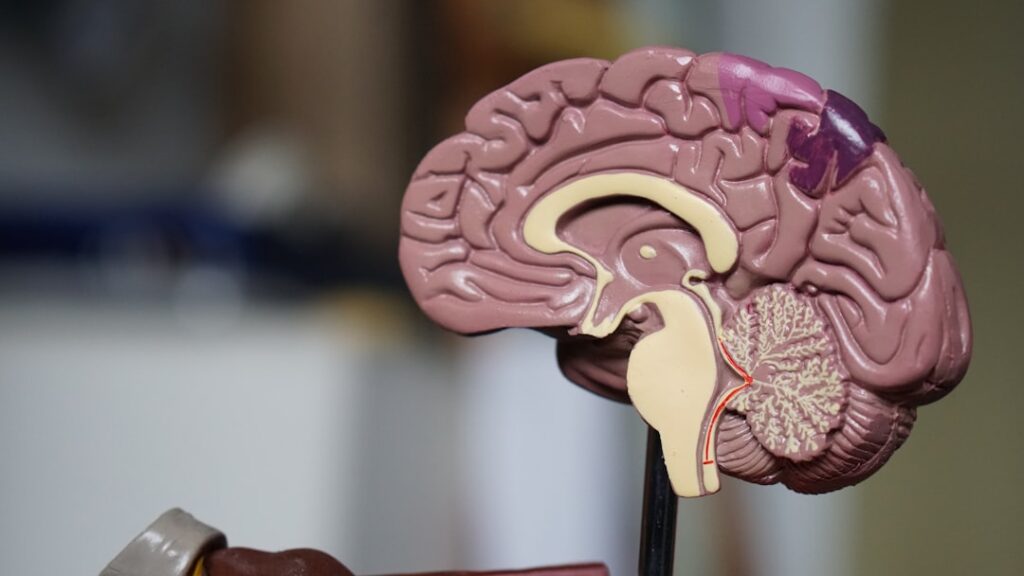
Meta took all that neural data and built an AI that now predicts what the human brain will do when it encounters new sights and sounds. The model is called Tribe v2.
It is not a toy. It forecasts brain activity across whole categories of experience. Meta says the system can even make predictions for languages it was never trained on.
That suggests the model has grasped something fundamental about how perception works — something that holds true regardless of which specific words or images a person encounters. This matters because neuroscience today is slow.
A researcher with a hypothesis about how the brain processes speech or visual scenes must recruit subjects, run experiments, collect fMRI data, analyze results. That process takes months. Tribe v2 could change that.
Meta says the model’s purpose is to help neuroscientists test hypotheses without involving human subjects. A hypothesis can be run through the AI first. If the model’s predictions match what the researcher expects, the experiment has a stronger foundation.
If they do not, the hypothesis may need rethinking — before any human volunteer is scanned. That could accelerate the pace of research significantly.
Scientists could explore more ideas, test more theories, fail faster and cheaper. The cost of fMRI scanning is enormous. The ethical burden of human subjects research is real.
An AI that can pre-screen hypotheses reduces both. But there is a risk buried in this progress.
Tribe v2 was trained on data from a few hundred volunteers. Those volunteers had specific brains, shaped by specific cultures, languages, and experiences. The model’s predictions may work well for people like them.
For people different from them — speakers of unwritten languages, people with neurological differences, children, the elderly — the predictions could be wrong. If researchers rely on Tribe v2 to filter hypotheses, they may unknowingly build a neuroscience that generalizes poorly. Meta’s own finding about cross-language prediction cuts both ways.
It suggests the model has found universal neural patterns. That is a powerful claim.
But it also means the model’s blind spots are invisible. If the training data did not include certain kinds of brains, the model cannot know what it is missing. The privacy question is also real.
Tribe v2 predicts brain activity. It does not read minds.
But the line between prediction and decoding is not fixed. Models that can forecast how a brain responds to a podcast can also, in principle, be inverted — used to infer what someone is hearing or seeing from their neural signals alone. Meta says the model is for research.
But the technology does not care about intent. It works the same way whether a neuroscientist or a surveillance agency runs it. For now, Tribe v2 is a tool for hypothesis testing.
That is a narrow, careful use case. It reflects a growing interest across the tech industry in using AI to model the brain — not just to mimic its outputs, but to simulate its internal processes.
The potential for breakthroughs in understanding cognition and behavior is real. So are the questions about whose brains get modeled, whose privacy gets protected, and who decides what the model is used for. Meta has not answered those questions.
It has built the model. The rest is up to the scientists who use it — and the regulators who may one day need to catch up.
{“@context”: “https://schema.org”, “@type”: “NewsArticle”, “headline”: “Meta’s Tribe v2 AI predicts brain activity across untrained languages”, “description”: “Four people sat inside MRI machines. More than 700 others wore brain-activity recorders. They looked at images, watched videos, read text, listened to podcasts.”, “datePublished”: “2026-06-06T15:00:00+00:00”, “author”: {“@type”: “Person”, “name”: “InfoPulse Today”}, “publisher”: {“@type”: “Organization”, “name”: “InfoPulse Today”}}