
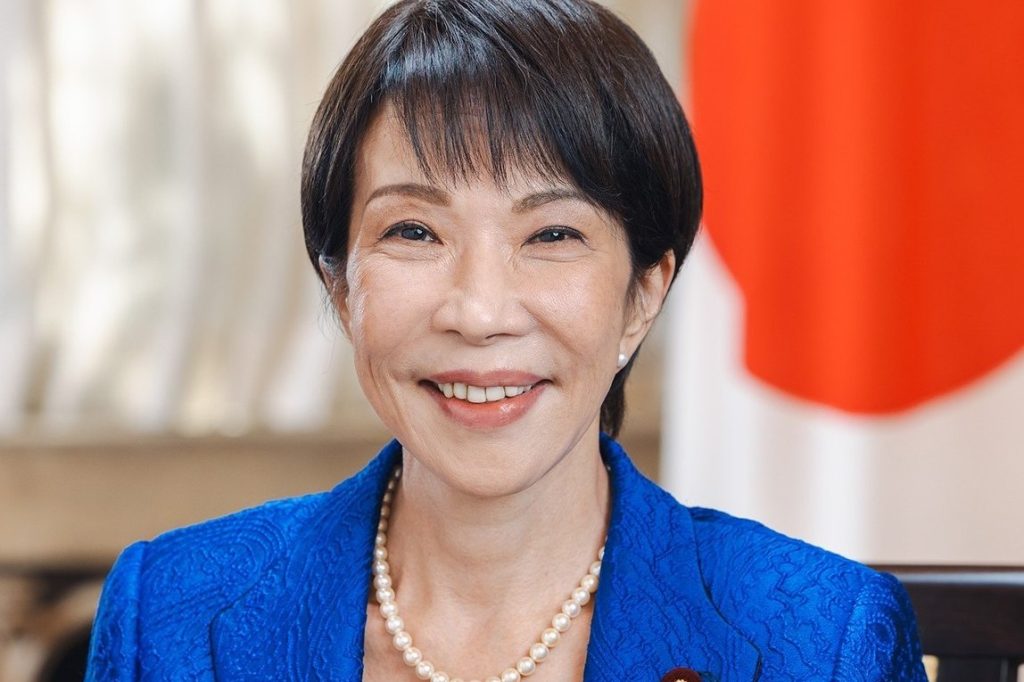
Diplomatic schedules rarely leak by accident. The news that Japanese Prime Minister Sanae Takaichi is weighing a June 13 departure for Britain, Italy, and France lands at a moment when Tokyo’s posture toward Europe carries weight far beyond bilateral pleasantries. Government sources confirmed the planning Wednesday.
The trip is still in the consideration phase. No final itinerary has been set.
But the timing matters. June 13 is three weeks out. That gives European capitals a narrow window to prepare.
It also gives Japan’s domestic political machinery a deadline. Takaichi’s office must lock down meeting agendas, trade talking points, and security protocols fast.
Delays would signal something — either internal hesitation or a shift in priorities. Britain, Italy, and France are not random stops. Each is a G7 member.
Each has defense and technology partnerships Japan is actively courting. Britain and Italy are partners in the Global Combat Air Programme, a next-generation fighter jet project Japan joined in 2022. France hosts major naval bases in the Indo-Pacific, a region Tokyo watches closely.
A prime ministerial visit to all three in one swing suggests Japan wants to deepen coordination on security and supply chains — not just photo opportunities. The trip will be watched.
That is not journalistic filler. Government sources themselves noted the visit “will likely be closely watched.” Why? Because Japan’s European diplomacy has accelerated under Takaichi.
Her predecessor laid groundwork. She is now testing how far those ties stretch.
European leaders will gauge her willingness to commit to joint military exercises, critical mineral deals, and technology-sharing frameworks. Each meeting produces either a joint statement or a vague communiqué. The difference tells the story.
Stakeholders are already calculating. Japanese defense contractors want export guarantees. European automakers want battery supply agreements.
The U.S. — not on the itinerary — will monitor whether Japan’s European pivot complements or complicates the alliance with Washington. That is the subtext of every handshake Takaichi makes.
Domestically, the trip carries risk. A prime minister abroad is a prime minister not managing the budget, not handling the Diet, not visible during domestic crises. If something breaks at home — a natural disaster, a market shock, a political scandal — the optics of a European tour shift fast.
Takaichi’s team knows this. Hence the careful language: “considering,” “expected to start,” “still in the consideration phase.” The escape hatch stays open.
What happens next is straightforward. The Japanese government will confirm or cancel the trip within a week. If confirmed, advance teams will fan out across London, Rome, and Paris.
Schedules will firm up. Briefing books will be written. Local media in each host country will start profiling Takaichi.
The world’s attention, already scattered across multiple crises, will sharpen on one question: What does Japan want from Europe right now? The answer will emerge in the details of the talks — trade numbers, defense pacts, technology transfer terms.
Nothing is decided yet. But the fact that Takaichi is even planning this route tells you Japan sees Europe as more than a diplomatic courtesy call. It sees a partner it needs to lock in.