MADISON, Wis. — The stool DNA test sits in a box. Patients collect a sample at home, mail it to a lab, and wait for results. No scope, no prep, no sedation. That product, Cologuard, is the single most concrete reason Abbott Laboratories is spending roughly $21 billion to buy Exact Sciences Corporation.
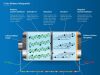
The deal, announced November 15, 2025, pairs one of the world’s largest healthcare companies with a Madison-based molecular diagnostics firm. Exact Sciences built its reputation on that colorectal cancer screening test — the first FDA-approved stool DNA test for the disease. It is a non-invasive alternative to colonoscopy, and it works by detecting altered DNA and blood in the stool.
Colorectal cancer is the second leading cause of cancer death in the United States. Screening rates have long lagged behind what doctors want. Cologuard targets that gap. A patient can do it at home. No time off work. No anesthesia. No driving home afterward. For people who avoid colonoscopies, the test offers a path into screening they otherwise might not take.
Abbott is not buying a one-hit wonder. Exact Sciences has been pushing beyond colorectal cancer into other screening tests and precision oncology tools. The company has built a pipeline of diagnostic products aimed at catching multiple cancers early, when treatment has a better chance of working. That broader portfolio — screening tests for other tumor types, plus tests that help guide treatment decisions — is part of what Abbott is paying for.
Early detection matters because stage matters. A cancer found early is far more treatable than one found after it has spread. Exact Sciences has built its business around that simple fact. The company’s technology looks for molecular signals of cancer in blood or stool, long before a patient feels symptoms. That approach shifts the focus from treating advanced disease to finding it sooner.
Abbott brings scale. The company operates in more than 160 countries. It has manufacturing capacity, distribution networks, and regulatory experience that Exact Sciences, for all its innovation, does not match on its own. The acquisition gives Abbott a ready-made position in molecular diagnostics for early cancer detection — a field that is growing fast as insurers, employers, and health systems push for screening tools that are cheaper and easier than traditional methods.
The $21 billion price tag reflects that potential. It is a bet that the technology Exact Sciences has developed — starting with Cologuard and expanding outward — will become a standard part of cancer care. Abbott is betting that the combination of its global reach and Exact Sciences’ products can change how cancers are found.
Not everyone gets screened now. Many people skip colonoscopies out of fear, cost, or inconvenience. A stool DNA test removes some of those barriers. Cologuard is not perfect — it can miss some cancers and can produce false positives that require follow-up colonoscopy — but it gets more people into the screening pipeline. That alone has value.
The deal is expected to close in the coming months, subject to regulatory approval. If it goes through, Exact Sciences will become part of Abbott’s diagnostics division. The Madison operations will continue, but with the resources of a much larger company behind them.
For patients, the change may be invisible. The test itself will not change. The lab processing it will not change. What could change is how fast new tests reach the market and how widely they are distributed. Abbott has the infrastructure to take a product that works in the United States and bring it to clinics and hospitals around the world.
That is the logic of the deal. A $21 billion bet that catching cancer earlier is worth the investment.