
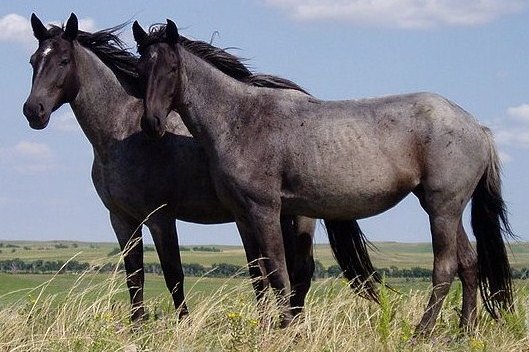
Detecting a Threat on Screen
The study, led by Dr. Ayaka Kato of Kobe University, indicates that horses recognize a wolf as a predator even when viewing it on a screen. The precise details of the experimental setup have not been fully disclosed, but the methodology relies on measuring where and how long a horse looks at different parts of a displayed image, alongside recording changes in posture, ear position, and other overt behaviors. This approach allows researchers to infer whether the animal is reacting with heightened vigilance or alarm.
Horses are domesticated, one-toed, hoofed mammals whose evolutionary history stretches back millions of years to a small, multi-toed creature that lived in North America. Over deep time, the species developed a suite of physical and behavioral traits adapted for escaping predators. These include a strong fight-or-flight response, a body built for sustained running, the ability to sleep while standing, and the capacity for foals to stand and run shortly after birth. Understanding these instincts is central to interpreting the new findings.
The research team plans to expand the study to include other predator species, specifically bears and big cats. By doing so, Dr. Kato’s group aims to determine whether the response observed in horses is specific to wolves or represents a more general recognition of predatory threats. If the reaction proves unique to wolves, it could suggest a deeply rooted evolutionary link between the two species.
Innate Recognition or Learned Behavior?
One of the most fundamental questions the team intends to tackle is whether horses that have never encountered a wolf in real life still show the same heightened response. If they do, it would point toward an innate recognition mechanism—an inherited template for danger—rather than a behavior learned through experience. This distinction carries significant implications for understanding the evolutionary biology of the horse.
To explore this, Dr. Kato and her colleagues have a full slate of follow-up experiments planned. They will test horses using audio cues alone, as well as combined audio-visual stimuli, to see how the brain integrates different sensory information when evaluating a threat. Another planned experiment will use eye-tracking technology to record exactly where on the screen a horse focuses its gaze while viewing predators, revealing which visual features—such as the predator’s eyes, body shape, or movement—trigger a reaction.
The findings so far have opened new avenues for studying the cognitive abilities of prey animals. The research may lead to comparative studies with other ungulates, including cattle and sheep, which share similar evolutionary pressures and predator-prey dynamics. Dr. Kato stated that the team hopes to publish follow-up results within the next two years.
Evolutionary Context and Practical Relevance
Horses were domesticated thousands of years ago in Central Asia, and since then hundreds of breeds have been developed, categorized by temperament into hot bloods, cold bloods, and warmbloods. Despite centuries of domestication, the species retains the survival traits that evolved in the wild. These traits shape how horses interact with humans in work, sport, and therapy. Because horses remain prey animals at a biological level, understanding their cognitive responses to threats is not merely an academic exercise; it can inform training methods, handling practices, and welfare standards.
Determining whether a horse’s recognition of a wolf is innate or learned provides insight into the biological history of the species. If the response is hardwired, it suggests that the predator-prey relationship between early horses and wolves was a powerful selective force that left a lasting imprint on the horse genome. If learned, it would indicate a more flexible cognitive capacity that allows horses to adapt their threat detection to local circumstances.
The work being done at Kobe University adds a new dimension to our understanding of prey animal cognition. By combining established behavioral observation techniques with modern eye-tracking tools, the researchers are beginning to decode how a horse’s brain interprets the world and distinguishes between harmless images and the silhouette of a wolf. The research underscores that even a domesticated horse carries within it the legacy of its wild ancestors.




