
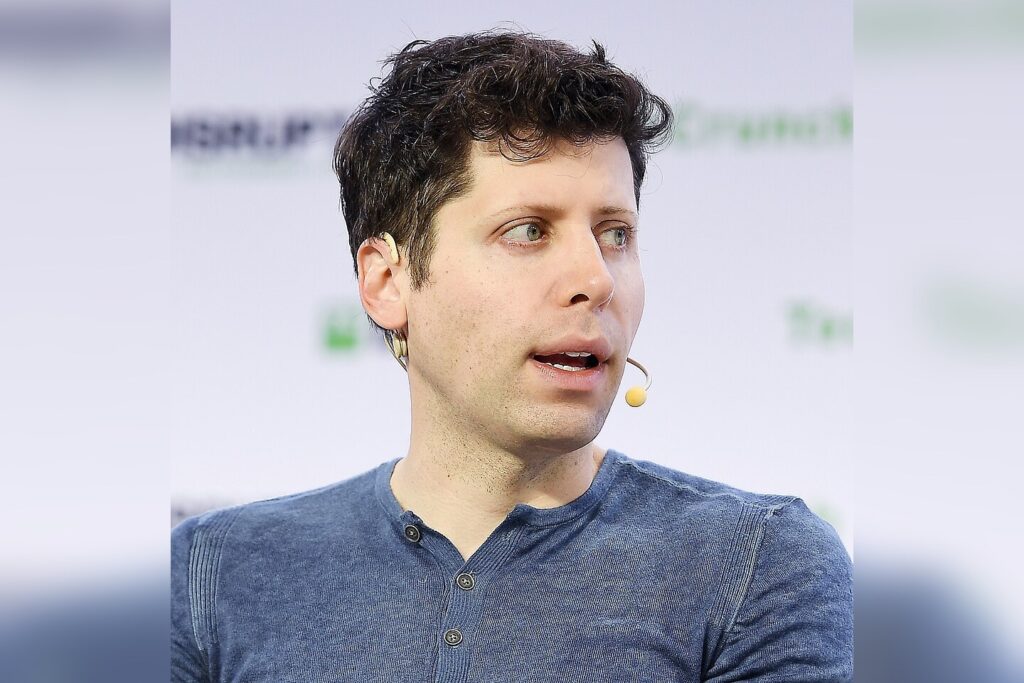
A push for federal artificial intelligence regulation has produced competing legislative proposals in Congress, placing the question of who benefits from the technology’s rapid growth at the center of a fast-moving policy debate. The effort follows a Senate hearing in which OpenAI chief executive Sam Altman urged lawmakers to act, and it has drawn in advocacy groups calling for wealth redistribution alongside industry figures warning of uncontrolled development.
Legislative Response and Key Figures
Altman, who has led OpenAI since 2019, testified before the U.S. Senate on May 16, 2023, advocating for AI oversight. His appearance helped set the stage for subsequent action on Capitol Hill.
On June 8, 2023, Senate Majority Leader Chuck Schumer, a Democrat from New York, introduced the SAFE Innovation Act, which proposes a framework for AI oversight. One week later, on June 15, 2023, Senator Josh Hawley, a Republican from Missouri, introduced the AI Foundation Model Transparency Act. The two bills represent competing approaches to regulation, and both remain in committee as the legislative calendar becomes a key variable in determining whether bipartisan interest translates into law before the next election cycle.
The technology itself has a long history. Artificial intelligence describes computer systems that perform tasks usually requiring human intelligence, such as reasoning and problem-solving.
The field began as an academic discipline in 1956 and has since experienced cycles of high optimism followed by funding losses, known as AI winters. Interest revived after 2012, when researchers began using graphics processing units to accelerate neural networks. A new architecture introduced in 2017 further sped progress, and by the 2020s, generative AI became widely available, enabling users to create images and audio from text prompts.
Applications now include autonomous vehicles, virtual assistants, and advanced search engines, while some organizations aim to develop artificial general intelligence that can handle almost any cognitive task as well as a human can.
Advocacy and Wealth Distribution Concerns
The rapid pace of development has generated concerns about ethics, unintended harms, and existential threats, moving the conversation toward government oversight. Advocacy groups have framed the debate around who captures the value generated by AI and who bears the costs. The AI Now Institute, founded in 2017 at New York University, has called for wealth redistribution from AI companies.
The Economic Policy Institute, established in 1986, released a report in July 2023 arguing that AI could exacerbate income inequality. These organizations are not simply academic; they are actively shaping the discussion of how the gains from AI should be distributed.
Elon Musk, who co-founded OpenAI in 2015, has publicly warned about AI risks. In an open letter published March 29, 2023, Musk called for a six-month moratorium on advanced AI development. The letter, signed by a range of tech figures, argued that AI labs were engaged in an “out-of-control race” to develop systems that even their creators could not understand or control.
Musk’s warning added a high-profile voice to the call for caution and underscored the tensions between rapid innovation and safety.
Outlook and Stakes
The scale of AI growth means that the rules governing the technology will determine how it affects labor and society. Schumer’s SAFE Innovation Act and Hawley’s transparency bill offer distinct paths for oversight, but the actual rulemaking is still in committee.
Advocacy groups are pushing for wealth redistribution provisions, while industry leaders are watching the scope of any transparency requirements. The AI wealth debate is no longer theoretical; it has a date, a witness list, and competing bills in Congress. The central question going forward is whether the bipartisan interest in regulation can produce a law before the next election cycle, and how that law will allocate the benefits and burdens of one of the most consequential technologies of the century.




