
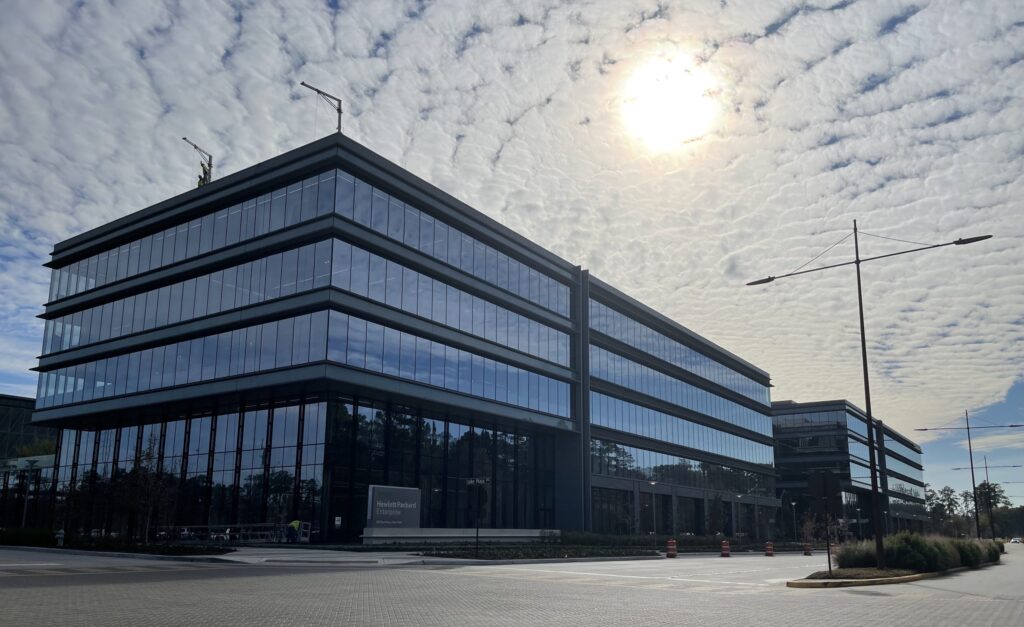
Hewlett Packard Enterprise and Kamiwaza Corp. are betting that the next big shift in artificial intelligence won’t be about training bigger models. It will be about making them run faster in real-world use. That’s the inference era — and it demands a different kind of data center.
The two companies announced their approach on June 22 in New York. The core idea: organizations need a mix of CPU and GPU platforms to handle everything from basic application hosting to complex agentic orchestration systems.
Think of it as an AI factory, purpose-built for production work, not just experiments. This is a marked change from the last few years. Most AI infrastructure talk centered on training massive models — throwing thousands of GPUs at a problem for weeks.
Inference, the process of actually using a trained model to make sense of new data, was almost an afterthought. No longer.
Robin Braun, HPE’s vice president of AI business development for hybrid cloud, laid out the problem plainly. Many organizations are drowning in the noise surrounding the IT stack. They cannot see clearly enough to improve inference speed.
Braun spoke with theCUBE’s Rob Strechay as part of HPE’s “Unleash AI Momentum” series. “People are trying to find the signal in the noise; they’re trying to use their data to improve their efficiency … to improve their business,” Braun said. That search for signal is what drives the shift.
Companies have spent heavily on data collection and model training. But the payoff comes when a model actually answers a question, spots a pattern, or automates a decision in seconds — not hours.
That is inference. And it is hard to do at scale. The challenge is not just technical.
It is organizational. Enterprises need governance, security, and the ability to move from pilot projects to full production without breaking things.
They need an infrastructure that does not treat inference as an afterthought bolted onto a training cluster. HPE and Kamiwaza are proposing a different architecture. One that blends CPU and GPU resources flexibly.
Static workflows — say, a monthly report — sit alongside agentic systems that react to events in real time. The data center becomes a factory floor where every compute cycle is aimed at producing intelligence, not just crunching numbers. This matters because the volume of data is not slowing down.
Companies that cannot unlock the full potential of their data will fall behind. Braun stressed that inference is the key to that unlocking.
It is the step where raw information becomes actionable insight. “That’s where inference comes in — just trying to use that to get at the data,” he said. The practical upshot for businesses is straightforward: faster inference means better decisions, faster.
A retailer can adjust pricing in real time. A hospital can flag a critical scan result immediately.
A manufacturer can predict a machine failure before it happens. None of that works if the infrastructure is slow, brittle, or insecure. The HPE-Kamiwaza vision is for a production-ready enterprise AI stack that handles those demands out of the box.
It is a bet that the next wave of AI value will come not from building ever-larger models, but from deploying the models we already have with speed and reliability at scale. That bet reflects a broader maturation of the AI industry. The hype around foundation models is giving way to hard questions about deployment, cost, and return on investment.
Inference is where those questions get answered — or not.
{“@context”: “https://schema.org”, “@type”: “NewsArticle”, “headline”: “HPE and Kamiwaza target inference era with mixed CPU-GPU data centers”, “description”: “Hewlett Packard Enterprise and Kamiwaza Corp. are betting that the next big shift in artificial intelligence won’t be about training bigger models. It will be…”, “datePublished”: “2026-06-22T07:51:00+00:00T09:30:00+00:00”, “author”: {“@type”: “Person”, “name”: “Noah King”}, “publisher”: {“@type”: “Organization”, “name”: “InfoPulse Today”, “url”: “https://newsfeed.infopulsetoday.com/”}}




