
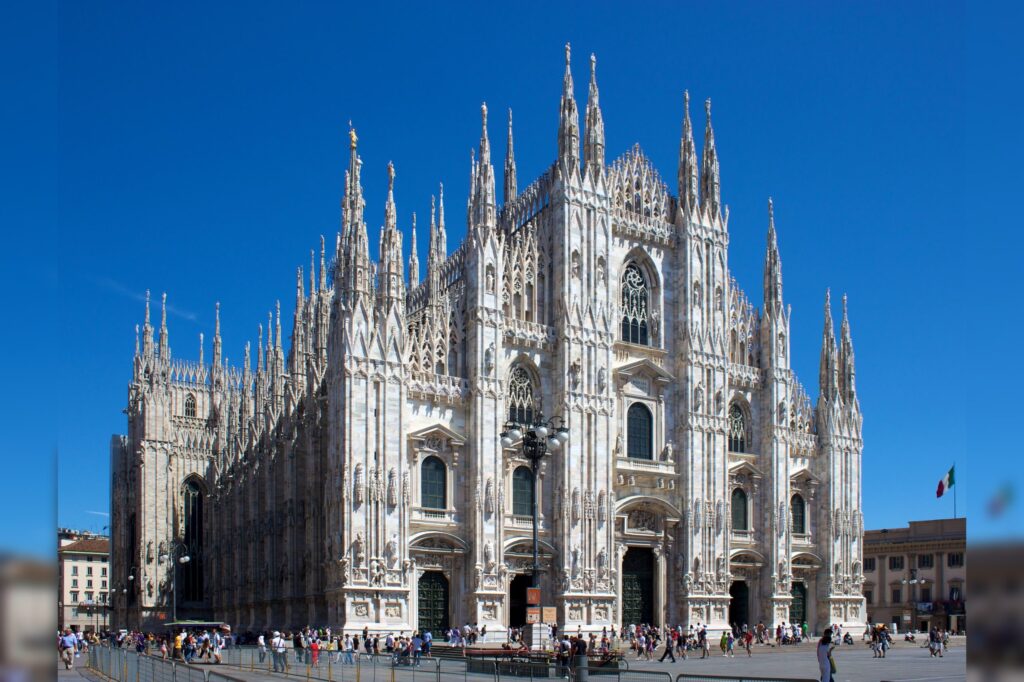
Milan Design Week 2026 was the backdrop for a live recording that could reshape how architects think about their own past. The second episode of the Room For Dreams podcast, produced with INDX|GLOBAL, brought architects Arun Sharma and Jaskaran Singh onstage to argue that artificial intelligence might be the best tool yet for preserving regional building traditions. Their concept — the digital vernacular — is still being defined.
But the implications are already spilling beyond the recording studio. Sharma and Singh flipped a common fear on its head.
They do not see AI as a force that flattens local character into a global style. They see it as a system that can absorb regional quirks — the specific patterns, the local materials, the odd ornamental detail that makes a building feel like it belongs somewhere. Feed those into the machine, they argue, and the machine learns from them.
It does not overwrite. It echoes.
This matters because Milan Design Week is itself a kind of pressure cooker for sameness. Every year, the same global firms arrive. The same materials get promoted.
The same aesthetic dominates booth after booth. Sharma and Singh are pushing back, and they are using the very technology many architects fear to do it. The podcast episode wrestled with a question that has haunted the profession for decades: can architecture embrace a digital future without losing its soul?
Their answer was one word: vernacular. Not as a preserved artifact.
As a living language. The consequences are practical, not just philosophical. If the digital vernacular gains traction, small firms in places far from Milan could find themselves with a new kind of leverage.
A studio in Jaipur or Oaxaca or Marrakech could feed centuries of local building knowledge into an AI, then use that same AI to compete with the glass-tower giants. The technology that has driven architectural homogeneity could become the thing that protects difference.
That is the flip Sharma and Singh are proposing. Room For Dreams is only two episodes old. But the format matters.
The podcast records live, in front of an audience. No polished talking points. No rehearsed answers.
Just architects thinking out loud under the pressure of a room full of peers. That rawness gives the conversation an edge.
It also makes the ideas harder to dismiss as academic theory. These are working architects, talking to other working architects, about how to use the tools already on their desks. What happens next is unclear.
The term digital vernacular is not yet standard. Sharma and Singh are still defining it.
But the timing of the Milan appearance was deliberate. The global architecture world converges on that city every year. The same faces.
The same firms. The same creeping uniformity. To stand on that stage and argue that AI — the very force many blame for erasing local identity — can be turned into a preservation tool is a provocation.
It is also a practical bet. If they are right, the next generation of buildings might not all look like they came from the same corporate handbook.
Some of them might actually look like they belong somewhere.
{“@context”: “https://schema.org”, “@type”: “NewsArticle”, “headline”: “Architects at Milan Design Week propose AI as tool for preserving regional building traditions”, “description”: “Milan Design Week 2026 was the backdrop for a live recording that could reshape how architects think about their own past. The second episode of…”, “datePublished”: “2026-06-24T14:04:00+00:00T09:30:00+00:00”, “author”: {“@type”: “Person”, “name”: “Beatrice Ferrari”}, “publisher”: {“@type”: “Organization”, “name”: “InfoPulse Today”, “url”: “https://newsfeed.2bme.xyz/”}}




