
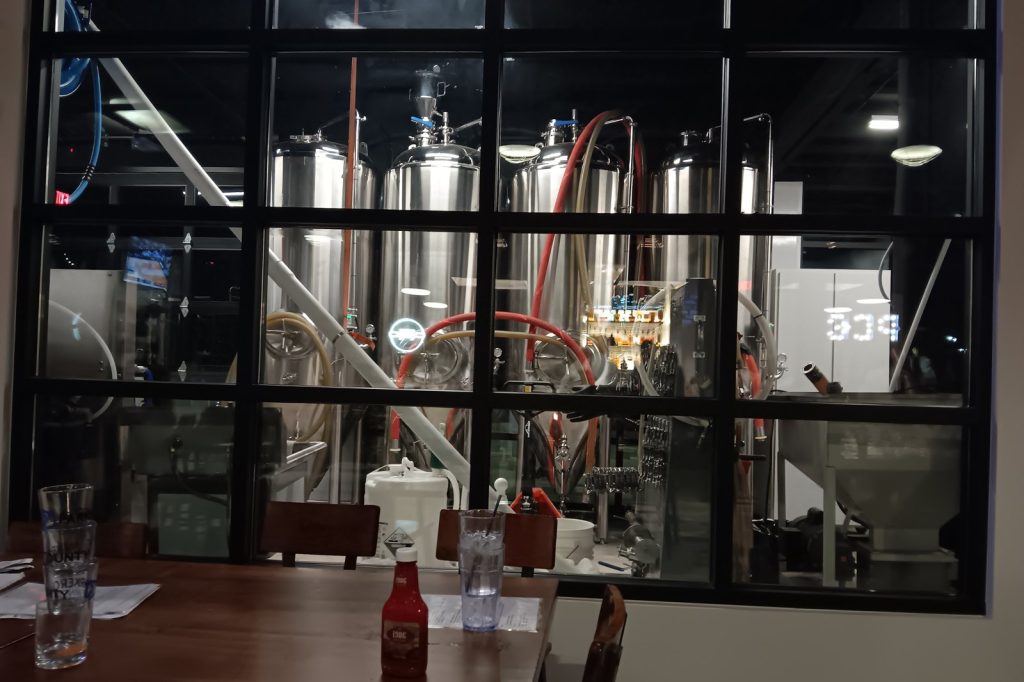
It was a clipboard that caught the eye of the engineers at Atomic47 Labs. Not the stainless steel vats, not the bubbling fermentation broth. The clipboard, with its handwritten temperature logs and pressure checks, represented a bottleneck.
That bottleneck, according to a project announced Monday by Protein Industries Canada, is about to be removed. The partnership, which also includes the Okanagan Valley-based Crush Dynamics, aims to build what they call a revolutionary AI-enabled fermentation platform.
It takes the existing sensors already bolted onto industrial equipment and feeds their data into machine learning algorithms. The result is a system that continuously infers fermentation conditions, food safety indicators, energy performance and process health. In plain terms, the manual readings disappear.
The human adjustments to temperature and pressure disappear. The clipboard disappears.
For Canada’s food processing sector, the implications are blunt. The country’s fermentation industry has long relied on skilled operators who know when a vat is about to turn. That knowledge is valuable, but it is also slow.
It is inconsistent between shifts. It is expensive. The new platform promises to replace that variability with real-time, autonomous control.
Energy consumption is a primary target. Fermentation facilities are energy-intensive operations, requiring precise heating and cooling over days or weeks.
An AI that continuously infers the state of the process can adjust those inputs far more efficiently than a human checking a gauge every hour. The announcement claims significantly reduced energy consumption as a direct outcome. Product consistency is another.
In food manufacturing, a batch that deviates from spec is a batch that gets dumped or sold at a loss. The AI platform monitors fermentation conditions constantly, catching drift before it becomes a problem.
That means less waste and more predictable output. Then there is the question of agricultural byproducts. The project specifically mentions creating new value from these materials.
Fermentation can turn what was once waste — grape skins, fruit pulp, grain husks — into high-value ingredients. The AI system, by optimizing the fermentation process, makes that conversion more economically viable. The Honourable Mélanie Joly, Minister of Industry, framed the announcement in terms of national competitiveness.
She said the project would strengthen Canada’s food supply chain and reinforce the country’s leadership in global food production. The language was about winning, not just surviving.
But the scene on the floor of the Summerland facility was one of cautious optimism. The technology exists. The sensors exist.
The question is whether the industry will adopt it at scale. The project is a test case, a proof of concept.
If it works, the clipboard’s disappearance from one facility could become a pattern across the sector. That pattern would touch not just the companies involved, but the workers who currently fill those clipboard roles. The announcement did not address job displacement directly.
It focused on automation, efficiency and competitiveness. Those are the words that matter in a trade-sensitive economy like Canada’s. What comes next is implementation.
The partners — Crush Dynamics and Atomic47 Labs — have to deliver a working platform. Protein Industries Canada has to show that its investment, made as one of the country’s global innovation clusters, produces measurable results.
The food processing sector has to decide whether to follow. By nightfall Monday, the announcement had already rippled through the industry. The vats are still there.
The stainless steel is still the same. But the way those vats are managed is no longer a question of habit.
It is a question of code.
{“@context”: “https://schema.org”, “@type”: “NewsArticle”, “headline”: “Atomic47 Labs and Crush Dynamics partner on AI to end fermentation data bottlenecks”, “description”: “It was a clipboard that caught the eye of the engineers at Atomic47 Labs. Not the stainless steel vats, not the bubbling fermentation broth. The…”, “datePublished”: “2026-06-24T07:33:00+00:00T09:30:00+00:00”, “author”: {“@type”: “Person”, “name”: “Isabella Moore”}, “publisher”: {“@type”: “Organization”, “name”: “InfoPulse Today”, “url”: “https://newsfeed.infopulsetoday.com/”}}




