
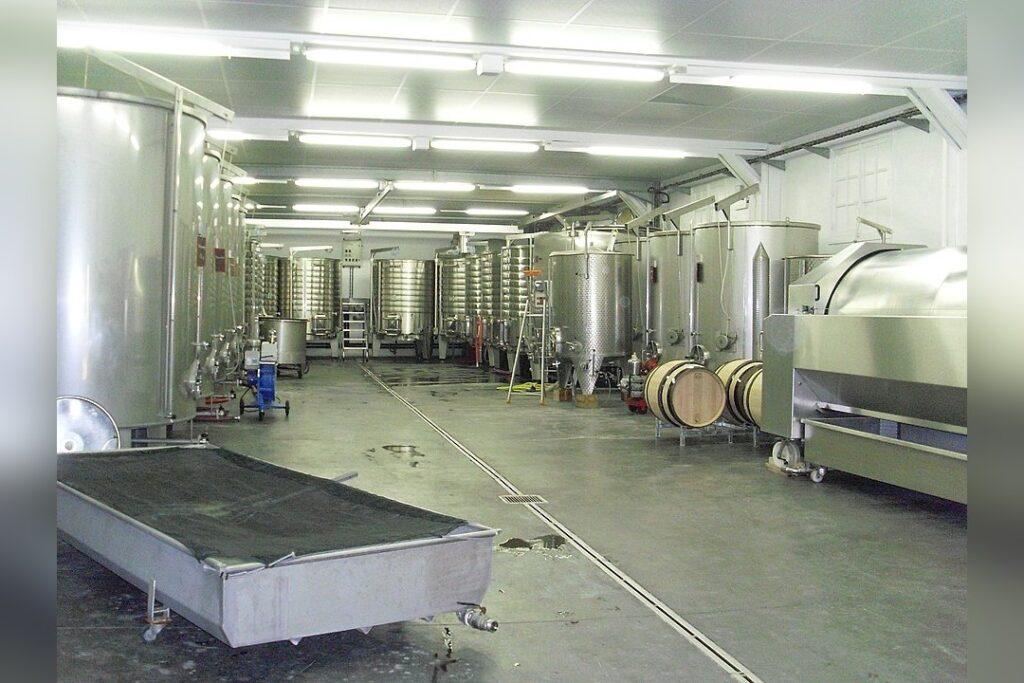
SUMMERLAND, British Columbia — The stainless steel fermentation vats at Crush Dynamics look the same as they always have. What is vanishing is the clipboard. For decades, fermentation has been a hands-on craft.
Workers walked the floor. They took manual readings.
They adjusted temperature and pressure by feel and by schedule. That model is ending here. Protein Industries Canada, a federal innovation cluster, announced a project Monday to replace that human-tended process with an AI-driven platform.
The partners are Crush Dynamics, a B.C. fermentation company, and Atomic47 Labs, a technology firm. Together they intend to build what they call a revolutionary AI-enabled fermentation system.
The technology does not require new hardware. It uses existing industrial sensors. Machine learning software continuously infers fermentation conditions, food safety indicators, energy performance and process health in real time.
The result is an autonomous system. No one needs to walk the floor with a clipboard anymore. This shift did not happen overnight.
Canada’s food processing sector has been under pressure for years. Labour shortages are chronic.
Energy costs are rising. Global competition is intensifying. The federal government has poured money into innovation clusters like Protein Industries Canada precisely to push industries toward automation.
The Summerland project is the latest result of that strategy. “With support from Protein Industries Canada, one of Canada’s global innovation clusters, Crush Dynamics and its partners will use AI-driven innovation to strengthen Canada’s food supply chain and reinforce our leadership in global food production,” said the Honourable Mélanie Joly, Minister of Industry and Minister responsible for Canada Economic Development for Quebec Regions.
Joly framed the project in terms of national competitiveness. “Automating industrial fermentation enables Canadian companies to compete internationally,” she said. The potential gains are concrete.
Energy consumption can drop significantly. Product consistency improves. Production efficiency rises.
Agricultural byproducts, often discarded or sold cheap, can be turned into new value-added products. The announcement calls it a new model for smart and sustainable food manufacturing.
Fermentation is not a niche industry in Canada. It underpins everything from beer and wine to biofuels, industrial enzymes and plant-based proteins. The Okanagan Valley, where Crush Dynamics operates, is already a hub for fermentation-based agriculture.
The region grows grapes, apples, cherries and tree fruits. Much of that harvest goes into fermented products.
The new AI platform could change how those inputs are processed. The technology works by learning the specific behavior of each fermentation batch. Sensors feed data into machine learning models.
The models predict when a batch will finish, when contaminants might appear and when energy use is wasteful. The system then adjusts conditions automatically. No human intervention is required.
That is the promise, at least. The project is still in its early stages.
The announcement Monday was a launch, not a completion. But the direction is clear. Canada’s food supply chain has been a focus of federal policy for years.
The pandemic exposed vulnerabilities. Border closures and labour shortages disrupted processing plants.
The government responded with money for automation and digitization. The Summerland project is part of that wave. For Crush Dynamics, the shift is existential.
The company processes agricultural byproducts into high-value ingredients. Its products go into food, beverages and cosmetics. Manual fermentation management limits scale.
An autonomous system could unlock larger production runs and new product lines. For Atomic47 Labs, the project is a chance to prove that industrial AI can work outside of clean rooms and data centers.
Fermentation vats are messy. Conditions change unpredictably. Microbes are living things.
If machine learning can handle that, it can handle a lot of industrial processes. The announcement rippled across Canada’s food processing sector by nightfall.
In boardrooms and on plant floors, the question is the same: How fast will the clipboard disappear?
{“@context”: “https://schema.org”, “@type”: “NewsArticle”, “headline”: “Canadian fermentation facility replaces manual clipboard readings with AI system”, “description”: “SUMMERLAND, British Columbia — The stainless steel fermentation vats at Crush Dynamics look the same as they always have. What is vanishing is the clipboard….”, “datePublished”: “2026-06-24T07:33:00+00:00T09:30:00+00:00”, “author”: {“@type”: “Person”, “name”: “Noah King”}, “publisher”: {“@type”: “Organization”, “name”: “InfoPulse Today”, “url”: “https://newsfeed.infopulsetoday.com/”}}




