
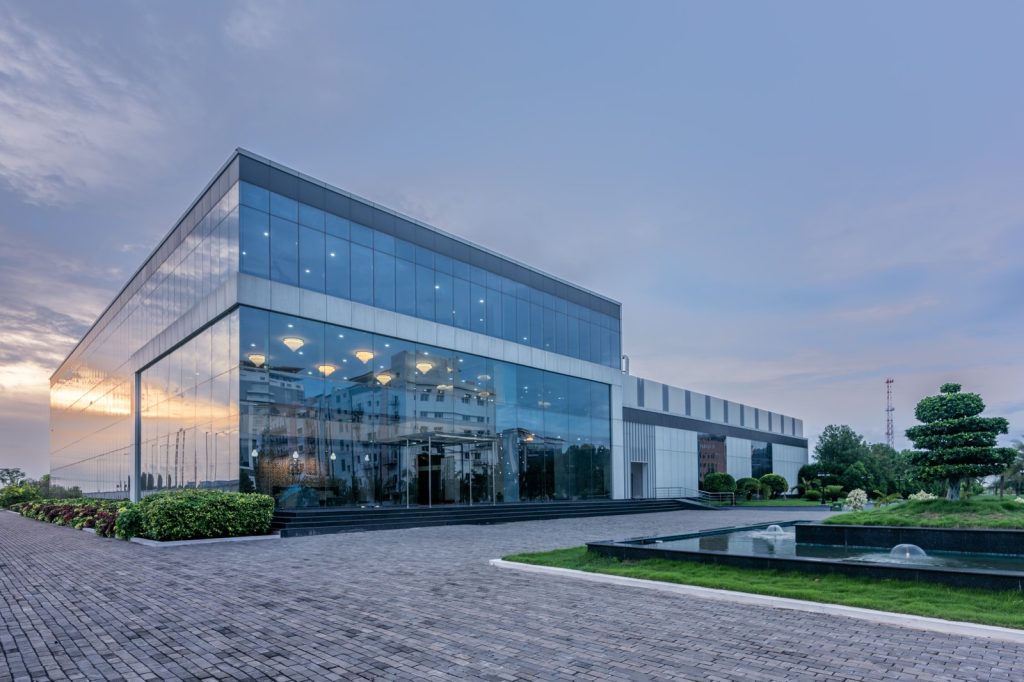
India’s decades-long trajectory as a democratic and technological power now confronts a resource constraint that its architects did not anticipate: water. The country’s ambition to build an inclusive artificial intelligence sector, one where shared compute resources, open datasets and affordable access are central, rests on a physical foundation that is showing strain. A new analysis published by ET Contributors warns that the very infrastructure powering India’s AI boom — data centers — consumes vast amounts of water for cooling, and the cities leading this push are already facing severe shortages.
India’s growth story has long relied on alignment between society, state and market. Its mixed-economy model has allowed public infrastructure, private innovation and social needs to advance together.
In artificial intelligence, that has meant deliberate efforts to keep access affordable and to ensure that the technology works for everyone. But as the analysis makes clear, AI infrastructure is not abstract. It is physical, resource-intensive and tied to local ecosystems.
Data centers, which run around the clock, add a new, inflexible load to water systems already under pressure.
The Water Cost of AI Infrastructure
Hyderabad and Bengaluru, both central to India’s plan to build shared AI compute infrastructure and attract global cloud investment, sit atop water-constrained regions. Hyderabad is on the drought-prone Deccan plateau.
Bengaluru, once known for its network of lakes, now imports water by tanker truck during dry months. These cities are becoming hubs for AI development at a time when water tables are falling across most of India’s agricultural heartland and industrial demand is rising. India’s economic stake in AI is clear.
The country has positioned itself as a low-cost destination for AI research and deployment. That pitch depends on cheap land, reliable power and abundant water.
Two of those three inputs are under strain. Officials have noted that while AI promises inclusive growth — including better crop forecasting, cheaper diagnostics and vernacular-language tools — its physical demands strain local resources. The analysis calls for urgent policy reforms and location-specific planning to balance digital ambitions with sustainable resource management.
The tension is structural. Data centers, which are the backbone of AI computation, require continuous cooling, consuming enormous amounts of water.
The authors of the analysis do not argue against AI investment. They argue instead that the country must plan for where the water will come from before the servers arrive. India has less water than its growth projections assume, and the math is simple: AI needs data, and data centers need water.
Policy Crossroads for Sustainable Growth
The analysis identifies a key question for state governments in Telangana and Karnataka: whether they will begin to condition data-center approvals on water-recycling mandates or the use of alternative cooling technologies. If policy shifts toward such requirements, the market for closed-loop cooling systems and air-cooled servers could see a sharp uptick. For now, the pressure on water resources in these tech hubs is mounting alongside the expansion of data-center capacity.
India’s history stretches back tens of thousands of years, with early human settlements along the Indus River giving rise to advanced civilizations before the emergence of Hinduism, Buddhism and Jainism shaped its cultural and social structures. Over centuries, the subcontinent absorbed diverse linguistic, religious and political influences from successive empires — the Maurya, Gupta, Delhi Sultanate and Mughal eras — each leaving lasting imprints on its identity.
Colonial rule under the British East India Company and later the British Crown reshaped its economy and governance until independence in 1947, when India became the world’s most populous democracy. Today, India is a South Asian nation bordered by the Indian Ocean, the Arabian Sea and the Bay of Bengal, sharing land borders with countries including Pakistan, China and Bangladesh. Its significance in the modern era lies in its role as a global democratic powerhouse with a rapidly expanding technological sector, where historical diversity and modern ambition intersect.
The challenge now facing India’s AI sector — the tension between progress and resource constraints — highlights a broader question that has defined the nation’s development for millennia: how to balance growth with sustainability. The data on falling water tables and rising industrial demand shows that the pressure is not hypothetical.
India’s agricultural heartland is already feeling the effects of over-extraction. Data centers, by operating continuously, introduce a new, inflexible demand on municipal water systems. The analysis published by ET Contributors recommends that urgent policy reforms be implemented, with location-specific planning to ensure that the country’s digital ambitions do not outpace its natural resources. The next steps from state governments will signal whether India’s democratic and inclusive model of AI development can adapt to its physical reality.
{“@context”: “https://schema.org”, “@type”: “NewsArticle”, “headline”: “India’s AI ambitions threatened by water scarcity crisis”, “description”: “BOSTON, June 24 — India’s decades-long trajectory as a democratic and technological power now confronts a resource constraint that its architects did not anticipate: water….”, “datePublished”: “2026-06-24T09:30:00+00:00”, “author”: {“@type”: “Person”, “name”: “Beatrice Ferrari”}, “publisher”: {“@type”: “Organization”, “name”: “InfoPulse Today”, “url”: “https://newsfeed.infopulsetoday.com/”}}




