
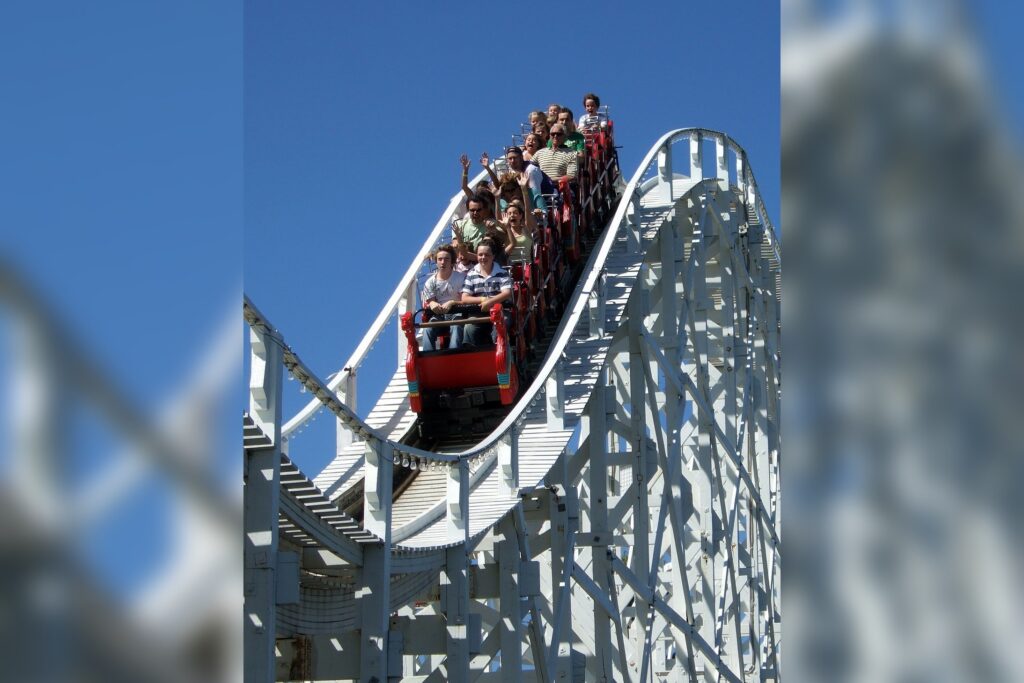
DUBAI — The roller coaster surge came two hours before it happened. The AI saw it coming. Park managers opened a second loading bay.
Waiting times dropped. That pilot test, described by an executive familiar with the deployment, is the closest thing to a proof-of-concept for a quiet technological shift underway at theme parks across the Middle East.
A man with a background in artificial intelligence is behind it, though his name has not been released. His system does not just predict crowds. It predicts what those crowds will want to eat.
Consider the holiday weekend at one park. The algorithm flagged a food stand that was about to run out of a popular item.
A restocking delivery was dispatched before the stand ever went empty. No guest had to ask. No manager had to notice.
The machine had already seen the pattern. The technology works by ingesting data from ticket sales, past visit patterns, local events, and social media chatter. It then forecasts where people will be and when.
Park operators use those forecasts to adjust staffing, open extra ticket booths, or send more food carts to the right spots before the rush hits. The whole thing runs on machine learning.
Think of it as a weather forecast, but for crowds. Theme parks have long relied on historical averages and gut instinct to manage operations. This approach uses real-time data and pattern recognition to make decisions on the fly.
For the visitor, that means less time standing in line and more time on rides. The system does not stop at ride queues.
It also monitors foot traffic through restaurants and retail shops. The same pattern-recognition engine that predicts a roller coaster surge can predict a lunch rush at a burger stand. It can predict which souvenir shop will get crowded at 4 p.m. on a Saturday.
It can predict when a specific flavor of ice cream will sell out. Several parks in the United Arab Emirates and Saudi Arabia have already deployed the technology. The company behind it says it uses anonymized, aggregated data.
It does not identify individual guests. The focus is on patterns, not people.
Privacy questions naturally arise when a system tracks movement through a park. The company’s response is straightforward: no names, no faces, no individual tracking. Just the ebb and flow of the crowd, reduced to data points and probabilities.
The practical upshot for visitors is fewer lines and less waiting. That is the pitch.
Whether the system will expand beyond the Middle East is unclear. For now, it is operating quietly, park by park, adjusting staffing levels and snack deliveries based on what the algorithm predicts. One executive described the pilot where the AI correctly predicted a surge at a popular roller coaster two hours in advance.
That gave managers time to open a second loading bay. The result was a noticeably shorter wait for guests. No magic.
Just math.
{“@context”: “https://schema.org”, “@type”: “NewsArticle”, “headline”: “AI System Predicts Roller Coaster Surge, Reduces Wait Times at Dubai Park”, “description”: “DUBAI — The roller coaster surge came two hours before it happened. The AI saw it coming. Park managers opened a second loading bay. Waiting…”, “datePublished”: “2026-06-26T08:27:00+00:00T09:30:00+00:00”, “author”: {“@type”: “Person”, “name”: “Erika Johnson”}, “publisher”: {“@type”: “Organization”, “name”: “InfoPulse Today”, “url”: “https://newsfeed.infopulsetoday.com/”}}




