
AI becomes the new face of India’s payment push
MUMBAI — The next half-billion users of India’s Unified Payment Interface may never touch a smartphone keypad. That is the bet Dilip Asbe, the head of the National Payments Corporation of India, laid out last month at Mumbai Tech Week 2026. He told TechCrunch that artificial intelligence would drive the next wave of UPI, which already handles over 750 million daily transactions.
That number is massive. But it also creates a problem.
The easy growth is done. Cheap smartphones and cheap data brought in the first wave of users. The next batch lives in villages.
Many have limited literacy. Some have never used a banking app.
AI, Asbe said, is the tool to reach them. NPCI, the central bank, and the government are working together on this. Asbe’s full quote from the interview: “AI will be used very effectively when we look at the next wave of UPI, and that includes all aspects, including reaching new users.” He added that AI must be used “to protect our current citizens, to find fraud, and to fi.” The sentence cuts off in the report, but the intent is clear.
The fraud angle matters. A network that processes three-quarters of a billion transactions daily is a fat target. Criminals follow money.
AI can scan transaction patterns in real time, flag anomalies, and block suspicious activity before a user loses cash. For rural users new to digital payments, that protection is everything.
One bad experience and they are gone. Then there is credit. Asbe mentioned AI would be involved in credit distribution.
That is a quiet revolution. UPI started as a person-to-person payment system.
It became a merchant payment system. Now it is becoming a credit pipeline. AI can assess a user’s transaction history — how much they spend, where, how regularly — and decide if they qualify for a small loan.
No paperwork. No branch visit. Just data.
The target is over a billion daily transactions. NPCI sees that as achievable.
But the path runs through districts where bank branches are rare and internet connections are patchy. AI can work in low-bandwidth environments. It can use voice interfaces for users who cannot read.
It can learn local languages. One consequence is obvious: India’s digital payment share, which has climbed steadily for years, will keep climbing.
Another is less obvious. The same AI tools that onboard new users can also track what they spend money on. That data is valuable.
Who controls it, and how it is used, will become a policy question. Asbe did not address privacy concerns in the interview excerpt. He focused on the upside.
For a network built by a consortium of banks, and overseen by the central bank, the trust equation is different from a private fintech. Still, the scale is unprecedented.
Over 750 million daily transactions means a dataset that grows by hundreds of millions of entries every day. Feeding that into AI systems requires rules. The rural push also changes the merchant side.
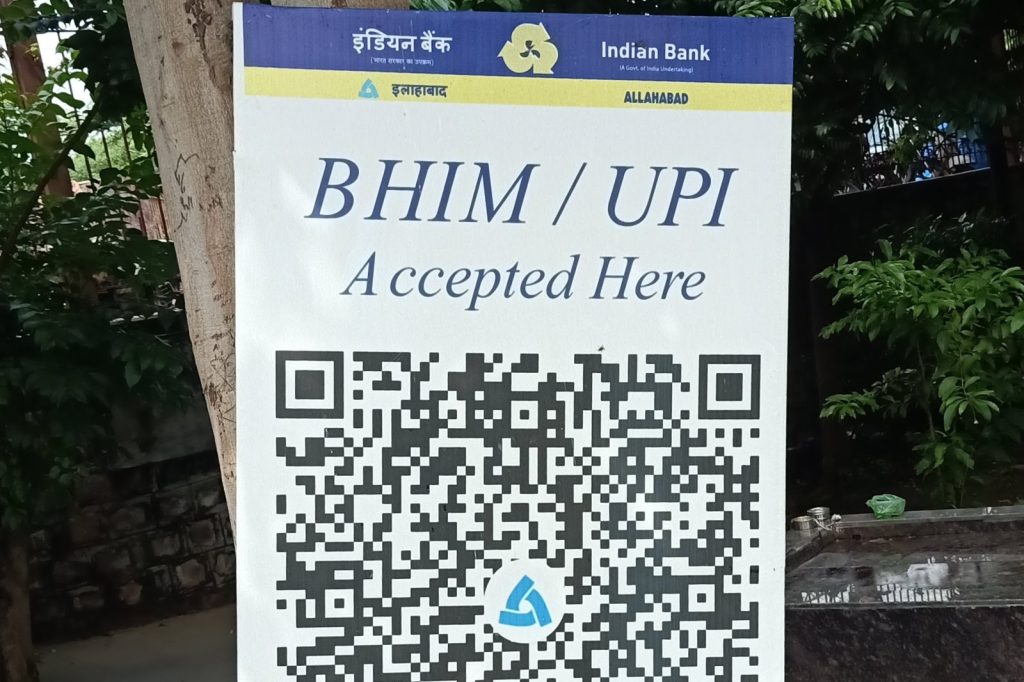
Street vendors who accept UPI today use a printed QR code. Tomorrow, AI could generate dynamic codes that change per transaction, or use facial recognition to confirm identity.
The technology exists. The question is cost and simplicity. For now, the direction is set.
AI is not an experiment for NPCI. It is the engine for the next phase. Asbe’s comments at Mumbai Tech Week were not a vague vision.
They were a roadmap. The numbers — 750 million daily transactions, the goal of a billion, the next half-billion users — are concrete.
The tools to get there are being built.
{“@context”: “https://schema.org”, “@type”: “NewsArticle”, “headline”: “NPCI Chief: AI to Power Next 500 Million UPI Users via Voice and Face”, “description”: “AI becomes the new face of India’s payment push MUMBAI — The next half-billion users of India’s Unified Payment Interface may never touch a smartphone…”, “datePublished”: “2026-06-28T11:46:00+00:00T09:30:00+00:00”, “author”: {“@type”: “Person”, “name”: “Henry Thomas”}, “publisher”: {“@type”: “Organization”, “name”: “InfoPulse Today”, “url”: “https://newsfeed.infopulsetoday.com/”}}




