
Last year, OpenAI’s o3 reasoning model took a law school final and walked away with grades from A+ down to B. That was a shock. This year, its successor, GPT-5.5, sat for the same test.
The result? A shrug.
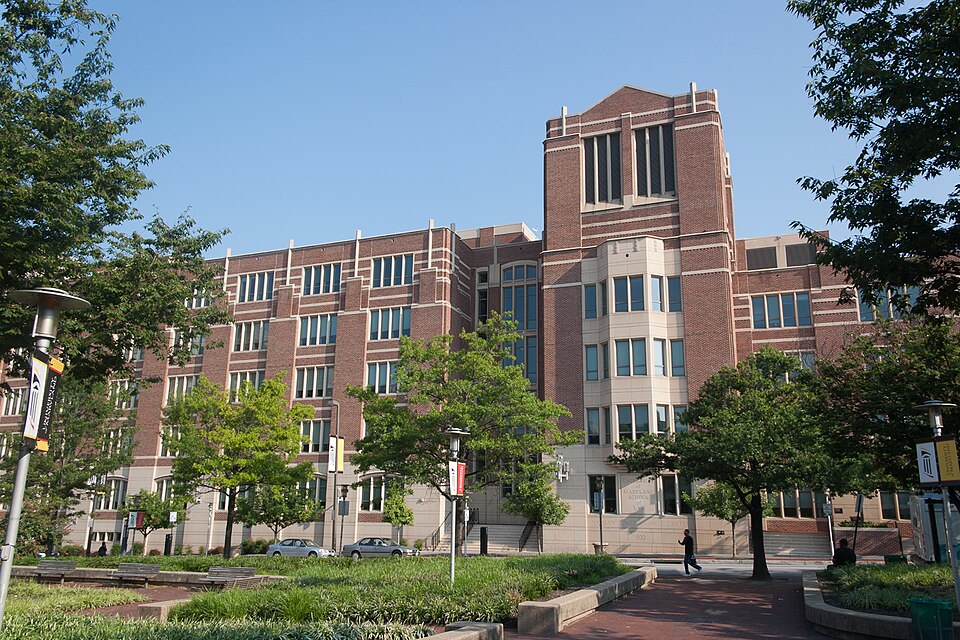
Researchers at the University of Maryland Francis King Carey School of Law ran the experiment a second time. They gave the updated model a fresh set of final exams, graded on the same curve as human students. The newer, supposedly better model did not clearly beat last year’s version.
In some ways, it may have done worse. The finding lands like a cold splash.
For months, the public has watched AI leap from one benchmark to the next. GPT-3.5 could barely string a legal argument together. GPT-4 could draft a memo. o3 passed a bar-style exam.
Each step felt like a revolution. Now, the curve has flattened. The researchers call it a plateau.
Their paper, published this week, notes that “this apparent plateau, despite a better model and using extra-high inference-time compute, may reflect trends observed in other legal benchmarks for AI and makes theoretical sense.” That is careful academic language for: we threw more power at the problem and got nothing back. Compare this to past AI milestones.
In 2020, GPT-3 could write a passable essay but failed basic logic puzzles. By 2022, GPT-4 could pass the Uniform Bar Exam in the 90th percentile. That was a leap.
In 2023, o3 scored well on law school finals. That was another leap.
Now, GPT-5.5 has stalled. The pattern — jump, jump, stall — is not new. It happened with chess engines after Deep Blue beat Kasparov.
It happened with image recognition after ImageNet. Early gains are fast. Later gains are slow.
For legal educators, this matters. The TaxProf Blog covered the study, and law professors are watching.
If AI had kept climbing, they would have to redesign exams, rethink grading, maybe even rethink the purpose of law school. A plateau buys time. But it also raises a harder question: is the wall real, or just temporary?
The researchers are not stopping. They plan to run the experiment again next semester and the one after that.
They will track whether GPT-6 or GPT-7 breaks through or stays stuck. That is the only way to know if the plateau is a ceiling or a rest stop. For families, for patients, for anyone who might one day rely on an AI lawyer: the technology is still learning the law.
It is not there yet. It may not get there next year either. The bar exam is not next.
The wall is.
{“@context”: “https://schema.org”, “@type”: “NewsArticle”, “headline”: “UMD Study Finds GPT-5.5 Matches, Not Beats, Last Year’s AI on Law Exams”, “description”: “Last year, OpenAI’s o3 reasoning model took a law school final and walked away with grades from A+ down to B. That was a shock….”, “datePublished”: “2026-06-29T13:16:00+00:00T09:30:00+00:00”, “author”: {“@type”: “Person”, “name”: “Muhammad Asim”}, “publisher”: {“@type”: “Organization”, “name”: “InfoPulse Today”, “url”: “https://newsfeed.2bme.xyz/”}}




