
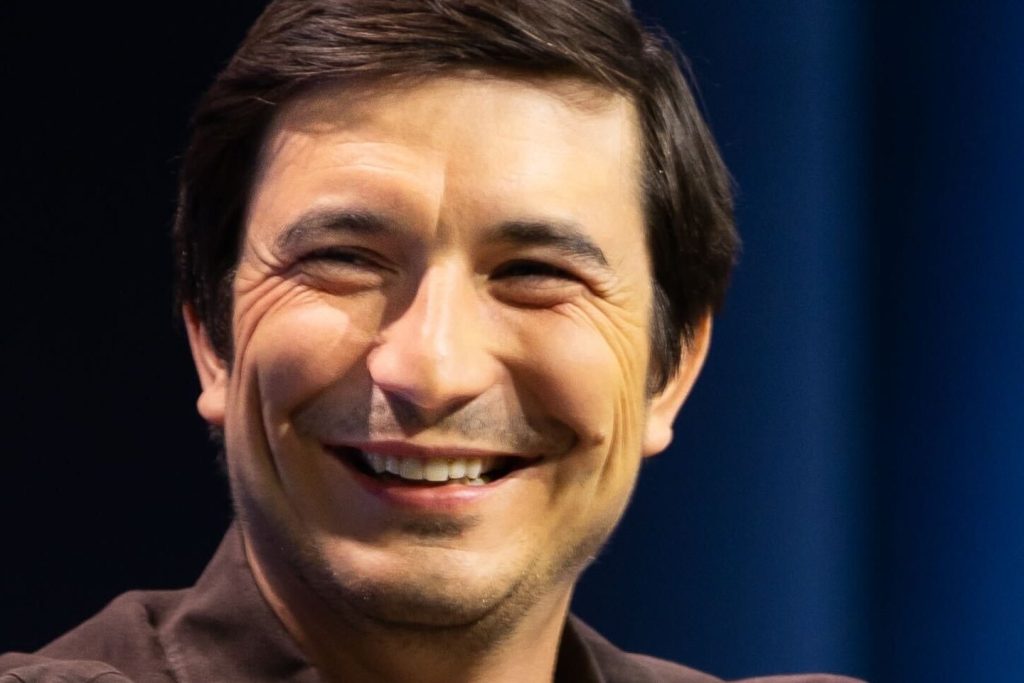
Robinhood Markets, Inc. chief executive Vlad Tenev on Thursday issued his firm’s most definitive forecast yet on the near-term capabilities of artificial intelligence in financial markets, telling investors and the public that AI agents are approaching parity with human traders. During a presentation outlining what Robinhood calls “agentic trading,” Tenev described a system in which AI can execute trades, manage risk, and make decisions in real time without constant human input.
The concept, he said, envisions software that learns and adapts like a person, eventually handling every capital allocation decision.
Tenev’s Vision for Agentic Trading
Tenev did not provide a specific timeline for when the AI agents would match human traders, but his language was direct: the technology is closing in on human performance. According to his public remarks and a related filing, the claim is that these agents will soon replicate the full skill set of a human trader. Sources familiar with Robinhood’s internal development say the company has been building toward this capability for months. Thursday’s remarks marked the first time the firm formally acknowledged the scope of its ambitions in this area.
However, Tenev offered no demonstration of the system’s performance, no benchmark data, and no third-party validation. He also did not specify when the technology would be available to customers or whether it would be optional.
No competitors were named, and no comparison was made to existing trading bots or algorithmic systems already on the market. The announcement represents Robinhood’s most aggressive public claim to date about its AI tools, but leaves critical details about timing, reliability, and oversight unaddressed.
A New Frontier for Robinhood
The statement signals a sharp strategic turn for the company. Robinhood built its reputation on a simple mobile app that democratized stock trading for a generation of retail investors, introducing commission-free trades and upending decades of industry practice after the 2008 financial crisis.
The firm quickly grew into a household name among retail traders by removing per-trade fees and lowering the barrier to entry. Its business model relies primarily on payment for order flow—selling customer orders to market makers—as well as premium subscription services and interest on uninvested cash. Its user base skews younger and less wealthy than that of traditional brokerages.
In the years since its founding, Robinhood has expanded into cryptocurrency, retirement accounts, and now advanced AI trading tools. By claiming these AI agents will match human traders, the company is effectively betting that software can replace one of the last bastions of human judgment in finance: active trading.
The claim is bold, but the record shows a CEO pushing the firm into a new frontier where software may decide when to buy, sell, or hold, blurring the line between a tool and a decision-maker.
Implications for Investors and Regulators
The push toward AI-powered trading agents matters because it represents a further shift in who controls investment decisions. Robinhood’s core appeal has always been simplicity and automation. Adding agents that can act with judgment similar to a human could accelerate that trend, raising questions for ordinary investors about whether such technology improves outcomes or simply speeds up mistakes.
For regulators, it introduces the specter of a new generation of automated trading behavior without clear guardrails. The Securities and Exchange Commission has scrutinized Robinhood in the past.
In the wake of the 2021 GameStop trading frenzy, when the company temporarily restricted purchases amid a surge in retail buying, it faced congressional hearings and later was fined for misleading customers about payment for order flow and for failing to ensure best execution. An AI system that makes autonomous trading decisions could raise new questions about oversight and accountability. Investors and analysts will now look for evidence that Robinhood can deliver on Tenev’s promise, including a release date, public testing, and third-party validation.
For now, Tenev’s Thursday statement stands as the company’s most ambitious forecast—a bet that artificial intelligence will soon trade with skill, judgment, and adaptability, doing what only humans could do before.
{“@context”: “https://schema.org”, “@type”: “NewsArticle”, “headline”: “AI Agents Nearing Human Trader Capabilities, Robinhood CEO Says”, “description”: “MENLO PARK, Calif., July 2 — Robinhood Markets, Inc. chief executive Vlad Tenev on Thursday issued his firm’s most definitive forecast yet on the near-term…”, “datePublished”: “2026-07-02T09:30:00+00:00”, “author”: {“@type”: “Person”, “name”: “Ariel Antonio”}, “publisher”: {“@type”: “Organization”, “name”: “InfoPulse Today”, “url”: “https://newsfeed.infopulsetoday.com/”}}




