
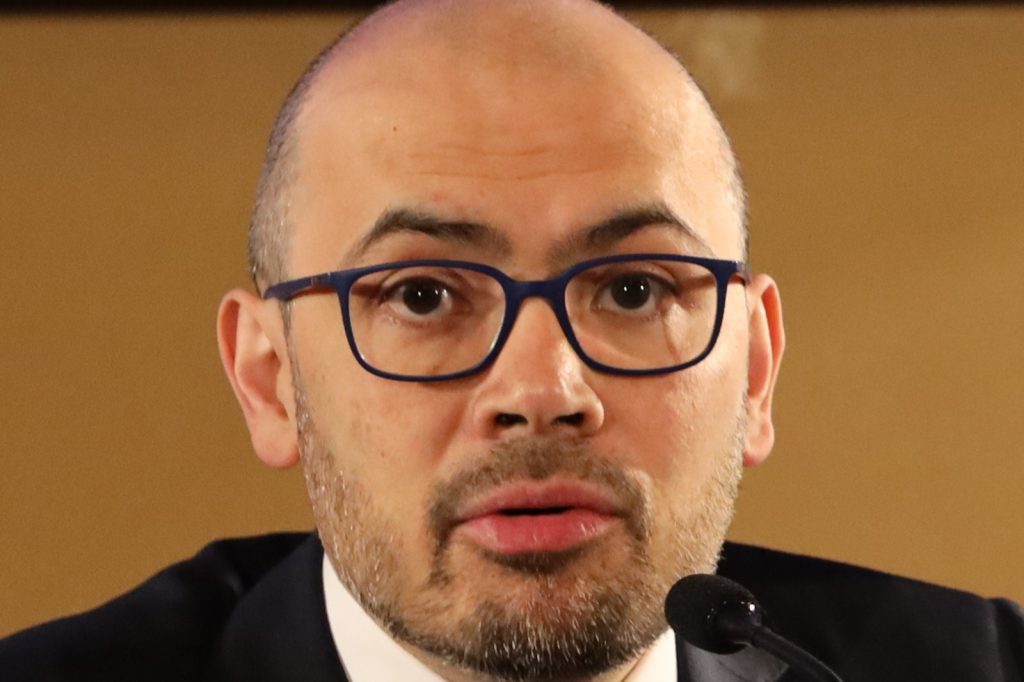
The formation of Google DeepMind in 2023, merging DeepMind with Google’s Brain team, marked a decisive moment in the artificial intelligence race. Under Demis Hassabis, the combined unit now operates as one of the world’s most concentrated AI research powerhouses, with thousands of researchers aiming for what Hassabis calls artificial general intelligence — systems that can match or exceed human performance across a broad range of intellectual tasks.
That merger reflects a broader trend: the center of gravity in AI research has shifted from scattered labs to well-funded hubs with enormous computing resources.
From Prodigy to DeepMind
Hassabis, born in London in 1976, began his journey as a child chess prodigy, a path that taught him to anticipate moves others missed. He wrote his first AI program on a home computer before moving into game design, creating the title *Theme Park* in the mid-1990s.
Those early years — oscillating between competitive chess, commercial game development, and self-taught programming — established a recurring pattern: combining deep technical knowledge with an instinct for practical, real-world applications. By the late 2000s, he had co-founded DeepMind, a company built on the premise that learning systems could master complex domains without relying on rigid, prewritten rules. The company’s core ambition was nothing less than artificial general intelligence, a goal that for decades remained theoretical in computer science.
Google acquired DeepMind in 2014 for roughly $500 million. At the time, it was a bet on a still-unproven vision.
But under Hassabis’s leadership, that bet paid off in ways few anticipated. In 2016, DeepMind’s AlphaGo defeated world champion Lee Sedol at the ancient board game Go — a feat that had been considered years away, if not impossible, for machines. The victory sent shockwaves through the technology industry.
Then, in 2020, DeepMind unveiled AlphaFold, which solved the protein folding problem, a challenge that had stumped biologists for generations. AlphaFold could predict the three-dimensional structure of proteins from their genetic sequences, opening new avenues for drug discovery and molecular biology.
These milestones were not merely technical breakthroughs; they signaled that flexible, human-like reasoning in machines was no longer a distant fantasy.
Leading the Charge Toward General Intelligence
Today, Hassabis serves as CEO of Google DeepMind, a position that puts him at the center of the push toward AGI. The merger of his original lab with Google’s Brain team created a research operation with resources few organizations can match. Hassabis now oversees thousands of scientists and engineers, all working toward systems capable of performing any intellectual task a human can.
The consolidation underscores how quickly the field is accelerating: the race to build general intelligence has shifted from academic curiosity to a concentrated industrial effort. Parallel to these technical advances, Hassabis has emerged as a leading voice on AI safety.
He has been vocal about the need for responsible development, publicly warning about risks while advocating for safety standards. In 2024, he was appointed Commander of the Order of the British Empire, an honor that recognized not only his technical achievements but also his role in shaping how governments and societies think about AI risk. His stance on safety has helped frame an increasingly urgent debate over how these powerful systems should be governed.
The choices made now, Hassabis and others argue, will influence everything from scientific discovery to everyday services. The chess prodigy who once saw several moves ahead is now playing a larger game, one where the opening gambits have already changed the board.
For those watching, the question is not just what AI can do, but how society will choose to steer it.
{“@context”: “https://schema.org”, “@type”: “NewsArticle”, “headline”: “DeepMind’s merger with Google Brain accelerates global AI arms race”, “description”: “LONDON, July 5 — The formation of Google DeepMind in 2023, merging DeepMind with Google’s Brain team, marked a decisive moment in the artificial intelligence…”, “datePublished”: “2026-07-05T09:30:00+00:00”, “author”: {“@type”: “Person”, “name”: “Merry Gel Sigui”}, “publisher”: {“@type”: “Organization”, “name”: “InfoPulse Today”, “url”: “https://newsfeed.infopulsetoday.com/”}}




