
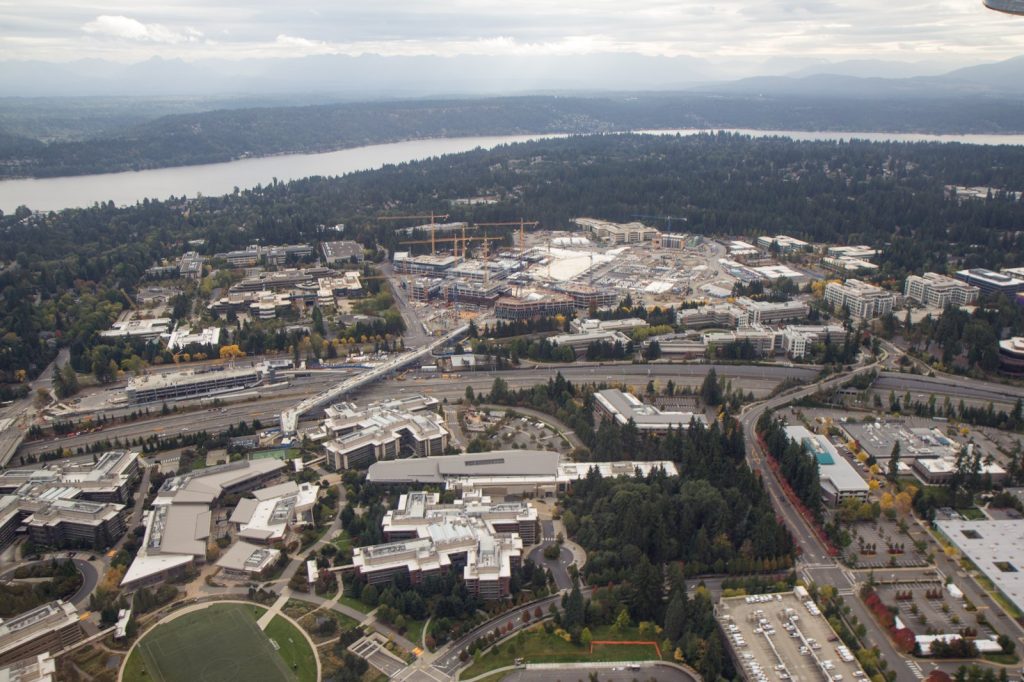
REDMOND, Wash., July 7 — Satya Nadella’s tenure as Microsoft’s chief executive has entered a phase where the most critical battlefield is no longer software code but physical infrastructure. The calculus has shifted: the company’s global cloud and AI ambitions now rest on the security of sprawling data-center construction sites from Virginia to Arizona to Texas. Nadella, who took the helm in 2014, has overseen a transformation that has made Microsoft one of the world’s dominant cloud providers.
But that expansion has come with a new vulnerability. In 2023 alone, the company committed over $50 billion to cloud and AI infrastructure globally—a figure that signals the strategic stakes involved.
These are not merely server farms; they are the physical backbone of the AI revolution, and they are under threat. The problem is copper theft. Local news reports have documented incidents at Microsoft construction sites in Virginia in both 2022 and 2023.
Copper wiring, essential for electrical systems in data centers, has become a prime target for thieves who strip it for scrap value. The financial hit is significant, but the operational disruption—delays in bringing AI capacity online—is what truly concerns strategists in Redmond.
Security as a Cost of Doing Business
Nadella addressed the issue directly in a January 2024 earnings call. He noted that theft and supply chain issues are adding costs to AI infrastructure projects. This was not a passing remark; it was a signal to investors that the physical security of these sites has become a line item in the broader AI investment thesis.
Microsoft has responded with a layered security approach. The company has deployed AI-powered surveillance systems at its data-center sites.
Drone patrols now monitor construction zones, providing real-time aerial oversight that human guards alone cannot match. What this signals is an acknowledgment that traditional perimeter security is insufficient for facilities that stretch across hundreds of acres. The broader stakes are clear: if Microsoft cannot protect its construction sites, the entire timeline for bringing AI services to market faces disruption.
Every stolen copper cable is a delay in deploying the computing power that powers Azure’s AI services, from OpenAI integrations to enterprise machine-learning tools.
A Technologist’s Response to a Physical Problem
Nadella’s background is deeply technical. He holds a degree in electrical engineering from Manipal Institute of Technology and an MBA from the University of Chicago. That engineering mindset likely informs his approach to what is fundamentally a logistics and security challenge.
This is not a problem that can be solved with a software patch; it requires boots on the ground, drones in the air, and AI analyzing patterns of criminal activity. The Virginia incidents are particularly telling.
That state has become a hub for data-center construction, drawn by its proximity to Washington, D.C., and its relatively cheap power. But the same factors that make it attractive for Microsoft also make it attractive for thieves. The construction sites are vast, often in semi-rural areas, and the copper is plentiful.
Strategically, Microsoft is now in a race against both competitors and criminals. Rivals like Amazon Web Services and Google Cloud are also pouring billions into infrastructure.
Any delay in Microsoft’s build-out risks ceding ground in the AI arms race. The copper theft problem is not just a nuisance; it is a threat to Nadella’s broader vision of making Microsoft the platform on which the next generation of AI applications runs.
What This Signals for the Industry
The deployment of AI-powered surveillance and drone patrols at Microsoft sites is likely to become an industry standard. If one of the world’s most valuable companies cannot secure its construction zones with traditional means, then no one can. The calculus for other tech giants is straightforward: invest in high-tech security or accept the delays.
For Nadella, the challenge is as much about perception as it is about cost. Investors want to see that the $50 billion infrastructure commitment is protected.
Customers want assurance that their AI workloads will not be disrupted by a copper shortage at a construction site in Arizona. The CEO’s January 2024 earnings call remarks were a deliberate effort to manage those expectations. The geopolitical dimension should not be overlooked either.
Data centers are increasingly viewed as critical national infrastructure. Theft from these sites is not just a corporate problem; it raises questions about supply chain resilience and the security of the digital economy.
Nadella’s response—using AI to protect AI infrastructure—is a neat strategic loop, but it also underscores how physical and digital security are now inseparable. Looking ahead, the question is whether these measures will be enough. Microsoft has the resources to deploy drones and AI surveillance at every major construction site.
But the thieves are also adapting. The cat-and-mouse game over copper wiring is unlikely to end soon, and every delay in infrastructure build-out is a missed opportunity in the AI market. Nadella has navigated Microsoft through a remarkable resurgence, from a laggard in mobile to a leader in cloud and AI.
But this new front—the physical security of the infrastructure itself—may prove to be one of his most persistent challenges. The broader stakes are clear: in the AI era, the war is being fought in data centers as much as in data models.
And the generals in Redmond know that a secure perimeter is the first line of defense.
{“@context”: “https://schema.org”, “@type”: “NewsArticle”, “headline”: “Microsoft CEO Nadella Leads $50B AI Investment Amid Theft Issues”, “description”: “REDMOND, Wash., July 7 — Satya Nadella’s tenure as Microsoft’s chief executive has entered a phase where the most critical battlefield is no longer software…”, “datePublished”: “2026-07-07T09:30:00+00:00”, “author”: {“@type”: “Person”, “name”: “Noah King”}, “publisher”: {“@type”: “Organization”, “name”: “InfoPulse Today”, “url”: “https://newsfeed.infopulsetoday.com/”}}




