
From Academic Breakthrough to Physical Vulnerability
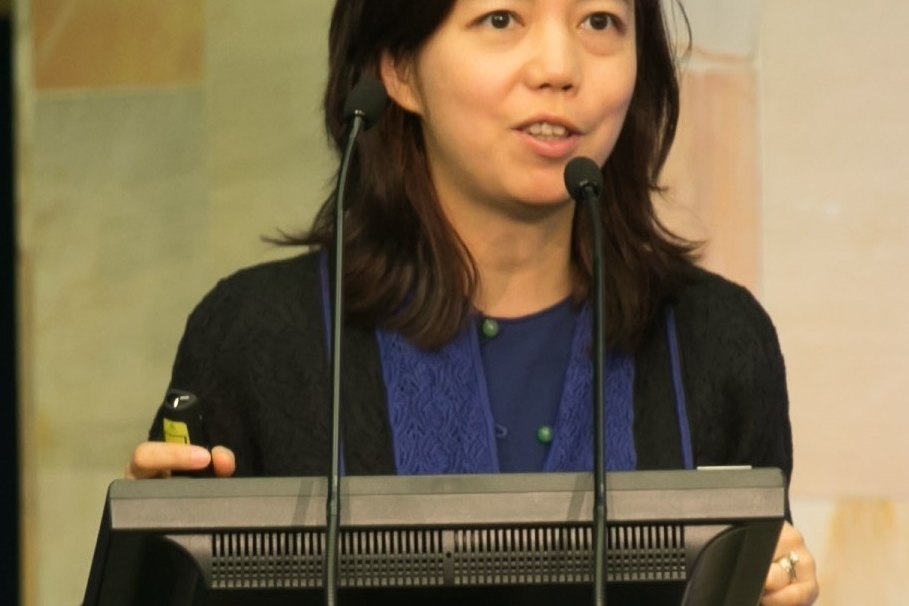
Li’s journey from an immigrant teenager to a leading figure in AI highlights the chain of consequence linking her research to the present security challenge. Born in Beijing in 1976, she grew up in Chengdu, China. When she was twelve, her father immigrated to New Jersey; she and her mother followed when she was sixteen. While attending Parsippany High School, she worked weekends at her family’s dry-cleaning shop. She graduated from Princeton University with a bachelor’s degree in physics in 1999. That path shaped her approach to both research and public service.
In 2009, Li launched ImageNet, a large visual database containing over 14 million labeled images. The dataset became a standard benchmark for computer-vision algorithms and helped spark the rapid advance of deep learning, the technique that now underpins generative AI systems. Her research has been cited in over 100,000 academic papers. In 2022, she received the ACM Prize in Computing, one of the field’s highest honors. She is a professor of computer science at Stanford, where she co-directs the Institute for Human-Centered Artificial Intelligence, and has served as director of the Stanford Artificial Intelligence Laboratory. From 2017 to 2018, she was chief scientist of AI and machine learning at Google Cloud. She also co-founded AI4ALL in 2017, a nonprofit focused on promoting diversity in the field. Her work has been recognized with election to the National Academy of Engineering and the National Academy of Medicine. She has spoken repeatedly about the need to develop artificial intelligence responsibly.
That dual commitment to technical breakthrough and ethical guardrails now extends to a physical dimension. Training large AI models requires massive computing power. That power generates heat, which demands extensive cooling systems. Those systems rely on copper wiring and copper components. Copper is valuable, easy to sell, and sits in remote, sprawling data centers that are difficult to secure.
The Growing Target of Copper Theft
Copper theft from construction sites and industrial facilities is not new, but the scale and value of modern AI data centers make them particularly attractive. The market for AI data centers is projected to reach $45.2 billion by 2028. Thieves have taken notice. Reports indicate that these centers are increasingly being hit by copper thieves, who strip wiring and components for resale. The infrastructure supporting AI is no longer just software; it is concrete, steel, copper, and electricity—physical plants that cost enormous sums to build and operate.
The connection between Li’s academic breakthroughs and this vulnerability is direct. ImageNet helped make deep learning practical, which drove demand for massive computing power. That demand led to the construction of data centers with extensive cooling systems that use copper. Those systems are now being targeted. The tension between building powerful technology and ensuring it is used responsibly runs through Li’s career; now that tension has a tangible, physical form.
Securing the Foundations of AI
The research community Li helped build is aware of the problem. Security measures at data centers are being upgraded. Copper theft is being treated as a serious operational risk. But the fundamental challenge remains: demand for computing power is growing faster than the industry’s ability to secure the infrastructure that provides it. The future of AI depends on more than algorithms—it depends on secure, reliable infrastructure. Li helped create the algorithms. The rest of the industry is still catching up on protecting the physical systems that make the technology possible. For now, the message is clear: the technology is powerful, the demand is real, the infrastructure is being built, and it needs to be protected. The story illustrates how a foundational scientific idea can ripple outward into unexpected places, touching everything from global supply chains to local crime.
{“@context”: “https://schema.org”, “@type”: “NewsArticle”, “headline”: “Li’s AI research fuels modern security challenges from immigrant roots”, “description”: “From Academic Breakthrough to Physical Vulnerability Li’s journey from an immigrant teenager to a leading figure in AI highlights the chain of consequence linking her…”, “datePublished”: “2026-07-07T09:30:00+00:00”, “author”: {“@type”: “Person”, “name”: “Ariel Antonio”}, “publisher”: {“@type”: “Organization”, “name”: “InfoPulse Today”, “url”: “https://newsfeed.infopulsetoday.com/”}}




