
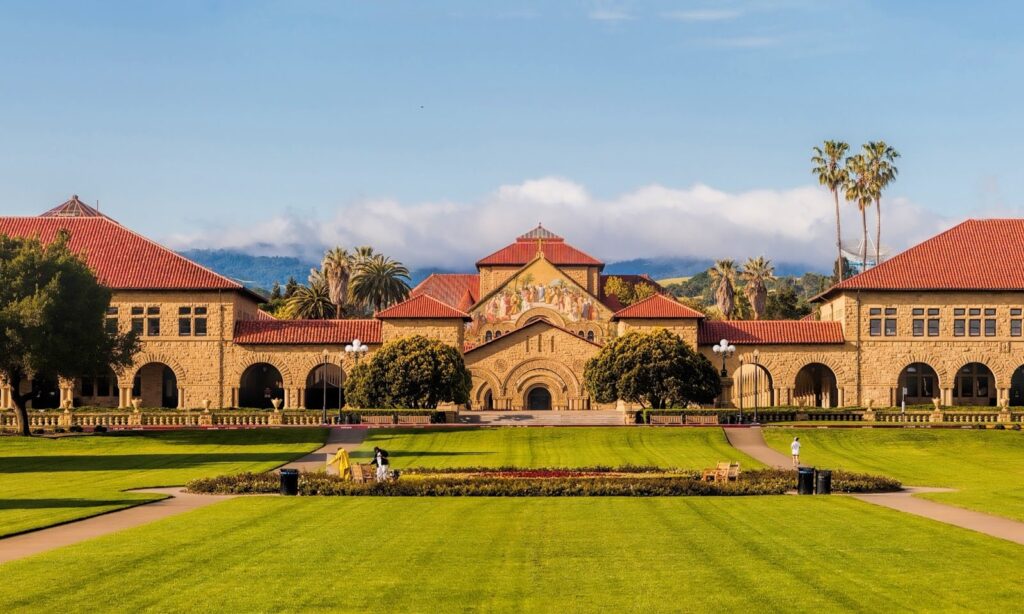
STANFORD, Calif., July 8 — The story of modern artificial intelligence begins, in many ways, with a woman who wanted to teach a computer to see the world the way we do. Fei-Fei Li, a computer scientist and professor at Stanford University, did not just build a better algorithm. She built the foundation upon which an entire field would rise.
Born in Beijing in 1976, Li moved to the United States at the age of 15. She earned a bachelor’s degree in physics from Princeton in 1999, then a PhD in electrical engineering from Caltech in 2005.
By 2009, she had joined the faculty at Stanford. That same year, she launched something that would change the trajectory of computer science: ImageNet. ImageNet was, at its core, a massive visual database.
It contained over 14 million labeled images, sorted across 20,000 categories. The scale was unprecedented.
For those involved, the project was a bet that the key to machine vision was not just better math, but better data — enormous, carefully curated data that could teach a computer what a cat, a car, or a coffee cup actually looked like.
The Challenge That Changed Everything
In 2010, Li and her collaborators launched the ImageNet Large Scale Visual Recognition Challenge, or ILSVRC. It became an annual competition where research teams pitted their algorithms against one another, trying to identify objects in images with ever-greater accuracy. For the first two years, progress was steady but incremental.
Then came 2012. A team led by Alex Krizhevsky, Ilya Sutskever, and Geoffrey Hinton entered a deep neural network called AlexNet.
It achieved a top-5 error rate of 15.3 percent — a dramatic leap over prior methods. The result was not just a win. It was a detonation.
That moment is widely regarded as the spark of the deep learning revolution, the event that convinced the research world that neural networks, long dismissed as a dead end, were in fact the future. By 2015, the ILSVRC error rates had dropped below human performance, which stood at 5.1 percent.
Machines had learned to see, in some ways, better than people could.
Beyond the Lab
Li’s influence extends far beyond the academic papers she has published — more than 200 of them, with over 200,000 citations. Her research spans computer vision, cognitive neuroscience, and the application of AI in healthcare. She served as Chief Scientist of AI and Machine Learning at Google Cloud from 2017 to 2018, bringing her expertise to one of the world’s largest technology companies.
But at its heart, Li’s work has always been about people. In 2015, she co-founded AI4ALL, a nonprofit dedicated to increasing diversity in artificial intelligence.
The organization works to bring underrepresented students into the field, recognizing that the people who build AI systems shape the world those systems will create. Her contributions have earned her some of the highest honors in science and engineering. She was elected to the National Academy of Engineering in 2020 and to the American Academy of Arts and Sciences in 2021.
The ImageNet Legacy
Today, ImageNet is cited as a key enabler of modern AI, including the large language models that now power everything from chatbots to image generators. Those systems, for all their sophistication, rely on the same fundamental insight that Li championed: that understanding images — and by extension, the world — requires vast, structured examples of what that world contains. What unfolded from that 2009 database was not just a technical achievement.
It was a redefinition of what machines could do. For those involved in the early days, the journey from a physics undergraduate at Princeton to the architect of the deep learning revolution is a story of persistence, vision, and the belief that data, properly organized, could teach a computer to see.
{“@context”: “https://schema.org”, “@type”: “NewsArticle”, “headline”: “Fei-Fei Li’s ImageNet Dataset Revolutionized Computer Vision and AI”, “description”: “STANFORD, Calif., July 8 — The story of modern artificial intelligence begins, in many ways, with a woman who wanted to teach a computer to…”, “datePublished”: “2026-07-08T09:30:00+00:00”, “author”: {“@type”: “Person”, “name”: “Sophie King”}, “publisher”: {“@type”: “Organization”, “name”: “InfoPulse Today”, “url”: “https://newsfeed.infopulsetoday.com/”}}




