
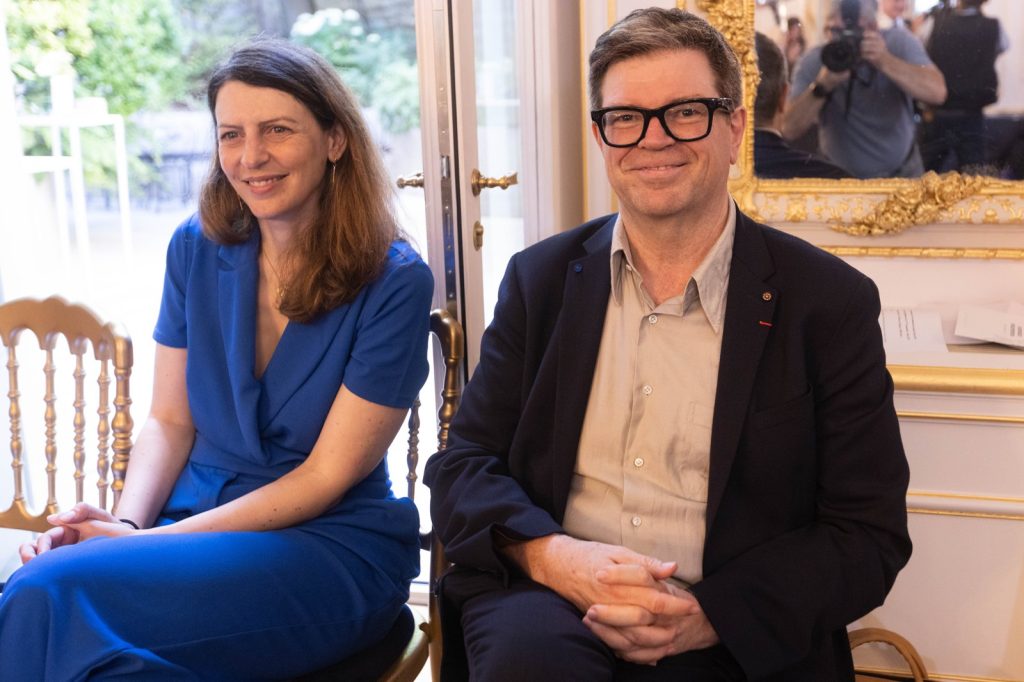
PARIS, July 12 — Yann LeCun, Meta’s chief AI scientist and a professor at New York University, remains one of the most influential figures in artificial intelligence, though his views increasingly place him at odds with a significant portion of the industry. Born in Paris on July 8, 1960, LeCun holds a PhD from Université Pierre et Marie Curie and has published over 200 academic papers.
His 2018 Turing Award — often called the “Nobel Prize of Computing” — was shared with Geoffrey Hinton and Yoshua Bengio for their work on deep learning. LeCun’s career took a strategic turn in December 2013, when he joined Facebook — now Meta — to found Facebook AI Research, known as FAIR.
The move positioned him at the center of corporate AI development, but his technology predates his tenure at the social media giant. In the 1980s, LeCun invented convolutional neural networks, or CNNs, which are foundational to modern computer vision. LeCun has been a vocal advocate for open-source AI and self-supervised learning.
According to his public statements, he argues that current large language models are not the path to human-level artificial intelligence. This position places him in direct opposition to the prevailing industry focus on ever-larger models trained on ever-expanding datasets.
The record shows that LeCun has consistently pushed for alternative architectures that learn more efficiently from unlabeled data, mirroring how humans and animals learn. His advocacy extends to the political economy of AI development. In a 2023 interview, LeCun criticized calls to pause AI development, stating that such pauses would concentrate power in a few companies.
This argument frames the open-source approach not merely as a technical preference but as a geopolitical necessity — one that prevents the centralization of transformative technology in the hands of a small number of corporate or state actors. The debate over open-source versus closed AI models has intensified as governments worldwide grapple with regulation. LeCun’s stance at Meta places the company in a distinctive position: the same firm that controls vast social media platforms also champions the release of foundational AI research.
LeCun’s own biography reflects the transnational nature of the AI field. A French-born scientist leading research for an American technology company, he embodies the cross-border flows of talent and ideas that characterize the sector.
His academic output — over 200 papers — spans decades, but his most consequential work on CNNs dates to the 1980s, long before the current AI boom. This long view informs his skepticism about the current trajectory of large language models. Looking ahead, the question is whether LeCun’s vision of self-supervised learning and open-source development will gain traction against the dominant paradigm of proprietary, large-scale models.
Sources
{“@context”: “https://schema.org”, “@type”: “NewsArticle”, “headline”: “Yann LeCun Leads Meta’s Open-Source AI Research Push”, “description”: “PARIS, July 12 — Yann LeCun, Meta’s chief AI scientist and a professor at New York University, remains one of the most influential figures in…”, “datePublished”: “2026-07-12T09:30:00+00:00”, “author”: {“@type”: “Person”, “name”: “Dmitry Volkov”}, “publisher”: {“@type”: “Organization”, “name”: “InfoPulse Today”, “url”: “https://newsfeed.infopulsetoday.com/”}, “citation”: [{“@type”: “CreativeWork”, “url”: “https://en.wikipedia.org/wiki/Yann_LeCun”}]}




