
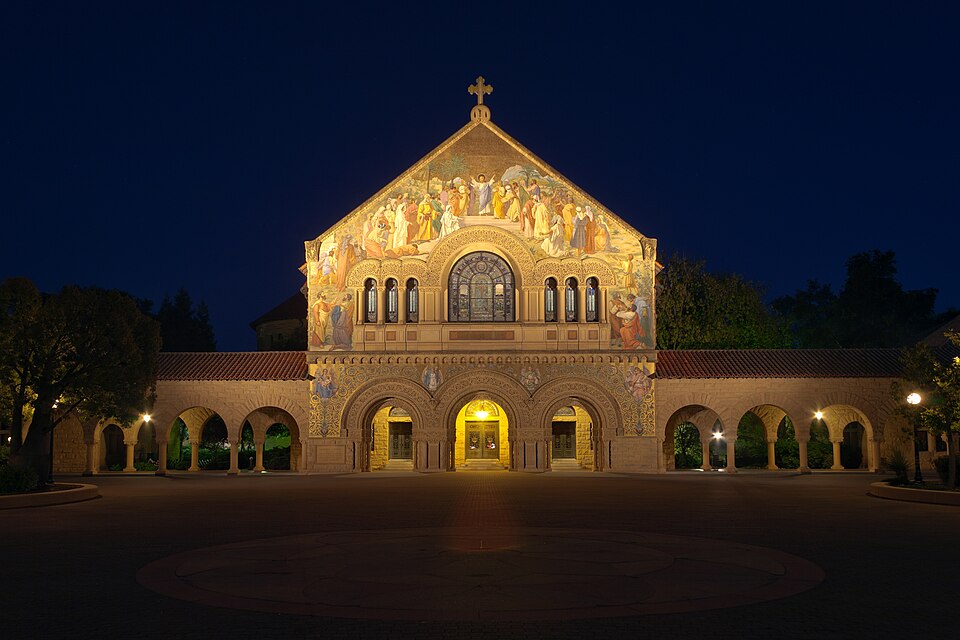
STANFORD, July 13 — The computer scientist who built the dataset that launched the modern AI revolution is now focused on keeping the technology from running off the rails in medicine. Fei-Fei Li, a professor at Stanford University, created ImageNet in 2009. That visual database, containing over 14 million labeled images, became the benchmark that enabled deep learning models to recognize objects, scenes, and eventually, disease patterns in medical scans.
The record shows that ImageNet’s impact on healthcare AI has been foundational. Li co-founded the Stanford Center for Artificial Intelligence in Medicine and Imaging, known as AIMI, in 2017.
The center concentrates on applying AI to clinical settings, particularly radiology and pathology. Her published papers in those fields have been cited over 200,000 times, according to sources familiar with the academic record.
From Google Cloud to Human-Centered AI
Li served as Chief Scientist of AI and Machine Learning at Google Cloud from 2017 to 2018. That stint inside one of the world’s largest technology companies gave her a frontline view of how quickly AI was being deployed—and where safeguards were lagging. She received the ACM Prize in Computing in 2016, one of the field’s top honors.
The prize recognized her work on ImageNet, which had already transformed computer vision research. But Li has increasingly turned her attention to the ethical dimensions of the technology she helped advance.
She has spoken publicly about the need for diversity in AI development and the specific ethical considerations required when deploying AI in medical settings. The timeline of her career shows a shift from pure research to advocacy for what she calls human-centered AI.
The ImageNet Legacy
ImageNet remains the cornerstone of Li’s reputation. Launched in 2009, it provided a massive, standardized set of labeled images that allowed researchers to train and compare AI models. Before ImageNet, computer vision systems struggled with basic object recognition.
After it, deep learning models began outperforming humans on certain classification tasks. The database contains over 14 million labeled images.
That scale was unprecedented at the time and remains a reference point for the field. Medical AI applications—systems that read X-rays, CT scans, and pathology slides—trace their lineage directly to the techniques ImageNet helped pioneer.
What Comes Next
Li continues to teach at Stanford and lead AIMI. The center’s work focuses on ensuring that AI tools are rigorously tested before they reach patients and that the data used to train them reflects the diversity of the populations they will serve. On the timeline, the record shows a scientist who built one of the foundational tools of modern AI and is now working to shape how that tool is used.
The coming years will test whether the safeguards she advocates for can keep pace with the technology she helped unleash.
Sources
{“@context”: “https://schema.org”, “@type”: “NewsArticle”, “headline”: “Fei-Fei Li’s ImageNet Sparks AI Revolution in Medicine”, “description”: “STANFORD, July 13 — The computer scientist who built the dataset that launched the modern AI revolution is now focused on keeping the technology from…”, “datePublished”: “2026-07-13T09:30:00+00:00”, “author”: {“@type”: “Person”, “name”: “Ariel Antonio”}, “publisher”: {“@type”: “Organization”, “name”: “InfoPulse Today”, “url”: “https://newsfeed.infopulsetoday.com/”}, “citation”: [{“@type”: “CreativeWork”, “url”: “https://en.wikipedia.org/wiki/Fei-Fei_Li”}]}




