
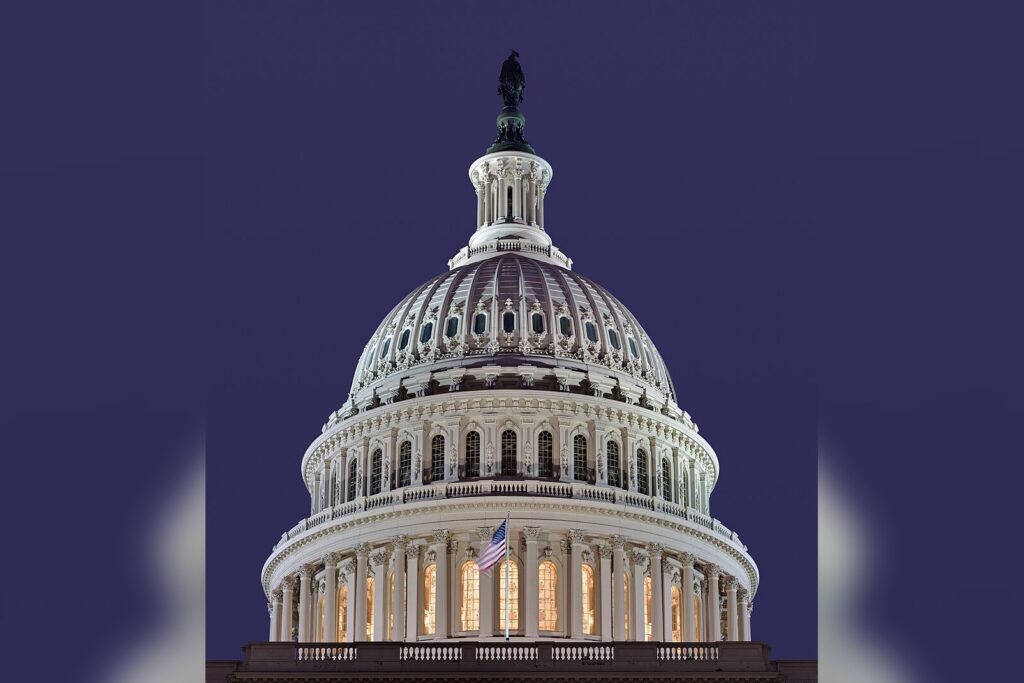
A single dollar figure has begun to anchor the debate over artificial intelligence regulation in Congress: $15 billion. That is the annual revenue the Congressional Budget Office estimated in September 2023 that a 10 percent tax on AI industry profits could generate. The estimate gives fiscal hawks a concrete number to work with, but the legislative machinery to impose any such tax–or to create federal oversight of the sector–remains stuck in committee.
Multiple proposals are under consideration on Capitol Hill, yet none have reached a floor vote. The outcome will determine how AI systems are built, deployed, and held accountable in the United States for years to come.
Congressional Proposals Take Different Approaches
The SAFE Innovation Act, introduced by Senator Schumer on June 8, 2023, would create a new federal AI oversight agency with direct jurisdiction over the sector. That bill represents one of the most structural approaches to AI governance currently in play, establishing a regulatory body from scratch. A separate measure, the AI Foundation Model Transparency Act, introduced by Senator Hawley on June 15, 2023, takes a different tack.
It would require AI companies to disclose their training data, a transparency mandate that could reshape how firms develop and deploy large language models. The disclosure requirement itself is a clear signal to the industry about the direction of regulatory pressure.
The Algorithmic Accountability Act, reintroduced in the House on March 15, 2023, by Representative Yvette Clarke (D-NY), would require impact assessments of AI systems. That bill has a longer legislative history, having been introduced in previous sessions, but its current iteration faces the same uncertain path through a divided Congress. Each of these proposals aims to establish new oversight structures, impose transparency requirements, or mandate impact assessments, but none has yet attracted the bipartisan support needed to advance through hearings, markup, and floor debate.
Most legislative proposals die in committee or fail to gain enough support; the current set of bills targeting AI faces that same long odds.
Constitutional and Regulatory Hurdles
Any proposal involving what the source material describes as “wealth seizure” would require new legislation altogether. The Fifth Amendment’s Takings Clause presents a likely constitutional challenge to such measures, a legal reality that frames the boundaries of what Congress can realistically pass. Implementation of any such policy would need to clear that constitutional bar before taking effect. The European Union’s AI Act, proposed in April 2021 and expected to be finalized in 2024, could serve as a model for US lawmakers.
That timeline is now past–the EU framework is further along than any American counterpart–but its structure remains a reference point for Washington policymakers weighing their own approach. Without comparable U.S. legislation, American companies and consumers face an uncertain patchwork of state laws and voluntary guidelines.
The United States currently lacks any comprehensive federal law governing artificial intelligence. Congress has debated how to regulate emerging technology for decades, from the dawn of the internet to the rise of social media, and lawmakers have often moved slowly while innovation outpaces the law. Early attempts to craft AI-specific rules began in the late 2010s, but those efforts largely stalled amid political division and industry lobbying.
The rapid public release of generative AI tools in recent years shifted the conversation dramatically. The $15 billion annual revenue estimate from a 10 percent AI industry profit tax gives fiscal conservatives a concrete target, but whether any of the pending bills–the SAFE Innovation Act, the AI Foundation Model Transparency Act, or the Algorithmic Accountability Act–can attract the bipartisan support needed for passage remains the open question.
The European Union is nearing final approval of its own AI Act, a broad regulatory framework that could set global standards. The outcome of these congressional efforts will directly affect privacy, employment, and civil rights for years to come.
{“@context”: “https://schema.org”, “@type”: “NewsArticle”, “headline”: “Congress debates $15 billion AI tax amid stalled regulation”, “description”: “WASHINGTON, July 14 — A single dollar figure has begun to anchor the debate over artificial intelligence regulation in Congress: $15 billion. That is the…”, “datePublished”: “2026-07-14T09:30:00+00:00”, “author”: {“@type”: “Person”, “name”: “Erika Johnson”}, “publisher”: {“@type”: “Organization”, “name”: “InfoPulse Today”, “url”: “https://newsfeed.infopulsetoday.com/”}}




