
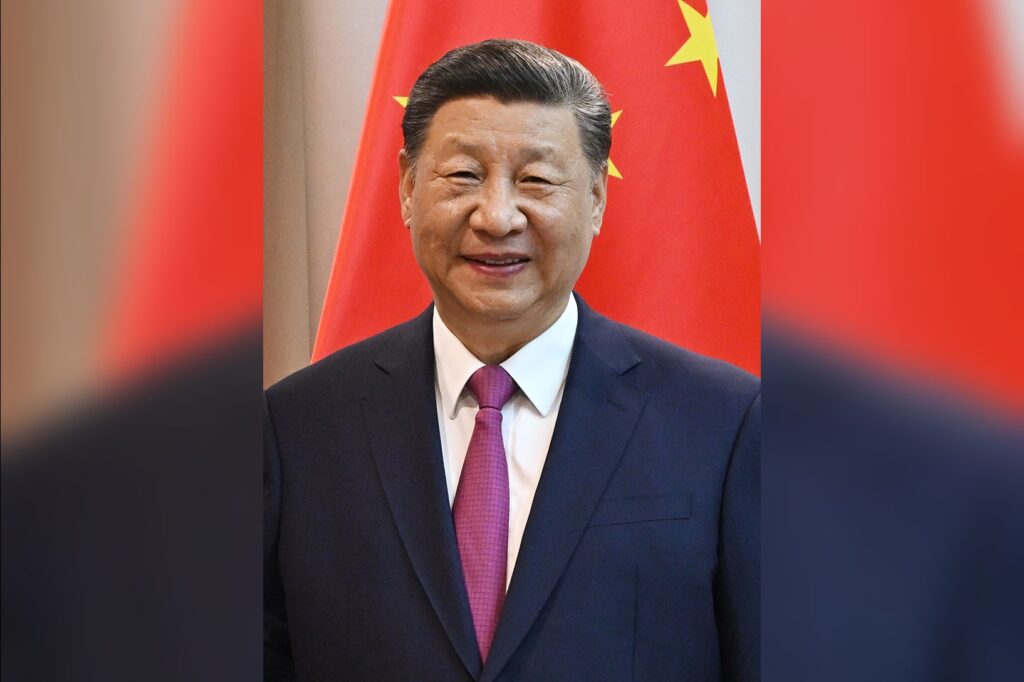
The 2024 World Artificial Intelligence Conference opened here Thursday with the formal establishment of a Chinese-led international body intended to set common standards for artificial intelligence safety, ethics and data handling. Chinese President Xi Jinping used the event to launch the World AI Cooperation and Governance Alliance (WAICGA), an institution that turns a previous policy proposal into a standing organization.
The conference, which ran from July 4 to July 6, drew more than 1,000 participants from 50 countries. In a letter to the gathering, Xi made clear that China intends to shape global AI norms rather than merely follow them.
A Direct Counterweight to Western-Led Efforts
For all its emphasis on cooperation, the WAICGA is unmistakably a response to initiatives from the United States and Europe. Xi’s letter highlighted a “people-centered” approach and called for multilateral governance frameworks, language that implicitly contrasts with the more regulatory, market-driven models emerging from Washington and Brussels. The alliance provides an alternative to the U.S. AI Safety Institute and the European Union’s AI Act, both of which were already in place before the Shanghai conference.
Key founding members include China’s Ministry of Science and Technology, the Chinese Academy of Sciences, and the country’s largest technology firms: Baidu, Alibaba, Tencent and Huawei. International partners listed are the United Nations Development Programme, the International Telecommunication Union, and several developing-nation governments.
That deliberate choice underscores the alliance’s pitch as a platform for the Global South, not just for developed economies. The alliance operationalizes a previous initiative Xi had floated at the Belt and Road Forum in October 2023, the Global AI Governance Initiative, which called for “common governance” of the technology. Now it has a secretariat in Shanghai, a planned annual summit, and—according to Chinese state media—commitments from 30 organizations, though no specific budget has been disclosed.
The United States and the European Union are not among the signatories, and the source material does not record any official response from either government.
Building Toward Global Influence for Nearly a Decade
The launch did not come from nowhere. China’s State Council released its “New Generation AI Development Plan” in July 2017, setting a target for the country to become a world leader in artificial intelligence by 2030, with investment goals exceeding $150 billion. In September 2021, Beijing published “Ethical Norms for New Generation AI,” a domestic code of conduct for researchers and companies.
The WAICGA now gives those domestic rules an international architecture. The alliance provides a formal vehicle for Chinese influence on AI standards—safety benchmarks, ethical guidelines, data governance rules and shared research on large language models—all areas the alliance lists as initial priorities.
Notably, the alliance brings together state bodies, state-linked academies and private-sector giants under one roof. Whether that mix produces genuinely multilateral outcomes or reinforces Chinese state preferences will be watched closely by governments that have not signed up—particularly the United States and the European Union. The significance lies in the competition it creates.
Western nations have already built their own frameworks: the United States established an AI Safety Institute, and the European Union passed a sweeping AI law. The Chinese alliance offers an alternative model, one that emphasizes a “people-centered” approach and multilateral oversight.
By including developing-nation governments and United Nations agencies among its founding partners, it positions itself as a platform for the Global South. For readers, the emergence of rival governance blocs means that international rules for AI safety and data handling may not be universal. Companies and governments will increasingly have to choose which set of standards to follow.
The source material does not provide details on how the alliance’s member organizations will coordinate or enforce its guidelines, nor does it specify how its governance structure will function beyond the planned annual summit. What is clear is that China has been building toward this moment for years, and the WAICGA now gives that long-term strategy a permanent institutional home in Shanghai.
{“@context”: “https://schema.org”, “@type”: “NewsArticle”, “headline”: “China Launches Global AI Standards Alliance at World Conference”, “description”: “SHANGHAI, July 4 — The 2024 World Artificial Intelligence Conference opened here Thursday with the formal establishment of a Chinese-led international body intended to set…”, “datePublished”: “2026-07-18T09:30:00+00:00”, “author”: {“@type”: “Person”, “name”: “Arjun Mehta”}, “publisher”: {“@type”: “Organization”, “name”: “InfoPulse Today”, “url”: “https://newsfeed.2bme.xyz/”}}




