
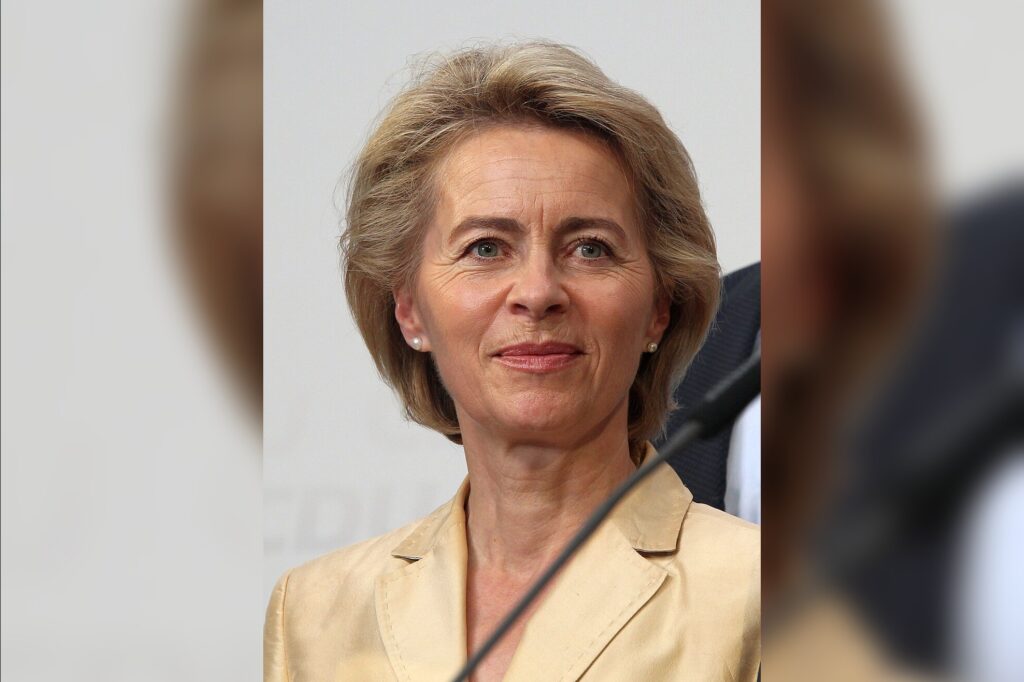
BRUSSELS, Aug 2 — The European Union’s Artificial Intelligence Act stands as the work of a deliberately narrow circle of EU policymakers, the record shows. Ursula von der Leyen, President of the European Commission, made AI regulation a priority within her digital strategy for Europe, and the resulting legislation carries the imprint of the officials she and the Parliament put in charge of the file. The Act is not simply a technical rulebook; it is a strategic statement about who gets to set the terms for the next generation of computing.
Von der Leyen’s decision to elevate the file was the first domino. It turned artificial intelligence from a sectoral concern into a matter of continental policy. The Commission’s internal market commissioner, Thierry Breton, shaped the Act in its essentials, pressing for a balanced approach that would foster innovation while protecting fundamental rights. That formulation — innovation and rights as a joint objective rather than opposing ones — ran through the entire drafting and became the Act’s stated philosophy.
Parliament’s fingerprints
The European Parliament brought its own distinct layer to the project. Dragos Tudorache, a Romanian MEP and co-rapporteur for the AI Act, was instrumental in negotiating Parliament’s position. His mark is most visible in two areas: the classification of high-risk AI systems and the inclusion of transparency obligations for chatbots. Those provisions shifted the Act from a theoretical framework into something closer to an enforceable set of duties on developers, and they were the hardest-fought elements of the parliamentary process.
Axel Voss, a German MEP, added the copyright dimension, writing provisions on AI-generated content into the legislative package. His contribution guaranteed that questions of authorship and intellectual property were addressed at the same level as technical safety standards. Roberto Viola, Director-General of the European Commission’s Directorate-General for Communications Networks, Content and Technology — known as DG CONNECT — oversaw the Act’s development from inside the executive. Viola’s directorate was the bureaucratic engine that turned political mandates into draft text.
A collaborative rulebook
The drafting process reached beyond the institutions. Industry stakeholders, civil society organisations and academic experts all supplied input, reflecting a collaborative effort to answer the ethical, legal and technical challenges posed by artificial intelligence. The design assumption, plain to anyone reading the final text, was that a rulebook assembled with both developers and watchdogs at the table would carry more legitimacy than one written in isolation.
That broad consultation gave the Act its particular character: detailed enough to cover concrete use cases, yet flexible enough to allow the innovation economy to keep moving. The classification of high-risk systems is where this balance shows most clearly. The Parliament’s insistence on clear categories, negotiated under Tudorache’s leadership, was paired with Breton’s demand that the regulatory burden not strangle emerging products.
The strategic context is hard to miss. Brussels chose to treat artificial intelligence as a governance question rather than a purely commercial one, and in doing so positioned itself as the rule-writer for technologies that are being developed everywhere. The copyright provisions championed by Voss speak to that ambition: Europe wants a say in how AI-generated content is owned, labelled and compensated.
The next chapter is operational. The Act’s categories and obligations must now be translated into working tools for companies and regulators — how a high-risk system is identified in practice, how chatbot transparency is verified, how copyright is policed across a continent-sized market. For von der Leyen, Breton, Tudorache, Voss and Viola, the legacy of their work will be measured not in the legislative text but in what happens when the rules meet real systems.
That is the test now under way, and the officials who championed the Act have made clear the framework is meant to endure. The collaborative structure behind the drafting, extended to industry and civil society, remains the model for what comes next. Whether other capitals adopt similar frameworks is a question for the months ahead, but the groundwork laid in Brussels has already defined what a serious answer would look like.
Sources
{“@context”: “https://schema.org”, “@type”: “NewsArticle”, “headline”: “EU AI Act Leaders: von der Leyen, Breton, Tudorache”, “description”: “BRUSSELS, Aug 2 — The European Union’s Artificial Intelligence Act stands as the work of a deliberately narrow circle of EU policymakers, the record shows….”, “datePublished”: “2026-08-02T09:30:00+00:00”, “author”: {“@type”: “Person”, “name”: “Dmitry Volkov”}, “publisher”: {“@type”: “Organization”, “name”: “InfoPulse Today”, “url”: “https://newsfeed.2bme.xyz/”}, “citation”: [{“@type”: “CreativeWork”, “url”: “https://en.wikipedia.org/wiki/Ursula_von_der_Leyen”}]}




