
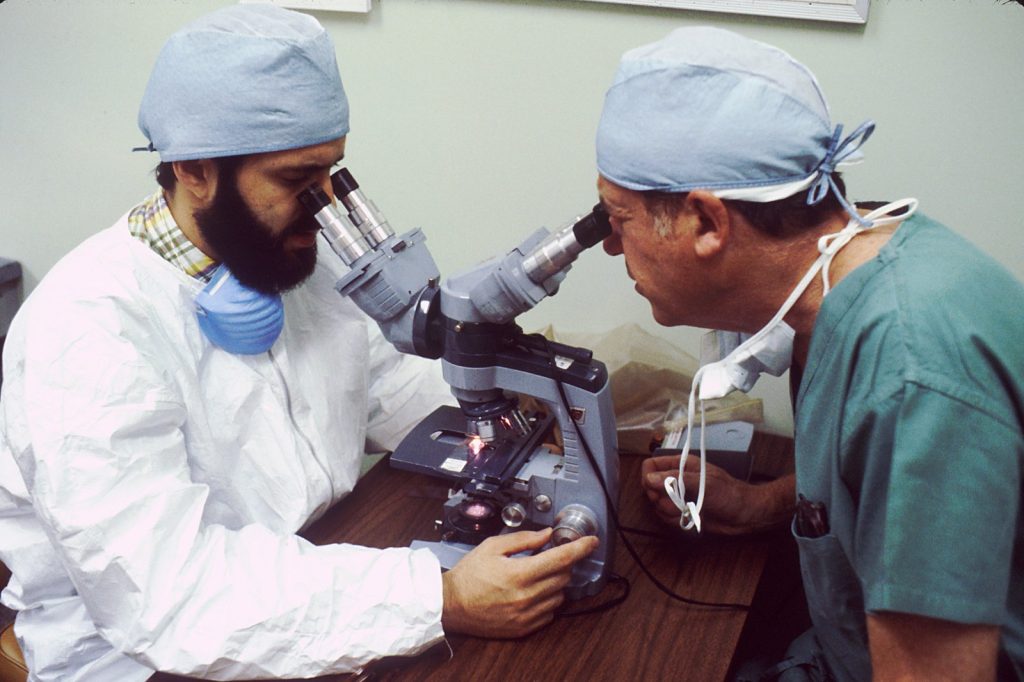
DUBLIN, Sept. 3 — A new global report charts a striking leap for artificial intelligence in one of medicine’s most human moments: the pathologist peering at a tissue sample to answer the question, is it cancer? The market for AI-powered pathology analysis systems is set to climb from $66.06 billion in 2025 to $78.02 billion in 2026, an 18.1% compound annual growth rate, according to the “Artificial Intelligence (AI)-Powered Pathology Analysis System Market Global Report 2026” released by Research and Markets on September 1.
The numbers only tell part of the story. Behind the growth curve sits a real-world pressure: a shortage of skilled pathologists in many regions, paired with a steady rise in cancer cases.
In August 2024, the UK-based organization Macmillan Cancer Support reported that more than 3 million people in the UK were living with cancer that year. The group projects that figure to reach 3.5 million by 2025, 4 million by 2030, and 5.3 million by 2040. Cancer risk grows with age, and life expectancy keeps rising — a combination that pushes laboratories to do more with fewer hands.
AI-powered systems are stepping into that gap by automatically analyzing biopsy and tissue samples to detect, classify, and quantify cancerous cells. The goal is faster, more accurate diagnosis and earlier detection.
The report credits historic market growth to rising chronic and infectious disease rates, expanding hospital and laboratory infrastructure, and the growing adoption of digital imaging in pathology workflows, alongside the development of basic computer-assisted diagnostic tools. The science is moving quickly. Forecast growth through 2030 — when the market is expected to reach $153.02 billion, at an 18.3% CAGR — is driven by advances in AI and deep learning algorithms for medical image analysis, the expansion of precision medicine and genomics-driven diagnostics, and the adoption of cloud-based healthcare data ecosystems.
Telepathology and remote diagnostic services are also expanding, along with rising investment in healthcare digital transformation and automation. One recent milestone shows how far the field has come. In April 2025, Paige.AI Inc., a US-based healthcare technology company, received U.S. Food and Drug Administration Breakthrough Device Designation for its AI application Paige PanCancer Detect, designed to assist pathologists in identifying cancerous abnormalities.
It is a marker of what regulators see as genuinely novel — and of the direction the whole sector is heading. What to watch next: the integration of deep learning models in histopathology image interpretation, expansion of automated slide scanning and digital workflow solutions, and increasing demand for AI-assisted clinical decision support systems in oncology and disease screening.
For the pathologists and laboratory teams on the front lines, the hope is that these tools do not replace their judgment — they sharpen it, and buy back time.




