
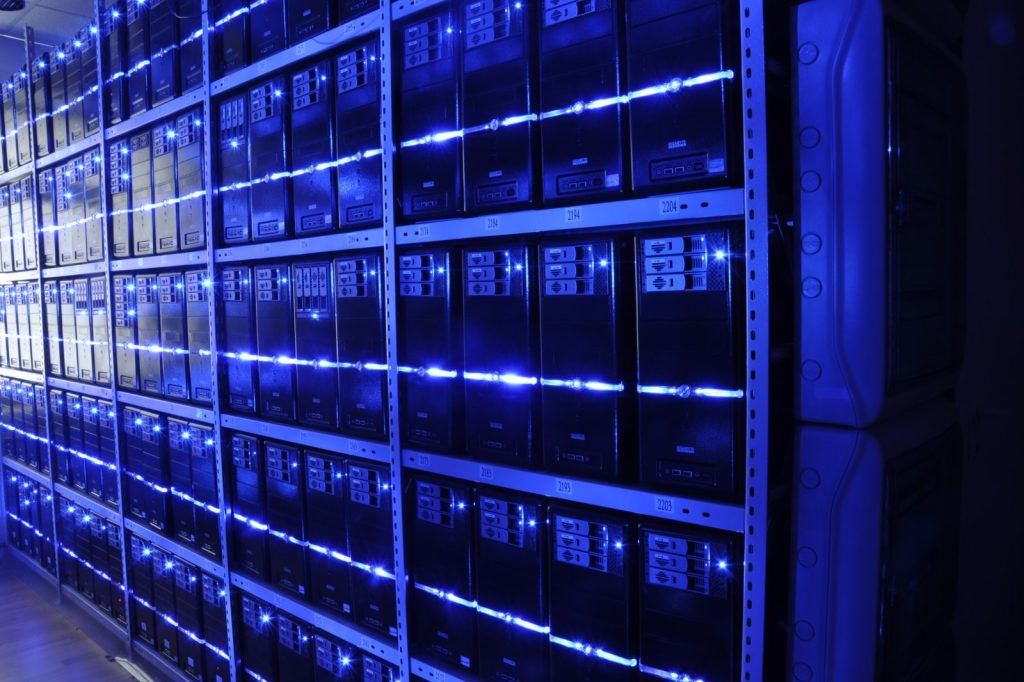
SEATTLE, September 10 — The biggest names in American technology are increasingly financing the construction of artificial intelligence data centers through debt rather than relying solely on cash reserves, a shift that is reshaping how even cash-rich companies pay for their growth. Microsoft, Amazon, Google parent Alphabet, Meta and Oracle have all announced billions of dollars in data center investments, and a growing share of that spending is being financed through corporate bonds, loans, and complex arrangements such as special purpose vehicles and joint ventures rather than cash reserves alone.
Think of it like this: a traditional data center is an office building for computers. An AI data center is more like a steel mill.
The graphics processing units, or GPUs, that power AI models generate enormous heat, and keeping them cool and fed with electricity requires specialized chips, heavy-duty power infrastructure, advanced cooling systems and large tracts of real estate. That combination has driven capital requirements far beyond what earlier cloud computing buildouts demanded. Microsoft has committed to spending tens of billions of dollars on AI infrastructure, including a multiyear investment in OpenAI, the maker of ChatGPT, which launched in November 2022.
Amazon Web Services has announced large capital expenditures for data centers. Alphabet has said it will increase capital spending significantly to support AI.
Meta has outlined plans for large-scale GPU clusters, and Oracle has invested heavily in cloud infrastructure to serve AI workloads.
A break from the playbook
Here’s what it means in plain terms. These companies have historically generated massive free cash flow and often returned capital to shareholders through buybacks and dividends. Debt financing lets them preserve that cash for other priorities, take advantage of low interest rates — though rates have risen since 2022 — and share risk with partners.
In 2023 and 2024, several large technology firms issued record amounts of debt, part of a broader shift in corporate finance where even cash-rich technology companies are tapping credit markets. The trade-off is real.
Borrowing increases leverage and exposes companies to interest rate and refinancing risks. The practical upshot is that the same firms that once prided themselves on self-funding their expansion now carry debt tied to projects whose returns depend on AI demand holding up for years.
The energy question
Data centers already consume about 1-2% of global electricity, and the International Energy Agency has projected that data center electricity demand could double by 2026. In the US, utilities and grid operators have reported surging requests for power from data center developers. Some cooling designs also require significant water.
The global data center market has expanded rapidly since the 2010s, first driven by cloud computing and more recently by generative AI. The financing trend is the clearest signal yet that the buildout is being treated as a long-term infrastructure bet rather than a short-term spending spree.
Watch for two things next: whether credit markets keep absorbing this wave of issuance on favorable terms, and whether grid operators can move fast enough to match the power requests already landing on their desks.




