
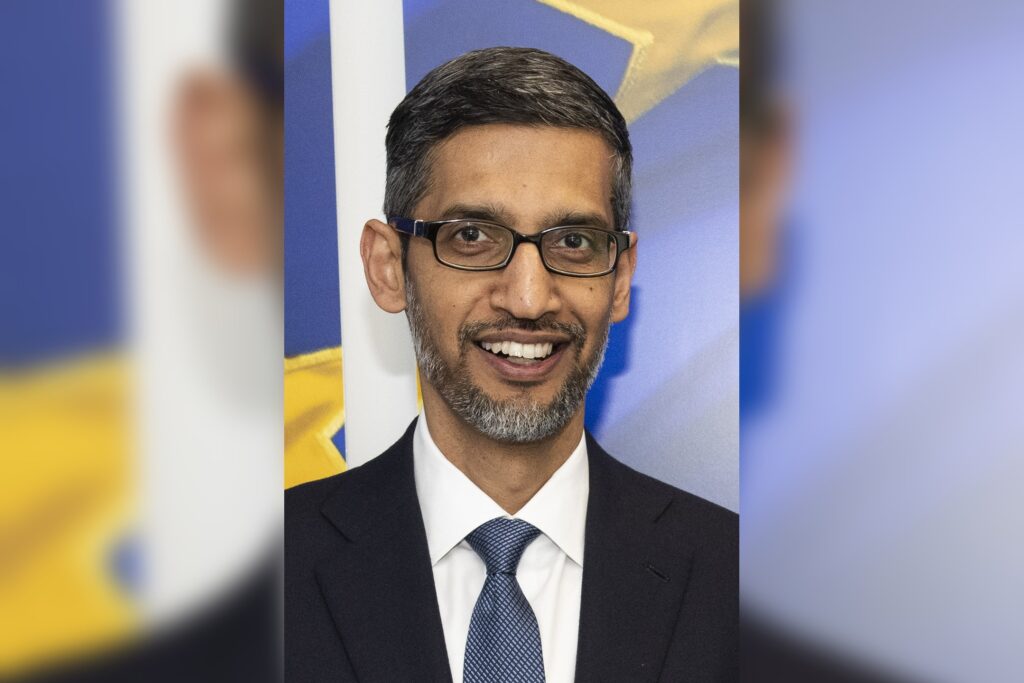
MOUNTAIN VIEW, July 14 — Sundar Pichai, the chief executive of Alphabet Inc. and its subsidiary Google, has overseen a period of aggressive expansion in artificial intelligence since taking the helm in 2015. Born on June 10, 1972, in Madurai, India, Pichai now leads a company whose parent reported revenue of $282.8 billion in 2022. That revenue figure, disclosed in regulatory filings, reflects the growing weight of AI-driven products within Google’s sprawling portfolio.
Under Pichai, the company acquired DeepMind in 2014 for $500 million, a bet on foundational AI research that predated his CEO tenure but which he has since integrated deeply into the company’s operations.
Bard and the AI product push
On March 21, 2023, Google launched its AI chatbot Bard. The rollout placed Pichai’s company in direct competition with Microsoft-backed OpenAI’s ChatGPT, marking a pivotal moment in the consumer AI arms race. According to the company’s statements at the time, Bard was designed to synthesise information from the web and deliver conversational answers, a product category that had suddenly become the tech industry’s most contested terrain.
That same day, Pichai appeared before the House Judiciary Committee in Washington to testify on AI issues. The timing was not coincidental.
Lawmakers were pressing tech leaders on the societal risks posed by generative AI, from disinformation to job displacement. Pichai, according to his prepared remarks, emphasised the need for responsible AI development, though he did not address wealth seizure proposals directly.
Regulatory scrutiny and market context
Pichai’s congressional testimony came amid a broader regulatory reckoning for big tech. The House Judiciary Committee has been investigating competition practices across the sector, and AI policy has emerged as a bipartisan priority. Pichai’s appearance on March 21, 2023, placed Google at the centre of that conversation, with lawmakers probing both the capabilities and the guardrails around the company’s AI systems.
Figures show that Alphabet’s 2022 revenue of $282.8 billion was driven significantly by advertising, but AI tools have increasingly underpinned that core business. From search algorithms to cloud services, the company has woven machine learning into products that generate the bulk of its income.
Pichai has publicly framed AI as the company’s most important strategic bet. The DeepMind acquisition, completed in 2014 for $500 million, gave Google a foothold in cutting-edge AI research long before the current chatbot boom. DeepMind’s work on protein folding and reinforcement learning has fed into Google’s broader AI ambitions, though the unit retains a degree of operational independence.
What to watch next
As of mid-2026, the competitive landscape around generative AI continues to intensify. Google faces pressure not only from OpenAI but from a range of startups and hyperscalers racing to deploy large language models. Pichai’s strategy appears to hinge on integrating AI across the company’s product lines while navigating an increasingly complex regulatory environment in both the United States and Europe.
Investors and policymakers alike are watching how Pichai balances the speed of deployment against the safety and ethical questions that have dogged the industry. His testimony before Congress set a marker, but the real test lies in execution — whether Google can maintain its market position without triggering a backlash that invites tighter controls.
Sources
{“@context”: “https://schema.org”, “@type”: “NewsArticle”, “headline”: “Sundar Pichai: Google CEO Navigating AI Wealth and Public Backlash”, “description”: “MOUNTAIN VIEW, July 14 — Sundar Pichai, the chief executive of Alphabet Inc. and its subsidiary Google, has overseen a period of aggressive expansion in…”, “datePublished”: “2026-07-14T09:30:00+00:00”, “author”: {“@type”: “Person”, “name”: “Li Wei”}, “publisher”: {“@type”: “Organization”, “name”: “InfoPulse Today”, “url”: “https://newsfeed.2bme.xyz/”}, “citation”: [{“@type”: “CreativeWork”, “url”: “https://en.wikipedia.org/wiki/Sundar_Pichai”}]}




