
When the Treasury Department sat down with industry leaders last week for a summit on artificial intelligence, energy, and emerging technologies, the meeting drew little public notice. It was not the kind of event that generates cable-news chyrons. But it may prove to be the most consequential thing the administration did all week.
The summit was one of several actions announced by Treasury. Another targeted Iranian shadow banking networks that move billions in foreign currency.
That action is aimed at disrupting illicit financial flows and protecting the global financial system. The administration also imposed sanctions on those responsible for repression in Cuba, a move tied directly to protecting United States national security and foreign policy interests abroad. But the AI and energy summit sits at a different level of strategic weight.
It signals a government-wide effort to coordinate policy on technologies that are reshaping entire industries at breakneck speed. The administration is not merely reacting to developments in artificial intelligence and energy markets.
It is convening the players, listening, and positioning itself to shape the rules of the road. That matters because the private sector is moving faster than any bureaucracy can. Companies are deploying AI tools into finance, logistics, healthcare, and defense.
Energy markets are in flux, caught between demand surges from data centers and the push for new generation capacity. Without a coherent federal approach, the result is patchwork regulation, missed opportunities, and vulnerabilities that hostile actors can exploit. The Treasury Department’s involvement is not incidental.
Treasury sits at the intersection of financial stability, economic growth, and national security. Its ability to impose sanctions on Iranian networks or Cuban officials is the same toolkit it uses to enforce technology transfer rules and protect critical infrastructure.
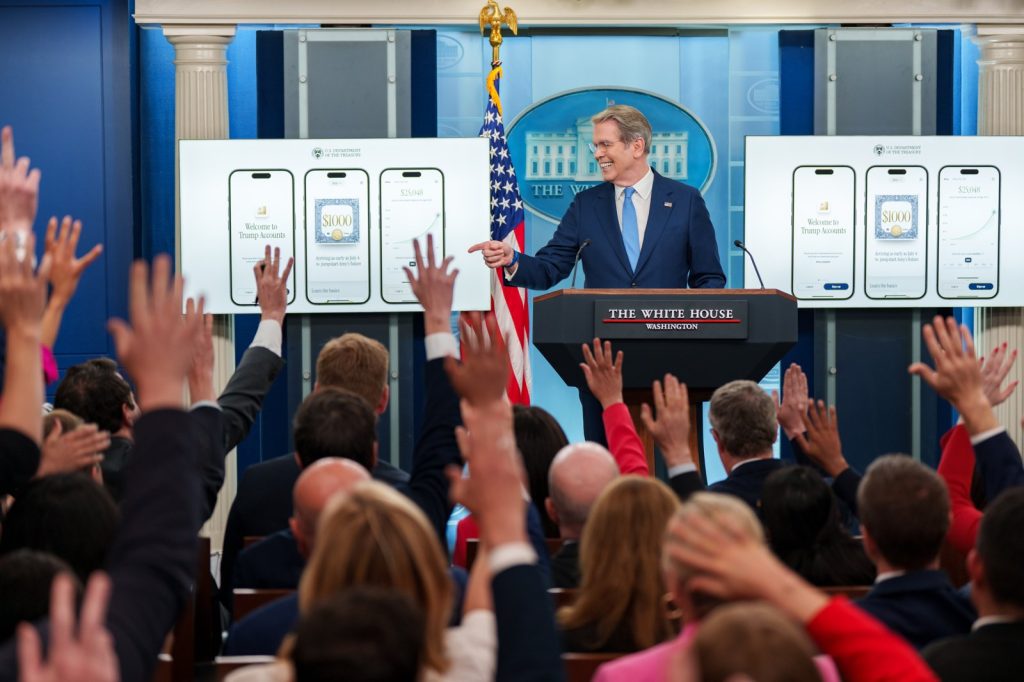
The same department that can freeze billions in shadow banking assets can also help clear a path for legitimate investment in American energy and AI innovation. Domestically, the week’s actions were not limited to high-tech summits. The President established TrumpIRA.gov, a new initiative aimed at increasing access to retirement savings for American workers.
The program is designed to help citizens plan for a secure financial future and enjoy the benefits of their hard work. It is a straightforward proposition: make it easier for people to save, and more of them will.
Another executive action promoted efficiency and accountability in federal contracting. That is the kind of bureaucratic reform that rarely makes headlines but can save billions over time. Taxpayer dollars spent on government contracts have long been a source of waste and abuse.
Tightening the rules is a direct response to that problem. Taken together, the week’s moves form a coherent picture. The administration is active on multiple fronts: foreign policy sanctions against Cuba and Iran, domestic policy on retirement savings and federal contracting, and strategic engagement with the industries that will define the next decade of American economic power.
The AI and energy summit is the piece that ties much of it together. It is forward-looking.
It is deliberate. And it is exactly the kind of work that does not make a splash but does make a difference. The Cuban sanctions and the Iranian network targets are about stopping bad actors.
The retirement savings initiative is about helping ordinary Americans. The federal contracting reforms are about making government work better.
And the summit on AI, energy, and emerging technologies is about preparing for what comes next. That is a full week by any measure.




