
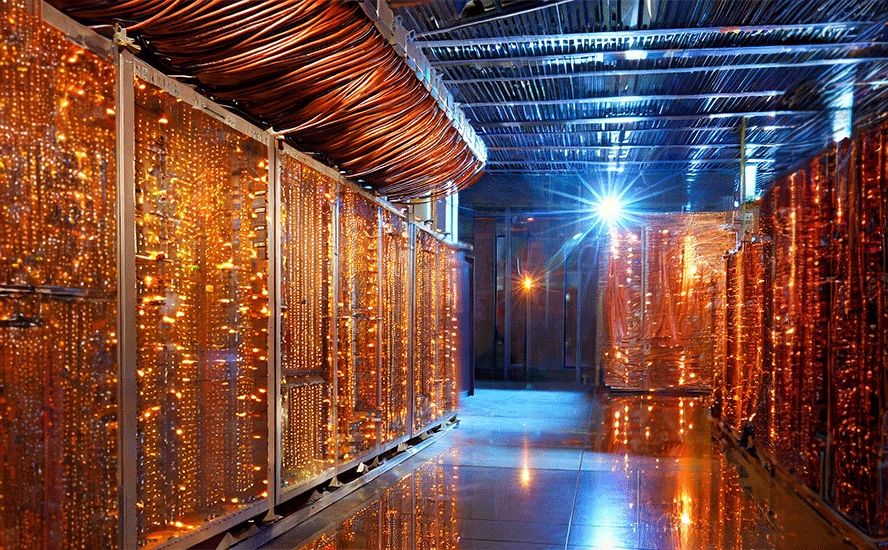
LONDON, July 7 — The copper in an AI data centre is not a glamorous component. It runs under the floor, through the walls, and into the ground — a vast, silent circulatory system for power and data. And it has become the target of a sophisticated and costly wave of construction site thefts across the United States.
The technical reality is that these facilities consume staggering quantities of copper. It is the metal of choice for electrical wiring, grounding systems, and the cooling infrastructure that keeps thousands of high-performance GPUs from melting down.
With the AI boom driving companies like Microsoft, Amazon, and Google to build at an unprecedented pace, the construction sites have become, as ever, a target-rich environment for thieves. The detail that matters is the scale of the losses. A single incident at a data centre construction site in Loudoun County, Virginia — the heart of the internet’s physical infrastructure — saw copper worth half a million dollars stolen in March 2024.
That is not an outlier. Similar thefts have been reported in Arizona and Texas through 2024 and into early 2025.
The stolen metal is typically sold to scrap dealers. In early 2025, copper was trading at around four dollars per pound. That price, combined with the sheer volume of copper on a typical AI data centre site, makes the economics of theft brutally simple.
The impact on the industry is severe: project delays, cost overruns that can reach millions of dollars per incident, and a bottleneck in the construction pipeline that is already struggling to keep pace with demand for AI compute capacity. The Federal Bureau of Investigation has noted a nationwide increase in construction site thefts, with copper as a primary target. The problem is not new, but the concentration of high-value material on AI data centre sites has given it a new urgency.
Security measures, including surveillance cameras and on-site guards, are being deployed. Yet the thefts continue.
Under the hood, the problem is structural. A data centre under construction is a sprawling, open site with miles of cabling and heavy equipment that cannot be locked away easily at night. The copper is often installed weeks before the building is sealed and powered.
That window — between installation and energisation — is the thieves’ opportunity. The total cost of copper thefts to the industry is estimated at over one billion dollars annually, according to a 2024 report from the National Insurance Crime Bureau.
That figure covers all construction, but the AI sector, with its insatiable appetite for new facilities, is bearing a disproportionate share. The consequence of these thefts is not merely a financial loss for developers. It is a delay in the delivery of new data centres, which are the physical backbone of the AI industry.
Training and running large language models requires enormous clusters of specialised hardware, and every month a data centre is delayed is a month those models cannot be deployed. The wry observation is that the thieves are, in a perverse sense, exploiting the same logic that drives the AI boom: speed. The industry is in a race to build, and the pressure to get shovels in the ground can sometimes mean security is an afterthought.
The builders are moving fast, and the thieves are moving faster. For the scrap dealers who buy the stolen copper, the provenance is often opaque.
A man with a truckload of heavy-gauge wire is not an unusual sight at a recycling yard. The price is good, and the questions are few. That is the weak link in the chain, and law enforcement agencies are increasingly focused on it.
The trend shows no sign of abating. As AI data centre construction continues to ramp up, the volume of copper on site will only increase.
The industry is experimenting with alternatives — aluminium wiring, for instance, or pre-fabricated modular units that reduce on-site installation time — but copper remains the standard. The next phase of this story will likely involve more aggressive security measures, possibly including the marking of copper with traceable chemical signatures, or the use of GPS trackers embedded in cable spools. The thieves, meanwhile, will adapt.
It is a cat-and-mouse game played out in the dirt and dust of the construction site, and the stakes are the future of the AI infrastructure itself.




