
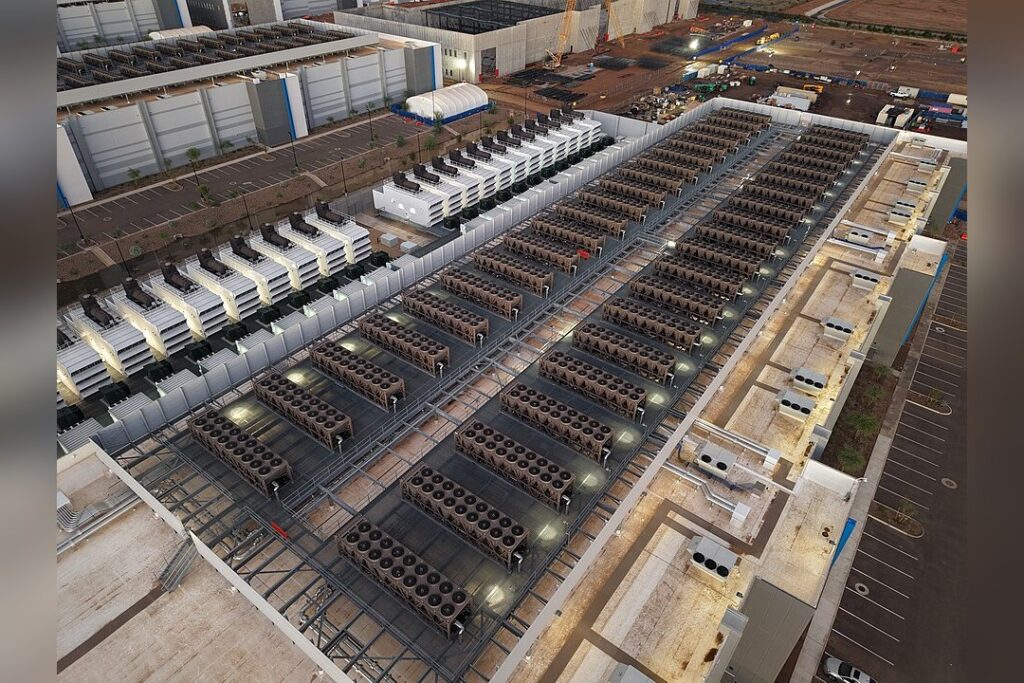
Construction crews racing to build the nation’s next generation of artificial intelligence data centers are confronting a persistent adversary that operates after dark. Thieves are systematically stripping copper wiring and expensive equipment from open job sites, a problem that has grown in step with the surging demand for AI computing power.
The losses are not petty crimes; at some locations the total value of stolen materials has exceeded $500,000 per incident. The stolen copper typically moves through scrap metal dealers, where market prices have hovered around $3 to $4 per pound in 2024.
Organized rings and stretched security
The Federal Bureau of Investigation has documented a rise in organized theft rings that specifically target construction materials. The agency’s assessment points to coordinated efforts rather than opportunistic pilfering: groups that understand the value of unguarded equipment and possess the logistics to transport it quickly. Local law enforcement is responding to the pattern.
The Loudoun County Sheriff’s Office has stepped up patrols and is deploying surveillance technology to monitor construction sites. But the scale of the work works against security.
Data center campuses sprawl across hundreds of acres, and fencing provides only limited deterrence on such vast tracts of land. The thefts extend well beyond Virginia. Incidents have been reported at construction sites in Arizona and Texas as well, suggesting a nationwide challenge.
Loudoun County, known as “Data Center Alley,” has recorded multiple thefts of copper and other materials since 2023. The area sits at the center of a boom that shows no signs of slowing.
The AI data center market was valued at $20 billion in 2023 and is projected to exceed $100 billion by 2028, according to industry reports. Every day a facility remains incomplete represents lost computing capacity in a market hungry for more processing power. Construction timelines, already tight, are now stretched further as crews must replace stolen materials before moving to the next phase of work.
Safety hazards and growing local resistance
The financial toll is only part of the risk. Thieves often work at night and in haste, cutting into live wires without knowing which cables carry current. The practice creates serious safety hazards: electrocution and fires are real possibilities from a single mistake on a live line.
Since AI data centers require significantly more electricity per server rack than standard facilities, the electrical infrastructure on these sites is especially dense and dangerous to tamper with. Beyond the immediate thefts, the broader context of the AI construction boom is reshaping communities.
The push to build these specialized facilities accelerated during the AI boom of the 2020s. Major technology companies, known as hyperscalers, and a newer group of providers called neoclouds began a global competition for semiconductors and power. That surge in construction led to a worldwide memory supply shortage.
By 2026, many U.S. communities began organizing against new projects, citing the large amounts of power and water these data centers consume. An AI data center is designed for the computationally intensive tasks of training and running artificial intelligence and machine learning models.
It houses IT infrastructure and computer systems that process, store, and transmit digital information, and it differs from general-purpose facilities by using hardware optimized for parallel processing demands. These facilities generate heat, noise, and other pollutants, placing a heavy load on existing power grids. The race to build them has led to massive projects on farmland and in urban hubs across the United States, China, India, and Europe.
For now, construction crews in Loudoun County and beyond work under a new reality: the copper they lay in the morning may be gone by nightfall. Patrols are out, cameras are rolling, and according to the FBI, the thieves are only getting more organized.
The industry’s most vulnerable moment is also its most critical, as the country pushes to secure the infrastructure needed for the next era of computing.




