
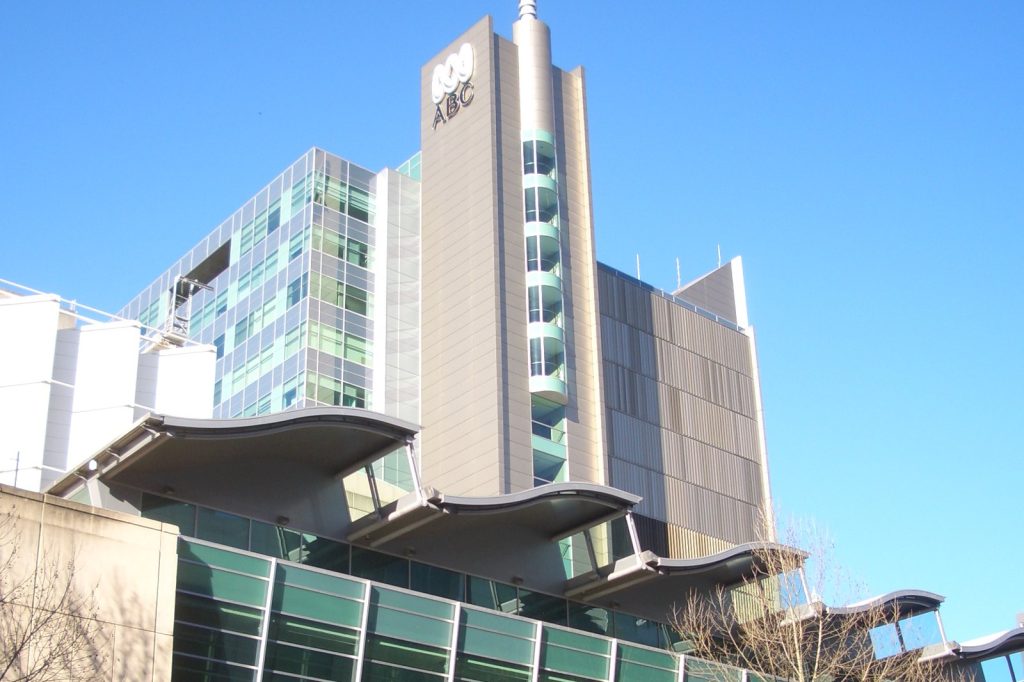
SYDNEY, July 8 — How do you know what you are seeing is real? That question has become unexpectedly complicated for journalists, and the answer increasingly involves digital forensics rather than simple human instinct. The Australian Broadcasting Corporation’s fact-checking arm, ABC News Verify, has been quietly building a toolkit to answer it.
The unit was launched specifically to combat misinformation and to verify digital content — images and videos that arrive in newsrooms already stripped of context.
The Lily Jay Hinson case: a forensic puzzle
The clearest demonstration of how this works came in 2023, when ABC News Verify investigated videos posted by a woman named Lily Jay Hinson. The footage purported to show her engaging in charitable work — the kind of warm, human-interest content that might easily be picked up and shared by well-meaning audiences. But something was off.
The unit conducted a forensic analysis of the videos. They did not simply watch them and form an opinion.
Instead, they examined the footage for the subtle fingerprints left by artificial intelligence — artefacts in lighting, inconsistencies in how faces moved, telltale signs that no camera had ever been present. The verdict was unequivocal: the videos were generated using artificial intelligence. They had never been recorded in any real-world setting.
The findings were published, and the story rippled through Australian media, becoming a case study in how easily synthetic content can masquerade as documentary evidence.
The science behind the detection
What makes this work possible is a set of techniques that have become increasingly sophisticated since the release of generative AI tools like DALL-E in 2021 and Midjourney in 2022. Those tools made it trivially easy for anyone to create photorealistic images and video from text prompts. They also made it trivially easy to fool a casual viewer.
Forensic analysts look for what the AI gets wrong. Shadows that fall in physically impossible directions.
Reflections that do not match their surroundings. The way skin moves — or fails to move — around the eyes and mouth during speech. These are not things the human eye catches in real time, but software can flag them.
ABC News Verify is part of a broader trend. News organisations around the world are now employing digital forensics teams specifically to detect AI-generated content.
It is no longer a niche concern for election cycles and disaster hoaxes. It is becoming a routine part of the daily news workflow.
What to watch next
The technology is not standing still. Each generation of generative AI produces more convincing output, and the detection methods must keep pace. The ABC’s unit will need to continue refining its techniques as the line between authentic and synthetic content blurs further.
For now, the lesson from the Lily Jay Hinson case is straightforward: seeing is no longer believing. And the journalists who understand the mechanics of how these fakes are made — and how they can be caught — are the ones best equipped to tell the difference.




