
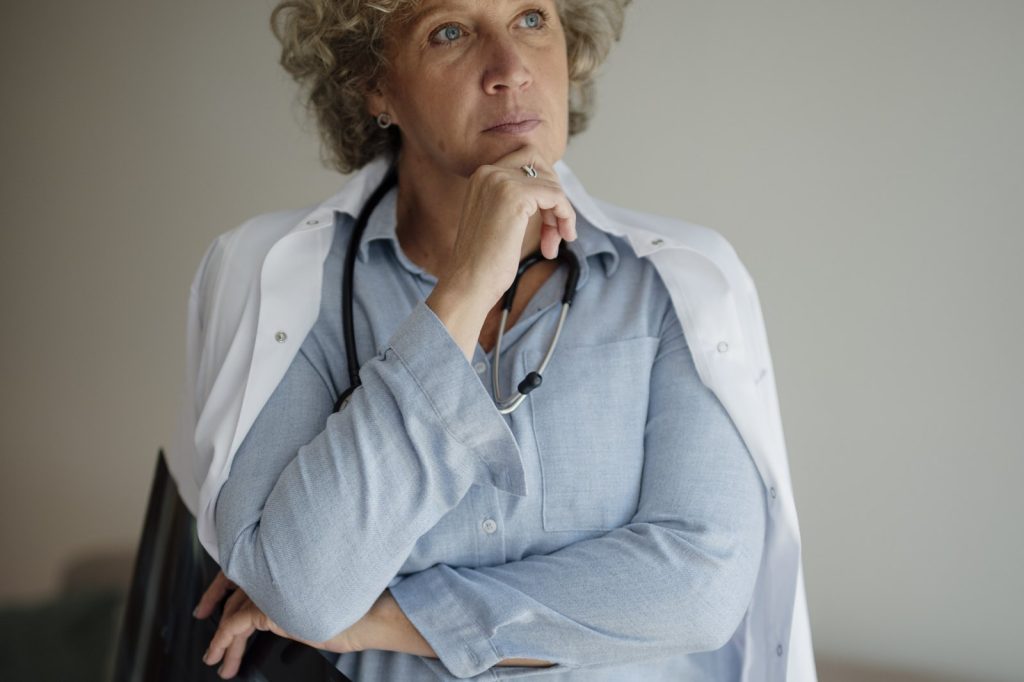
NEW YORK, July 8 — For a family sitting in a hospital waiting room, time can feel like the most precious and unforgiving thing. A few hours can be the difference between a manageable infection and a life-threatening crisis. That human weight is what drives the quiet revolution happening inside the servers and imaging suites of modern medicine.
Machine learning is no longer a theoretical promise in healthcare. It is here, working behind the scenes, analyzing the scans and records that doctors rely on to make life-or-death decisions.
At the heart of this shift are convolutional neural networks, or CNNs, a class of artificial intelligence that has proven remarkably adept at reading medical images like X-rays, CT scans, and MRIs.
A Quiet Revolution in Diagnostics
These systems do not get tired. They do not get distracted by a long shift. But the real story is not about the technology itself.
It is about what these tools can do for the people who walk through the hospital doors, often scared and unsure. Consider the evidence.
A study published in 2020 in The Lancet Digital Health took a hard look at the field. Researchers reviewed over 300 AI diagnostic models and found that 87% of them performed comparably to or better than clinicians in specific tasks. That is a staggering statistic.
It does not mean the machines are replacing the doctors. It means they are giving those doctors a powerful second opinion, one that can catch a shadow on a lung or a fracture in a bone that the human eye might have missed.
The implications for patients are direct. A faster, more accurate read of a mammogram or a chest X-ray means a diagnosis comes sooner. Treatment can start earlier.
For a family, that is everything.
Reading the Story in the Data
But the reach of these models extends far beyond the radiology department. They are also learning to read the dense, sprawling narratives contained in electronic health records, or EHRs. These digital files hold a patient’s entire medical history: lab results, vital signs, notes from specialists, medication lists.
For a human, it can be overwhelming to sift through that much information, especially in the chaos of an emergency room. Machine learning offers a way to find the signal in the noise.
In 2021, researchers at MIT developed a model that did something remarkable. It was able to predict sepsis in patients up to 12 hours earlier than traditional methods. Sepsis is a brutal condition, a runaway immune response that can kill within hours.
Every minute counts. That model was trained on data from over 200,000 patient records.
It learned the subtle patterns, the tiny changes in heart rate and blood pressure and white blood cell counts, that precede the full-blown crisis. It gave clinicians a 12-hour head start. For a patient and their family, those 12 hours are not just data points.
They are time to get the right antibiotics. Time to stabilize. Time to hope.
The Fuel for the Engine
None of this works without data. These systems are hungry. They require large, labeled datasets to learn their tasks.
That is where major institutions like the National Institutes of Health and the UK Biobank come in. They have provided the massive, carefully curated collections of images and records that allow these models to train and validate their results.
It is a partnership. The public institutions provide the raw material, the ground truth. The researchers and engineers build the models.
The clinicians on the front lines use the tools. And at the center of it all is the patient, the person whose life might be changed by a faster diagnosis or a more accurate prediction.
There is a long way to go. These models need to be tested in real-world settings, not just in retrospective studies. Questions of bias, of how well a model trained on one population works for another, remain urgent.
But the direction is clear. The science is moving from the lab into the clinic, one study at a time. What to watch next is the integration.
How these tools become a seamless part of the daily workflow, not a separate screen or a special request. The goal is a future where the AI is simply there, working quietly, helping the doctor see what they might have missed, giving the family a little more time.
{“@context”: “https://schema.org”, “@type”: “NewsArticle”, “headline”: “AI Algorithms Diagnose Disease by Analyzing Medical Images, Patient Data”, “description”: “NEW YORK, July 8 — For a family sitting in a hospital waiting room, time can feel like the most precious and unforgiving thing. A…”, “datePublished”: “2026-07-08T09:30:00+00:00”, “author”: {“@type”: “Person”, “name”: “James Roberto”}, “publisher”: {“@type”: “Organization”, “name”: “InfoPulse Today”, “url”: “https://newsfeed.infopulsetoday.com/”}}




