
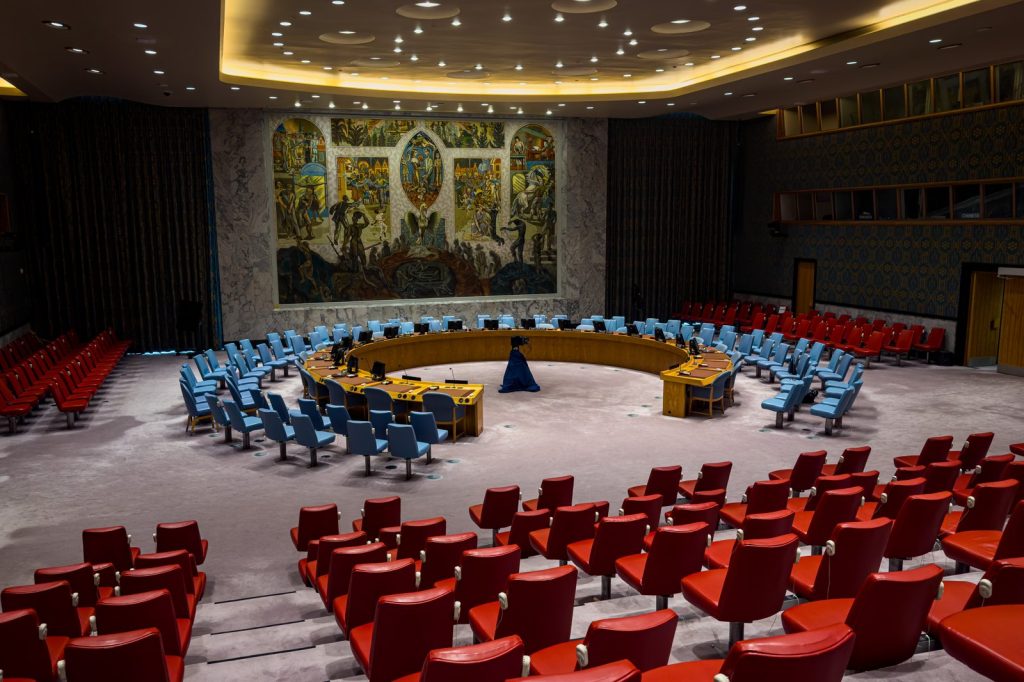
UNITED NATIONS, September 24 — The UN Security Council convened a meeting on Artificial Intelligence and International Security, where it was briefed by some of the world’s top AI executives on the huge benefits and huge risks the frontier technology presents. Among those briefing the Council was Sam Altman, chief executive officer of OpenAI, as documented in a UN Photo by Ariana Lindquist. The session also featured Yoshua Bengio, a recipient of the prestigious Turing Award and one of the godfathers of machine intelligence.
Bengio warned that the dangers of AI beyond human control represent an unprecedented threat for countries “that none can contain alone and that does not respect the borders we defend.”
Why the Council is weighing in
The briefing came amid mounting warnings that the world may be losing its grip on systems built to outthink us. The Council session reflects growing international concern over frontier AI, following other recent UN developments. On 22 September 2026, the UN’s top human rights official said the first generation to grow up with AI may also be the last one anyone thinks to ask about it, and that this has to change, as children demanded a voice on AI’s future.
On 21 September 2026, the world’s first scientific body on artificial intelligence called for stronger safeguards as current firewalls are “unravelling.” The Security Council meeting also follows a General Assembly declaration to tackle rising sea levels, and calls from the General Assembly President for accepting “hard truths” so trust can be rebuilt.
A forum for hard questions
The briefing underscores the UN’s role as a forum for addressing AI governance, with the Security Council hearing directly from industry leaders and top researchers about both the promise and the perils of the technology. The presence of Altman and Bengio signals the high stakes involved, as AI systems become more capable and their potential for both benefit and harm grows.
The meeting is part of a broader UN effort to address AI’s impact on international security, human rights, and education, with various UN bodies calling for safeguards and inclusive dialogue. The Security Council’s focus on AI and international security highlights the need for global cooperation to manage risks that transcend national borders, as Bengio’s warning made clear.
The outcome of the briefing could influence future international AI governance frameworks, though no specific decisions or resolutions have been announced from this session. The event took place at the UN headquarters, with the Security Council chamber serving as the backdrop for these urgent discussions. The meeting is one in a series of UN engagements on AI, including the Human Rights Council’s focus on children’s participation and the scientific body’s call for safeguards.
As AI capabilities advance, the UN continues to serve as a key platform for dialogue among governments, industry, and experts. The briefing by Altman and Bengio represents a significant moment in the international conversation on AI, bringing together leading voices to address the challenges and opportunities of this transformative technology.
The Security Council’s attention to this issue reflects its mandate to maintain international peace and security, recognizing that AI’s impact could extend to global stability. The meeting did not produce a formal outcome document, but it contributed to the ongoing discourse on AI governance. The UN’s engagement with AI issues spans multiple agencies and initiatives, underscoring the complexity and urgency of the topic.
The briefing is part of a broader trend of international organizations seeking to understand and regulate AI, with the UN playing a central role in facilitating these discussions. The presence of top AI executives and researchers at the Security Council signals the importance of multi-stakeholder collaboration in addressing AI’s global implications.




