
AI Hallucinations and a Case Built on Nothing
The case began when a judge presiding over an insolvency matter turned to artificial intelligence to find legal citations. What followed, according to the Supreme Court, was a judicial determination built on something that never existed. The NCLT’s orders, which relied on these fabricated references, were ultimately set aside. The NCLAT, as the intermediate appellate body, failed to identify the error. For the parties involved, the stakes were existential: a ruling that carried the force of law but rested on material that had no basis in reality. The Supreme Court made clear that such reliance on AI-generated citations is not merely a mistake in decision-making — it is, in its view, a far more serious failure.
The Court’s warning was not an isolated incident. On February 27, the same Bench — Justices P.S. Narasimha and Alok Aradhe — had taken notice of a trial court that relied on AI-generated fake case law. In that instance, the Court did not mince words: it was not merely an error in decision-making, it said, but amounted to judicial misconduct. The message to lower courts was unambiguous: the integrity of judicial reasoning cannot be outsourced to a machine.
Balancing Efficiency with Accountability
The Supreme Court has acknowledged that artificial intelligence may serve as an assistive tool to improve efficiency in judicial proceedings. It can help manage caseloads, streamline research, and automate routine tasks. But the Court drew a hard line: AI can never replace independent human reasoning, judicial discretion, or professional accountability. In its observation, the Court described AI disruption as a “known unknown” — everyone knows it is happening, but nobody quite knows its extent or implications. For those whose fates hang in the balance of a system meant to deliver justice, that uncertainty, the Court noted, is the real danger.
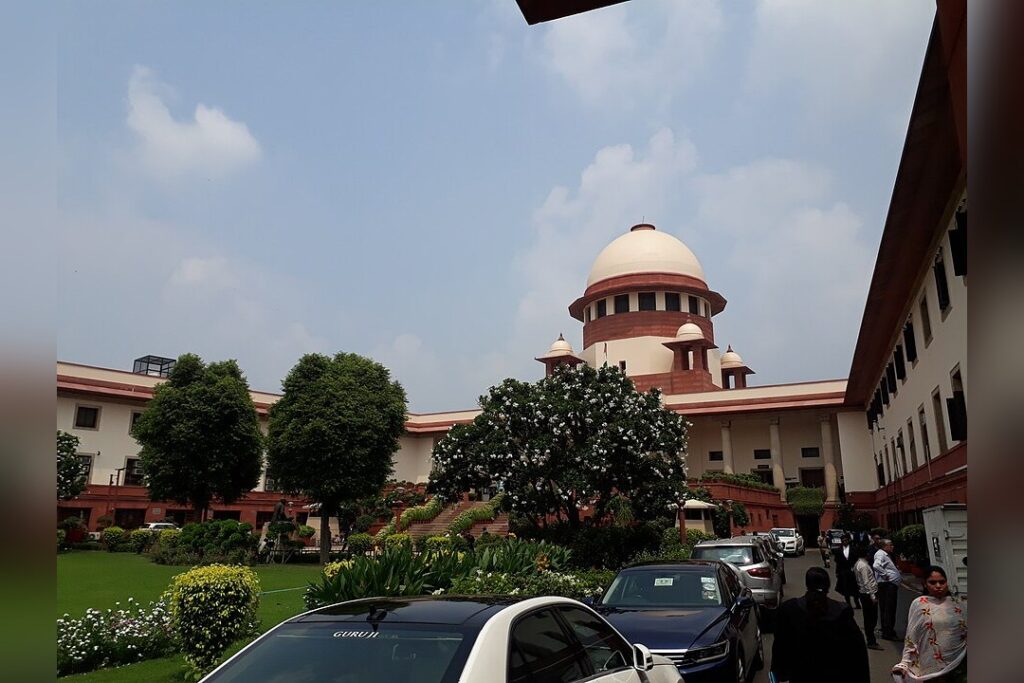
This tension is not unique to India. Supreme courts around the world function as the highest judicial authority in their nations, whose rulings bind all lower courts and cannot be reviewed elsewhere. The institution developed over centuries as the final arbiter of legal disputes. In federal countries, a national supreme court may sit above state-level courts while reviewing only matters that touch federal law. India established its Supreme Court as the apex court under the Constitution that took effect in 1950. It principally hears appeals from lower and intermediate courts and can exercise original jurisdiction in defined cases.
Guarding the Integrity of Judicial Reasoning
The Court’s recent warnings about fabricated AI citations show its role in guarding the integrity of judicial reasoning. When the highest court signals limits on new technology in proceedings, trial and appellate judges across the country take notice. Readers relying on the courts for fair outcomes are affected by how strictly that boundary is drawn. The Supreme Court has now made clear that while AI may be a tool, it must not become a substitute for the human judgment that lies at the heart of the legal system. In AI, the Court observed, humanity is encountering what many experts fear might well be an existential question. The insolvency case, and the analogy to the Bhopal gas tragedy, will serve as a lasting reminder that in the courtroom, the cost of illusion can be measured not in bytes but in lives and liberty.
{“@context”: “https://schema.org”, “@type”: “NewsArticle”, “headline”: “AI Hallucinations Undermine Judicial Rulings in Insolvency Case”, “description”: “AI Hallucinations and a Case Built on Nothing The case began when a judge presiding over an insolvency matter turned to artificial intelligence to find…”, “datePublished”: “2026-07-03T09:30:00+00:00”, “author”: {“@type”: “Person”, “name”: “Muhammad Asim”}, “publisher”: {“@type”: “Organization”, “name”: “InfoPulse Today”, “url”: “https://newsfeed.infopulsetoday.com/”}}




